A Double Dose of Awesome: Author Interview & Holiday Giveaway

It’s that time of year again. Trees are dressed like girls going to prom, boxes accumulate like snow, and I disappear for a few weeks. That’s right, it’s Christmas! And because I said it would be an annual occurrence, (and really, I just like giving you stuff) that also means it’s time to announce this year’s Holiday Giveaway. But first, I have an extra bonus. The lovely Cally Ryanne, author of Echoes of Balance, has agreed to stop by and give us some insight on what it’s like to be a new author, what her publication journey was like, and what you should expect from her debut novel.

I featured Echoes of Balance a few weeks ago under my From the Editor’s Desk series, so if you’re curious about the book, hop on over there. Otherwise, I’ll let Cally tell you about it herself. 😉

~

 
1. First, thank you for joining us today and congratulations on the release of your debut novel! Tell us a little about it; what kind of experience should readers expect?
 
Thank YOU for featuring me, editing Echoes (y’all — Kisa is a phenomenal editor), and making this book an awesome first experience. Really. 🙂

(Note from Kisa: Aww, thanks Cally! That means a lot. <3)

Echoes is about Chloe Moraine, the youngest of the Naimei, an ancient line of beings charged with keeping the universe in balance. But she wasn’t always sold on this particular responsibility; following their Ways can be boring, and so, for a long while, she set off to be a vampire hunter, to do something that felt more immediate and important. It’s not until her family receives warning that Pan and Damonos, the original demons and premiere forces of chaos, are set to return that Chloe resumes her Naimei duties, and then she does so with a conflicting view of the world: things can’t all be as black and white as the Ways would have the Naimei believe.

When the Ways, themselves, begin to fail, Chloe is approached by Josef, an unnervingly charming vampire who seems to know more about the Originals than anyone outside the Naimei fold should. It seems as if her best bet to save the world is to trust him, but doing so will lead her to a darker side of the supernatural than she’s ever seen, and may alienate her family in the process.

I think the experience readers should expect is immersive. The book has been a long time coming — there’s a lot to Chloe and her world beyond just this story. Get ready. 🙂
 

Chloe Moraine, high school superhero by day, universe balancer and occasional vampire hunter by night. — Echoes of Balance, 2013

 
2. This is the first in a trilogy, isn’t it? Anything you can tell us about the next book?
 
It totes is the first in a trilogy! Echoes stays pretty focused on Chloe’s life in the immediate right now, and the things she’s (mostly) used to experiencing. It’s her world, as far as Echoes is concerned. Book two — literally, that’s what the document is called right now, I’m so terrible at titles — expands a lot of Chloe’s borders, so to speak. There are new places, and a lot of new characters. Her world starts expanding — quickly — and she sort of has to deal with the fall out of that, along with all the decisions she’s made in book one.

Also, as it stands now, the first word (prologue aside) is Ducante. Man, I just love that guy. Can’t get enough of him.

(Note from Kisa: Awesome! Ducante was one of my favorite characters. Nothing like a snarky, bar-tending demon to complete things, you know? 😉 )
 

Meeting a vampire at a bar was certainly not the most dangerous thing she could do. But it was far from the least. — Echoes of Balance, 2013

 
3. This story is clearly one that’s very dear to you. Please tell us a little about your road to publication. What steps did you take? How did you ensure the story you love is the one that readers can now hold?
 
If we go back to the Way Back, the first step to publication was to totally “murder my darlings”. Chloe & company have been around for some time, and they’ve had lots of starts to their stories. That’s what happens when you think you can write novels in like, middle school. Plot holes, bad writing, plots that didn’t lead anywhere, and none of them fit, really. So eventually, there had to be a time where the pallet was cleansed — all these things I’d been building and thinking about and the what if this happened’s had to get out to make room for something real and solid and logical, but still true to the characters. Because, in the end, they were what mattered most to me.

Then I wrote and wrote and wrote forever, reworked and edited, got sick of editing, edited some more, agonized over a query letter, and then sent that query letter out to ten thousand people. Then got rejected by ten thousand people, put the book on hold for awhile, and repeated that last process again a few more times.

And, FYI, when you actually do get accepted, you have to go back to that write/edit/get sick of looking at your own words process all over again. It’s a blastity blast.
 

He was handsome . . . with chiseled features that screamed there was an aspiring actor resumé with his name on it somewhere. — Echoes of Balance, 2013

 
4. You chose to publish with a new, indie publisher instead of following the popular trend of self-publishing. What has that experience been like? Would you recommend working with a smaller press? (And please answer honestly. I promise I won’t hold anything you say against you.)
 
So, I feel like I should stress that my experience was definitely different than people working with big publishers (because duh) and probably a little different than most people working with indie publishers (because new). I was actually approached by Ashley, one of the REUTS founders, on a writing site and encouraged to submit my then mostly-finished-and-edited manuscript, and I’m the first book (!) to come out of REUTS.

That being said, I had never really seriously considered self publishing. I was sort of the exhausted mom that really needed it to be summer so her kid could go away to camp for awhile. I loved my manuscript, but I just didn’t have it in me to do everything that’s needed to self publish successfully, so that it was actually polished and professional looking and not just something that was stuck up on Amazon at 3 a.m. I figured if no one would accept me now, I would just keep writing and try again in a few years, or something, and if that didn’t work, I’d have to self publish when I actually had time to devote to it. (Which isn’t really an option when you’ve just graduated college, moved to a new city and started a new job.)

If I’m super honest, the first time I emailed Ashley, I was stupid nervous that this was just going to be some prank or grandiose dream of authors-who-wanted-to-publish-other-authors that wasn’t really going to go anywhere. But, a little over a year later, and there are real paperback copies of my fully edited book. And it’s awesome.

I’m a fan of indie and a big fan of smaller presses in general, and working with them is great. There’s a lot of personal attention, everyone involved in the press is queued into what’s happening, they really care about helping you and being new, and small, and indie, they’re totally open to being experimental and adaptive. Some things to consider, though, is that small presses — and new small presses, at that — don’t necessarily have the same experience as bigger names. REUTS is awesome, but I can see how you could easily get other presses who think they know what they’re doing but really don’t (my initial panic when Ashley emailed me). So, I guess, tread with caution if you seek a new operation to publish with. Also, consider what you want out of publishing — I just wanted to be able to share my story, but some people want to be able to walk into Barnes and Noble and see their book on the New and Now table. Different publishers have different resources that can give you different things!
 

Night was several hours off, and she didn’t have time to play host to a pseudo-corpse. — Echoes of Balance, 2013

 
5. Could you please describe what actually happens during the publication process? What should authors expect after they sign a contract?
 
Let’s start with what you should not expect:

That your book magically goes away to some factory-land that puffs out rainbows, and comes out the other side this polished, beautiful thing ready to head to booksellers everywhere.

Don’t expect that.

As soon as you sign the contract, you start in on your book proper. Finding a title that fits (this might be a personal problem — I’m pretty awful at titles), making cover decisions, starting the process of editing. I was lucky enough to be able to edit right in my Google Doc, (instant feedback, whoo!) but that also meant coming home from work and having thirty to fifty comments I needed to address on top of normal life. It can be a lot. And you’re going to keep having to tweak, cut, change, rewrite, and add to this thing you thought was great because, duh, someone wanted to publish it. But just because someone wants to publish you doesn’t mean your book is perfect. Yet.
 

She knew nothing of high school beyond the basic conventions, structure, & potential for heaping amounts of teenage angst. — Echoes of Balance, 2013

 
6. What’s been your favorite part?
 
I actually love getting edits. They’re tiring and sometimes I’m just like, ugh, I can’t look at this, but it’s also awesome to see comments from someone else who is as critical of and as invested in your story as you.
 
7. And lastly, what advice would you give to other aspiring authors out there?
 
Gut check your expectations. That being said, keep on keeping on!
 

Why did vampires always incorporate puns into their conversation? Did they try, or did it just happen? — Echoes of Balance, 2013


~

Thank you, Cally! 🙂

To find out more about Echoes, The Ways Trilogy, and Cally, be sure to visit her author website, or connect with her on Twitter: @callyryanne.  And, of course, Echoes of Balance is out now! So head to your favorite online retailer or meander over to REUTS Publications to pick up a copy.

Which leaves us with only one more piece of business: the Holiday Giveaway. In honor of Cally’s achievement and the first release from REUTS (which I might have had a small part in), I decided to give away 3 copies of Echoes of Balance. Yep, 3 lucky people can score one of the beautiful paperback editions for free! (Why 3? Who knows. That seems to be my magic number.) Ready to enter? Click here!The drawing will be held on New Year’s Day, and the winners will be announced that following Friday (1/3/14).

Until then, I wish you all a safe and happy holiday and I’ll see you in the new year! 🙂

The Anatomy of a Successful Short Story

Short stories. Some people love them, others can’t stand them. But no one can deny they’re an entirely different creature from novels.

This week, I’ve been judging entries for the ProjectREUTSway competition held during the month of November. Buried amid 144 short stories, I started to think about what exactly makes one “successful”. I think most of you know by now that I, myself, published 3, so this is a topic that hits very close to home. It’s also one I’ve never really stopped to think about. Until now. Because, let’s face it, short stories are strange. Similar to novels and yet completely dissimilar, they require a certain — almost magic — recipe to really shine. I don’t believe in the undefinable though, (at least not when it comes to writing) so let’s see if we can’t identify the exact ingredients that make short stories such a unique form of storytelling.

Short stories are often considered a novelist’s training wheels; the idea being that someone can learn the basics of storytelling through short stories and then graduate into novels. But that’s not exactly what happens. Because, in reality, they require two different skill sets to pull off well. A short story is not a truncated novel, nor is a novel an elongated, rambling short story. Rarely can the concept for one be turned successfully into the other. And yet people still try. Why? Because short stories have been given a bad rap. Novels take all the glory, leaving short stories to rot in creative writing jail like fiction offenders. They’re looked down on as an inferior form of narrative, an eighth grade diploma to the novel’s PHD. After all, the only difference between them is length, right?

Wrong.

There are three things a successful short story must have: brevity, focus, and telling. Yes, you heard me, telling. But before you get your knickers in a bunch, let me explain further.
 

1. Brevity

 
Novelists are taught the value of brevity. But even the most refined novels still sprawl, meandering through details and settings and other things short story authors simply can’t afford. Literally every word matters in a short story. No detail is extraneous. If we mention the light blue collar on a random cat, you can bet that collar is important somehow.

The same holds true for the words themselves. Novelists are allowed to write sentences like this:

She paused, grabbing the handle of the stainless steel refrigerator and pulling it open with a subtle flick of her wrist.

(Hey, no comments on the quality. Clearly, I know that sentence is atrocious. I’m proving a point. 😉 )

That’s 21 words to say this:

She opened the refrigerator door.

Yes, that may be a bit exaggerated, but you see what I mean, I hope. When you only have maybe 5000 words of space, every letter has to serve a purpose. Successful short stories know this, and the language/storytelling is as finely honed as a scalpel. If it doesn’t somehow move the plot along, impart valuable information or absolutely have to exist, it doesn’t.
 

2. Focus

 
I’m a firm believer that every story should have a message, a reason for existing. But maybe that’s because I started out as a short story author. Whenever I come up with an idea, I identify the core message first, before the setting, characters, or even plot. For example, The Bardach is a story about identity, Spinning is about fate, and Confessions is about losing faith. Even Unmoving has a focal point. At its core, its about compassion. This type of focused narrative is one of the more notable differences between a short story and a novel.

Short stories are single-minded. Like a starving man spotting food, they keep their eyes on the prize. None of this wandering off into detours, flashbacks, subplots or other shenanigans that novels get away with. Nope, they have one message, one plot, one climatic moment that everything points to. And, interestingly enough, short stories are typically driven by an event, rather than a character. The focus is on the action, not the person doing it.

How does this translate into our recipe for success? Well, you’ll be able to feel the underlying drive in a really good short story. You’ll walk away from it remembering the message, not necessarily the characters. So make darn sure you know what you’re saying, both literally and subtextually.
 

3. Telling

 
All right. I know this is the one you were waiting for. After all the times “show, don’t tell” has been beaten into your head, you simply can’t believe I’d actually stand here and advocate telling, can you? Well, I’m not really.

See, the thing is, showing is still 100% better than telling. But, telling is allowed in a short story. Due to the limited amount of time you have to impart your narrative, there’s really no way around it. You don’t have the luxury of wasting thousands of words, or even hundreds, showing us the back-story. Nor can you illustrate anything directly outside the timeline of the main event, regardless how important it may be. So that only leaves one option — telling. You should still avoid the dreaded info-dump if you can, but slipping in the occasional line of summary, or a paragraph of back-story, won’t automatically earn you peer derision. Well, most of the time, anyway.

Successful short story authors are masters of knowing when to tell and when to show. (Which, by the way, I am not. Just wanted to clarify that in case anyone thought I was going to be cocky and throw myself on that list.) They give you just enough information — typically in the form of telling — to make their worlds/characters feel as fleshed out as a novel’s, but not so much that you really notice. They cover a lot of ground in a really short amount of time, making this the hardest skill on the list. It actually requires mastery of the other two to pull off, which is why I listed it last.

And there you have it; the anatomy of a successful short story. Learn how to control these three elements and your short fiction will stand out in a pile like little beacons. And let’s all try to stop viewing short stories as the lesser form of fiction. They’re not inferior. Just different.

How to Judge a Book by Its Cover

After spending the past several weeks learning the ins and outs of cover design, I found myself thinking more about the other side of the fence — the buyer’s side. I tend to browse bookstores rather aimlessly, as I’m sure a lot of us do, waiting for something to pop out and grab me. We’ve always been told, “Don’t judge a book by its cover.” But that’s exactly what we do. We can’t help it; it’s instinct, a way to filter the walls and walls of choices and prevent information overload. What actually makes a cover design stand out against the others, though? What hidden information are we subconsciously told in a glance? We saw glimpses of it during Ashley Ruggirello’s excellent series, but I wanted an opinion from outside the design world, from someone whose job isn’t necessarily to create the covers, but to judge them.

So I recruited Elizabeth Watson. Some of you may recognize that last name from a post I wrote back in May announcing the release of A Foundation in Wisdom, and you’d be correct. Elizabeth is Robert’s wife. But more importantly, she’s a librarian. She faces the same predicament we do when stepping into a bookstore, just on a much larger (professional) scale. So stick around, listen to her tips for deciphering the subtle language of book covers, and then be sure to check out A Foundation in Wisdom!
 

How to Judge a Book by Its Cover


By Elizabeth Watson

 
As Kisa mentioned, I’m a librarian for a small, rural library. My job duties include purchasing books (monthly) for the library and recommending titles to our patrons. As a librarian, I feel it’s important to know your community and what they like/want to read. But obviously, I don’t have time to read every book out there, and there are some genres that appeal to me more than others. So how can I tell whether or not to buy or recommend a title? By looking at its cover. Publishers put a lot of time and money into the cover design, so take advantage of it.

Here are some things I tend to look at while making my decisions:
 

The Title and Cover Art:

 
The cover will let you know the genre. For example:
 
The Sum of All Kisses by Julia Quinn
 
You can tell this is a romance. (And, by the way, a good rule of thumb is: the more skin showing on the cover, the more sex scenes you’ll find inside.)

Whereas this:
 

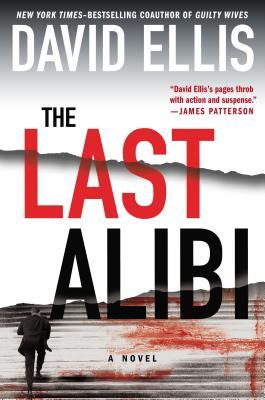
The Last Alibi by David Ellis

 
…clearly isn’t. Based on the endorsement from James Patterson and the imagery, it’s safe to say The Last Alibi is a suspense novel.

The cover can also give you a hint about location. For example:
 

Discretion by Allison Leotta
 
If you recognize the building on the cover of Discretion, you can tell it takes place in Washington, D.C.
 
The Bone Bed by Patricia Cornwell
 
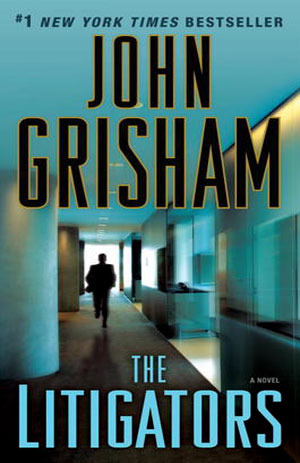
The Litigators by John Grisham
 
Also, pay attention to the presentation of the author’s name; the more real estate it takes up, the more likely you are to be looking at a famous, established author (as illustrated above).
 

Author Recommendations:

 
Getting endorsements from established writers can really help sell your book.  If the book you’re looking at has author recommendations and you’re familiar with that author, you can probably safely say the book in your hand will be similar to those written by the endorser. For example:
 
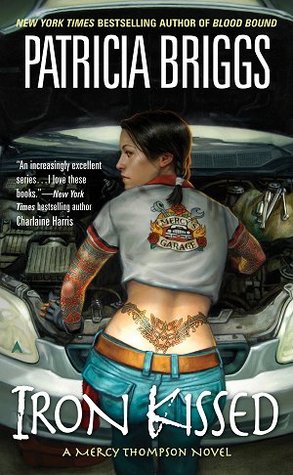
Iron Kissed by Patricia Briggs
 
Charlaine Harris writes paranormal romance, so you can guess that Iron Kissed is probably a paranormal romance, too.  (I would say it’s also safe to guess that the main character isn’t very quiet and conservative based on the tattoo.)  But if you don’t have a famous author to provide you with a quote, quotes from reviewers are helpful, too.  I just recommend making sure the quote tells the reader or purchaser what to expect from the book — should they expect a lot of action? Courtroom drama? Vampires? Fantasy?
 

Awards or Prizes:

 
The Replacement Child by Christine Barber
 
As a reader/purchaser, I definitely pay attention if a book has received a prize. A few examples of awards given to authors are the Edgar award for mysteries, the Christy award for Christian fiction, and the RITA award for romances. Being nominated is impressive even if you didn’t win, so you should brag up your nomination on the cover, too.
 

Additional Things that Factor into Purchasing:


  • Patron requests — if one of our patrons asks for it, I try to buy it.
  • Variety and diversity — I try to get something for everybody, something to represent all the genres. And, of course, I try to buy the big-name, bestselling authors when they come out with a new book.
  • Local authors.
  • Reviews — the Library Journal, Kirkus Reviews, newspapers, and other print sources are helpful. I also look at online reviews at Goodreads, Amazon, and Fantastic Fiction, as well as BookPage, and BookReporter. And I buy the Oprah’s Book Club selections and books that get reviewed in O: The Oprah Magazine.
  • If we have some books in a series, I will try to complete it.
  • Impressive covers with good reviews or endorsements from famous authors.
  • Local Book Club Requests — book clubs often tell me what title they’re planning to read next, and I’ll buy copies of their selection for the library.

Well, those are my thoughts. I hope you find them interesting and useful. The world of cover design is an intricate thing from start to finish. A lot goes into the design side, but nearly as much goes into the decision to buy. If you keep some of these key elements in mind while you create, I’m sure you’ll be able to wow the world with your covers.

Designing a Book Cover: Conclusion

Welcome to the 7th and final installment of Ashley Ruggirello’s guest post series on cover design.

For those just joining us, meet Ashley, Creative Director/Founder of REUTS Publications, and owner of freelance design company, Cardboard Monet. She’s been sharing her design expertise, taking us through the process behind designing a book cover. From inception to finished product, she’s illustrated the collaborative steps authors and designers go through, using my nemesis WIP as the guinea pig. And today, we’ve reached the end.

Know what that means? That’s right, next week I’ll be revealing the announcement I’ve been teasing you with since the beginning. I’m pretty excited about it, and hope you will be too. So follow along as Ashley walks you through the finishing touches on Unmoving‘s design and get ready for next week’s surprise! 😉
 

Chapter 7: Unmoving Tutorial Finale


By Ashley Ruggirello

 
The end is near. We’ve entered the closing chapter of our Book Cover Art Series! We started the series with an idea, something abstract and intangible. After playing around with that idea, and different forms of representation, the final cover was revealed. And, if you’re interested in how the cover was created, Chapter 5 and Chapter 6 have documented that process. But now, the time has come to put the finishing touches on the Unmoving cover, and close the book on the wonderful journey we’ve taken together.

Last, but not least . . . the necklace.

Picking up from last week:
 
Screen Shot 2013-10-28 at 7.17.54 PM
 

And again, the basic design elements


Part III: Step-By-Step Tutorial for the Unmoving Book Cover

 
Open the Necklace inspiration image in a new browser tab. You don’t need to pull it into Photoshop, just have it easily accessible to reference. In a new layer, above all the background/bench layers, zoom in and draw with the brush tool (“B” on your keyboard to bring it up). It doesn’t matter what color you use, but remember to keep the brush sharp:
 
Screen Shot 2013-11-04 at 7.31.17 PM
 
Before I show how it looks on my screen, we’ll have to add some FX to the necklace base. Remember the button? Make sure you have the necklace layer selected, and from the toolbar at the bottom of your layer window, click the FX icon and select “Drop Shadow”: (We’ll start with Drop Shadow, but we’ll be adding a couple different effects in one swoop.)
 
Screen Shot 2013-10-28 at 6.40.00 PM
 
Screen Shot 2013-10-28 at 7.09.34 PM
 
This’ll open the effects window, where you can change the Distance to “3″, Spread to “0″, Size to “38″ and Angle to “150″:
 
Screen Shot 2013-11-04 at 7.35.01 PM
 
Then, from the left-hand column, click “Outer Glow” (as you see from the above screen shot). You’ll change these options to Blend Mode of “Hard Light”, Opacity of “100%”, Spread to “29%”, Size to “90px”, Range to “50%” and Color to “#c0c9cc” :
 
Screen Shot 2013-11-04 at 7.36.02 PM
 
Then hit OK. And, while keeping that layer selected, set it to Multiply, Opacity “48%” and Fill “0%”:
 
Screen Shot 2013-11-04 at 7.37.35 PM
 
It should look something like this (zoomed in):
 
Screen Shot 2013-11-04 at 7.39.05 PM
 
Duplicate the layer by either clicking CTRL/command + J or right-clicking the layer and selecting Duplicate Layer:
 
Screen Shot 2013-10-28 at 6.36.22 PM
 
On your new layer, open up the FX window again. You’ll notice the previous effects have already been applied to this duplicate layer:
 
Screen Shot 2013-10-28 at 6.40.00 PM
 
Screen Shot 2013-10-28 at 7.09.34 PM
 
We’ll be adding a Gradient Overlay, so select that option from the left side bar. Set Blend Mode to “Mulitply”, Opacity to “100%”, Style to “Linear”, and Angle to “90”:
 
Screen Shot 2013-11-04 at 7.42.26 PM
 
The gradient colors themselves look like this:
 
Screen Shot 2013-11-04 at 7.44.01 PM
 
From left to right the colors are “#262626”, “#575757”, “#8a8a8a” and “#262626”. Hit OK and OK, then look back at your layer. Make sure you change your layer Opacity to “87%” and you should see something like this:
 
Screen Shot 2013-11-04 at 7.47.59 PM
 
Screen Shot 2013-11-04 at 7.45.33 PM
 
In a new layer below the necklace, using a soft-edged brush with a black color (#000000), add a slight drop shadow to the bottom edge of the necklace:
 
Screen Shot 2013-11-04 at 7.50.46 PM
 
Screen Shot 2013-11-04 at 7.49.46 PM
 
I want to apologize for this next step, which I forgot to document: the gem image and coloring. For this, you can either play around and come up with your own gem, or use the following image (taken directly from my design file) and add it as a new layer below your necklace, but above the drop shadow layer:
 
shine
 
With the gem in place, you should have something that looks like this:
 
Screen Shot 2013-11-04 at 7.54.28 PM
 
Zooming back out, the last thing we need to add is the chain. Zooming out allows you to better see how it’ll fall off the bench in relation to the design as a whole. This step was as simple as using the brush tool with a hard brush to draw out a chain:
 
Screen Shot 2013-11-04 at 7.57.57 PM
 
To add a little bit of realism, we’ll add a Gradient Overlay to the layer, so open the FX and select Gradient Overlay:
 
Screen Shot 2013-10-28 at 6.40.00 PM
 
Screen Shot 2013-11-04 at 7.59.32 PM
 
Set your options to Blend Mode at “Normal”, Opacity at “100%”, Style to “Linear” and Angle to “90%”:
 
Screen Shot 2013-11-04 at 7.59.55 PM
 
With the gradient colors from left to right at “#262626”, “#575757”, “#000000” and “#262626”.
 
Screen Shot 2013-11-04 at 8.01.44 PM
 
Hit OK and OK one final time, and you’re done! Take a moment to bask in your new cover, and the new techniques, tips and tricks you’ve learned.
 
Screen Shot 2013-11-04 at 7.19.12 PM
 
Thank you for participating and following our Book Cover Art Series! REUTS would love to showcase the work you come up with based on our series, so email them to hello@reuts.com, and we’ll display them on our blog! Happy designing, reading and writing!

Designing a Book Cover: Tutorial Part 2

Welcome to week 6 of Ashley Ruggirello’s guest post series and part 2 of her guided walk-through.

For those just joining us, meet Ashley, Creative Director/Founder of REUTS Publications, and owner of freelance design company, Cardboard Monet. Over the past weeks, she’s been sharing her design expertise, taking us through the process behind designing a book cover. From inception to finished product, she’s illustrated the collaborative steps authors and designers go through, using my nemesis WIP as the guinea pig. But it’s not over yet!

Last week, she began a step-by-step breakdown of how she created this beautifully subtle piece of art. Today is part 2, and there’s one more installment scheduled for next week. That means, in two week’s time, I’ll finally reveal the exciting announcement I’ve been hiding. So stick around, learn some of Ashley’s tricks and find out what I’m keeping up my sleeve. We’re almost there, I promise! ;)
 

Chapter 6: Unmoving Tutorial Continued


By Ashley Ruggirello

 
If you’re just now joining us on this cover designing adventure, I’d suggest picking up from Chapter 5, where we begin the tutorial, or Chapter 1, to see how far we’ve come. Last week we ended with a good base image of a color-adjusted and textured bench:
 
Screen Shot 2013-10-21 at 9.06.52 PM
 

And again, the basic design elements


Part II: Step-By-Step Tutorial for the Unmoving Book Cover

 
Bring in the filigree
 
To start, we’re going to jump right in to the floral filigree, which is — by far — the more difficult part. Bring the floral filigree into your Photoshop document by your preferred method (c+p, drag/drop, etc…) as a new layer, above the work we’ve already done. You’ll want to Transform (CTRL/Command +T) and rotate the image -5.77 degrees to the left, to get it in a similar location as the final. Of course, you can also omit this step.
 
Screen Shot 2013-10-28 at 6.28.41 PM
 
Set the layer to Lighten and you’ll see a very gray silhouette of the filigree:
 
Screen Shot 2013-10-28 at 6.29.54 PM
 
Screen Shot 2013-10-28 at 6.56.23 PM
 
To get that gold color, we need to mess with the image Hue & Saturation by going to Image > Adjustment > Hue and Saturation:
 
Screen Shot 2013-10-28 at 6.31.16 PM
 
Click the Colorize option. This is where a lot of playing around, and guess/check comes into play. If you select Preview you can see your progress before committing to anything. I set Hue to “45”, Saturation to “24” and Lightness to “+15”.
 
Screen Shot 2013-10-28 at 6.32.11 PM
 
It’ll give you that gold color on just the filigree element.
 
Screen Shot 2013-10-28 at 6.54.21 PM
 
But the filigree in the sky is too light, so duplicate the layer by either clicking CTRL/command + J or right-clicking the layer and selecting Duplicate Layer:
 
Screen Shot 2013-10-28 at 6.36.22 PM
 
Set this layer to “49%” Opacity:
 
Screen Shot 2013-10-28 at 6.53.47 PM
 
There, that’s a little better! But now we have all that crap over the bench that we definitely don’t need. Here’s another section that’s guess-and-check. Take those two filigree layers and put them in a group of their own by highlighting them both and hitting CTRL/Command + G or right-clicking and clicking the folder icon at the bottom of your layer window:
 
Screen Shot 2013-10-28 at 6.40.00 PM
 
Your two filigree layers should now be in their own group, easy to edit at the same time, which is what we’re about to do! Using that same icon bar above, hit the icon with the circle in the square to create a mask.
 
Screen Shot 2013-10-28 at 6.41.57 PM
 
This adds a white box next to your group, which — in essence — allows us to erase any element within the group without truly editing the image itself. That way, if we ever need to go back and make changes, we don’t lose the authenticity of the original:
 
Screen Shot 2013-10-28 at 6.42.34 PM

(Disregard that mine says “Group 9”, yours will likely say “Group 1”)


Now, make sure you’re selecting the mask (it should have a the frame around the corners when selected as seen above), and select the Eraser tool. You can hit “E” on your keyboard to pull it up, or find the eraser icon in your left toolbar:


Screen Shot 2013-10-28 at 6.45.17 PM


From the color selection at the bottom of your toolbar, make sure the foreground color is set to white:


Screen Shot 2013-10-28 at 6.46.14 PM


We’re moving all around your screen now. Looking at the top toolbar, select the brush size and shape. Make sure it’s set to a fuzzy circle, at any given size (mine is 300px):


Screen Shot 2013-10-28 at 6.47.17 PM


Screen Shot 2013-10-28 at 6.48.23 PM

 
Working back on your art board, begin to “erase” the filigree overlapping the bench and surrounding area. You’ll notice your mask on the group layer turn black where you’ve erased:
 
Screen Shot 2013-10-28 at 6.50.11 PM
 
Screen Shot 2013-10-28 at 6.52.59 PM
 
I can’t say exactly how I erased, but you can see my mask on the guide layer as a general idea. The lighter grays were created by changing the opacity of my eraser, so I wasn’t deleting as much.

And there you have it! The filigree has been added to your design.
 
Typesetting title, author name, and tagline
 
(Even though I consider this the easiest part of the design, Kisa and I still went through multiple combinations and options before settling on the final._

Let’s start with the tagline…

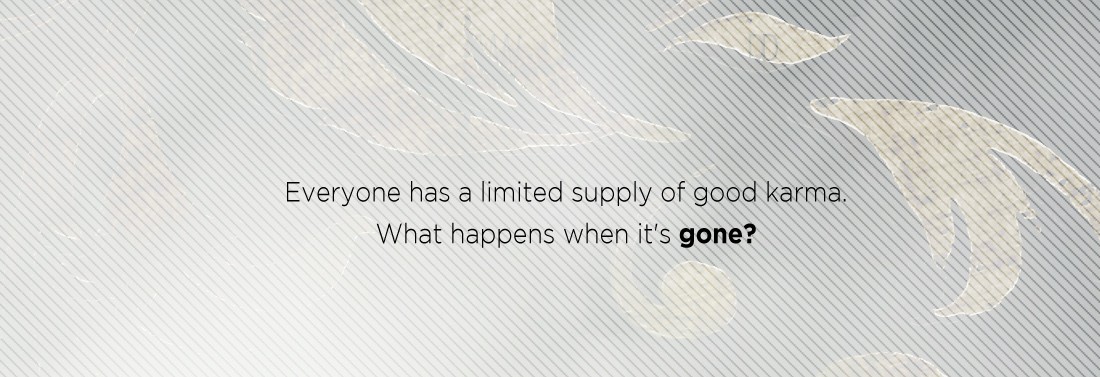
The fonts used were “Gotham – Light” and “Gotham – Bold”, for the unbolded and bolded words, respectively, at a size of 9pt. (Here’s where you can sub for Century Gothic.) All you really have to do is type out:

“Everyone has a limited supply of good karma. What happens when it’s gone?”

Break the line between the sentences, center it nicely in the sky, and you’re all set with the tagline:
 
Screen Shot 2013-10-28 at 7.01.31 PM
 
Next, the title. The title is “Proxima Nova Alt Condensed – Light” at font size “64pt”. You can also sub “Collaborate – Thin“. Type out “Unmoving” in all UPPERCASE (the font color doesn’t matter at this point) and place it evenly between the tagline and the top of the bench:
 
Screen Shot 2013-10-28 at 7.05.20 PM
 
Back in your layers window, change the fill to “0%”
 
Screen Shot 2013-10-28 at 7.06.13 PM
 
You’ll notice the font has disappeared, but that’s okay! That’s what we want. Make sure you have the text layer selected, and from the layer toolbar at the bottom of your window, click the FX icon and select “Drop Shadow”:
 
Screen Shot 2013-10-28 at 6.40.00 PM
 
Screen Shot 2013-10-28 at 7.09.34 PMThis will open the Effects window, where you can change the Distance to “5”, Spread to “89”, Size to “1” and Angle to “150”:
 
Screen Shot 2013-10-28 at 7.10.57 PM You’ll now see a really cool, shadowed text:
 
Screen Shot 2013-10-28 at 7.12.09 PM
 
And, boom. The title. 🙂

The last piece of text is Kisa’s name. It’s also in  “Proxima Nova Alt Condensed – Light” at size “14pt”. (You can sub “Collaborate – Thin“.) Type out “Kisa Whipkey” in all UPPERCASE, and place it right below the title, centered on the art board.
 
Screen Shot 2013-10-28 at 7.15.42 PM
 
Similar to the title, open the Drop Shadow Effects window, and set the Blend Mode to “Normal”, Opacity to “75”, Angle at “150”, Distance to “1”, Spread to “0” and Size to “1”:
 
Screen Shot 2013-10-28 at 7.16.37 PM
 
After hitting “OK”, all the text in the design is complete!
 
Screen Shot 2013-10-28 at 7.17.54 PM
 
Last, but certainly not least, we’ll address the necklace sitting on the bench, and finish off the Book Cover Art Series! I hope you’ve enjoyed (and found useful) this step-by-step tutorial. As always, if you have any questions, please don’t hesitate to ask. That’s what I’m here for!