Featured From the Archives: The Different Types of Critiques

This has always been one of my more popular posts, and I’m sure a lot of you still remember it (or are still stumbling on it — internet crumbs are awesome, aren’t they?). But there’s a reason I’m dredging it up from the archives this week — I have a similar post planned for next week that will expand on the ideas contained in this one, with a slight twist. So what better way to prep for that post, than to revisit the foundation for it?

Since this also happens to be one of my longer articles, I won’t waste too much time with an intro. I think the information contained below pretty much speaks for itself, no?

The Different Types of Critiques

By Kisa Whipkey

(Originally Posted on 6/14/13)

(Yes, I realize that’s frighteningly close to today’s date, and no, that was not done on purpose. 😉 )

Every writer knows there are varying levels of quality in the critiques they’ll receive. Some will be extremely helpful, offering ideas for fixing particularly troublesome areas, or finding plot holes/inconsistencies you missed during your 142 times reading the manuscript. Others will be glowing, fluff-filled ego strokes that feel amazing, but offer virtually no help. Still others will be harsh, brutal, and make you want to curl up in a hole, never to write again. And the worst part is, you can never predict which type you’re going to get. Sometimes the horrible, hate-filled ones come from the people closest to you, and the fluff-filled ego strokes come from the professionals you’d expected to tear it to pieces. So how are you supposed to deal?

The most common advice you’ll receive is to simply “grow a thicker skin.” But that’s right up there with “show, don’t tell” and “kill your darlings” in terms of prosaic, vague responses that ultimately provide no help at all. Instead, I suggest learning the various categories of critique, that way you’ll know instantly what you’re dealing with and whether or not to pay it much mind.

(Disclaimer, these are not official categories. They are completely fabricated by me, and therefore, contain the appropriate amount of tongue in cheek — lots.)

The Fanboy/Fangirl

These are the ego-flatterers. The “OMG!!!! I LOVED IT! SQUEEEEE!” type critiques we all secretly want to receive by the millions. But as much as they puff our chests with pride, they actually aren’t very helpful. Once you come down off your pedestal of hot air and strip away the loudly screamed outpouring of emotion, you realize that you’ve learned absolutely nothing of value. Except how awesome you are, and you already knew that, didn’t you?

A helpful critique, even a glowing one, should tell you why — why they loved it, what they identified with, what the strong points were. But the overwhelming, star-struck gushing of love from a Fanboy/Fangirl doesn’t usually contain a shred of this. You have their reaction to your work (and probably a new stalker), but you don’t have anything you can take away and replicate in your new project. So at the end of the day, soak up the adoration, but know that these kinds of critiques are fairly worthless.

The Thinly Veiled Swap Request

Similar to a Fanboy/Fangirl critique, these will include a generally positive diatribe of how brilliant you are and how you’re the best author they’ve ever read ever, and oh, by the way, would you read and critique their story now too, please? Yep, the Thinly Veiled Swap Request is really just a bait and switch. A cleverly positioned “I scratched your back, now you scratch mine, because you owe me.” You’ll usually see these kinds of critiques on public writing sites like Wattpad, Figment, and Authonomy, where the popularity system relies on the number of favorable reviews (or hearts) a story gets. These requests are vaguely insulting and usually best ignored. Upon close inspection, many will reveal that the person asking for a return critique hasn’t truly read your work at all. So be careful with these ones. Don’t fall for the fluff.

Your Mom (a.k.a. Friends and Family)

No, that’s not meant to be a badly worded “Your Mom” joke.  (I can’t believe you would think that of me! 😉 )

One of the scariest groups of people to share your work with are those closest to you. I’m sure it stems from the fact that they are close to you, and we tend to trust them over strangers. But that’s a double-edged sword. How many people really believe their mom won’t wax poetic over everything they’ve created, even if it’s the worst thing on the planet? She loved your stick-figure blobs and macaroni/toilet-paper-roll art, didn’t she? Yeah, exactly. Now, tell me again why you’re worried she’ll hate something you’re hoping people will pay for?

This category is its own special blend of helpful and unhelpful. Chances are good that even though you’re more terrified of showing your friends and family your work than having your wisdom teeth removed, these reviews will generally come back positive. Even if they hate it, these are the people that love you, so they’ll pull their punches. Which is also what makes this batch of reviews hard to trust. Instinctively, we do, because we value their input, but that can lead to a skewed perspective if we’re not careful.

The best approach is to bask in the positivity, but then cull the review for anything valuable. Surprisingly, this is where you’ll get your first truly helpful tidbits, as these readers are comfortable enough with you to point out potential plot-holes or problems with your story. Just make sure you keep your ears open and take the criticism graciously. You do have to live with them, after all.

The Critique Partner

Every writer should have at least one of these. Seriously! Every. Writer.

Critique Partners are an amazing blend of friendship and writing ability. Typically writers themselves, these are the people you can be your absolute strangest with. The people who won’t just smile and nod when you start talking about your characters like they’re real people, but actually join in! They understand all your writerly eccentricities because they have them too. But the best part about a critique partner is that they’ll give you brutally honest, valuable feedback. Of all the critique categories, listen closest to this one. Critique Partners are a step away from the professionals, and their suggestions are usually right. They can be the difference between handing an editor the equivalent of dog-poo and a beautiful, ready-to-publish masterpiece.

The Aspiring Writer Knock-down, Drag-out

All right, on to one of the less happy styles of critique. The Aspiring Writer Knock-down, Drag-out is a particularly nasty one. Stemming from insecurity and a fear that success is a limited resource, this critique will unfairly rip your work to shreds in an effort to beat you to the finish line. Most writers don’t fall into this category. Most of us are genuinely friendly and want to help our fellow authors succeed. But there are those out there with superiority complexes that thrive by tearing others down.

The worst part about these is that they come from people who sound knowledgeable. These insidious, evil creatures are armed with an intimate familiarity of the writing process, and they’ll attack your work at its core. The key to surviving one of these critiques is to see past the intentionally hurtful language and look for something positive you can use to grow. Don’t listen to the individual words, but look at the overall viewpoint. If they’re going after your character development with a butcher knife, consider that might actually be a weak spot in your story and use that clue to improve. The best way to defeat a bully is not to give them any power, so turn their negativity into something good that helps you, or ignore them completely. (Easier said than done, I know.) Politely thank them for their feedback and then go home and stab the voo-doo doll you made of them in the eye.

The Editing Writer

This is another insidious type of critique that masquerades as helpful. These reviewers assume that because they’ve written some drafts of novels, or some short stories that were well-received in school, they’re qualified to offer feedback as an editor. But that’s a slippery slope to go down. Not every writer is a good editor. And not every English degree equates to mastery of storytelling. Writing and Editing really are two completely different skill sets. Some writers, like me, genuinely do possess both. (You’ll be able to tell by the solid feedback that can be easily verified against known writing rules.)  But it’s not as common as you would think.

Usually, these critiques will try to rewrite your work. They’ll be couched in personal preferences and will try to get your writing style to conform to theirs, citing made-up rules and questionable storytelling approaches. A good editor will preserve an author’s voice, offering suggestions that strengthen it rather than try to replace it with their own. Take these critiques with a grain of salt. Likely there will be some beneficial morsels regarding areas that need work, but find your own path. Don’t necessarily take theirs.

The Grammar Nazi

Who doesn’t love a good Grammar Nazi? These people go through your work and pick it apart punctuation by punctuation. Their review will consist entirely of technical suggestions and pretentious gloating over every mistake you made. It will feel like you’ve suddenly been sent back to your least favorite English class, with dangling participles, evil adverbs and misplaced commas haunting your every move. But as horrible as it can feel to be schooled by a Grammar Nazi, these critiques are actually helpful. They did just flag all the really technical stuff that needs fixing, after all. So, as painful as it is, listen to these people. Someone has to be the Grammar Nazi, and thankfully, now it doesn’t have to be you.

The Beta Reader 

Next to the Critique Partner, the Beta Reader is probably the most hailed tool writers turn to. However, they are not the same as a professional editor. Don’t be fooled by their lengthy reports and the marked-up manuscript they hand you. These critiques fall under a wide range of possibilities on the helpfulness scale. A conglomeration of every category I’ve listed above, their feedback can range from exceedingly helpful, to downright missing the mark. So your best strategy is not to rely on any single one.

The beauty of Beta Readers is that they’re most valuable in groups, like a pack of wolves or a pride of lions. (Yes, those are meant to be slightly ironic choices. Though Beta Readers are best in large numbers, they’re also more likely to corroborate the things you didn’t want to hear when in a group, tearing your book apart limb by limb.) Take the feedback provided by one and compare it with that from others in the group, looking for the recurring things that consistently pop up. Those are the problems you might want to consider addressing. The rest? Well, that could be anything from personal preference to Grammar Nazi, Fanboy/Fangirl to the Editing Writer, or even, God forbid, the Aspiring Writer Knock-down, Drag-out. In other words, take it with a grain of salt.

The Structural Editor

Now we start to get to the really meaty types of reviews. The ones you’ll receive from the professionals if you’re lucky. And from the freelance professionals if you’ve got money. 😉

Structural editing focuses on the actual elements of storytelling, the underlying framework of your story. Critiques of this type will talk about things like character/world development, pacing, dramatic tension and suspense, to name a few. They won’t go into detail on the mechanics of writing, but will go into heavy detail about what’s working and what isn’t, and most importantly, why. This is one of the most valuable critiques you’ll receive during the pre-publication phase. Often, your book won’t go to press until the issues found by a Structural Editor are taken care of. So they’re definitely good people to pay attention to.

The Copy/Line Editor

Right up there with the Structural Editor is the Copy/Line Editor. Where the Structural Editor’s domain is everything storytelling, the Copy/Line Editor lords over all things technical. Similar to the Grammar Nazi, but with a bit less pretension, the Copy/Line Editor will go over your manuscript with a fine-toothed comb (and this handy little thing called a Style Guide — an editing bible, so to speak), providing valuable suggestions on everything from word choice to sentence phrasing to punctuation usage. These people are masters of the English language and will help you refine your work into it’s most clarified form. Also similar to the Structural Editor, they tend to stand between you and your final goal of publication, so it’s wise to listen to their advice.

The Reader Review

This is the holy grail of critiques. Ideally, the Reader Review is a coveted blend of Fanboy/Fangirl, Your Mom, and the Structural Editor. The best ones will go into detail about what they loved and why, convincing other readers of your awesomeness without you having to lift a finger and providing insight into what you should include in your next book. But, though these are the reviews that matter most, they can vary widely in quality. Readers are just that, readers. They won’t have the expertise that some of the other critique categories do, nor will they try to sugarcoat their thoughts. You can get everything from a Fanboy/Fangirl reaction, to the complete opposite — the Hateboy/Hategirl (Yes, I totally made that up, but it could be a thing, right?) — to everything in between.

A lot of writers recommend not even reading these reviews, as the negative ones will undermine every shred of self-confidence you have. But if you don’t know why your book is bombing, how will you know what not to do in the next one? I think you should periodically check up on what people have to say, just don’t obsess over it. (Again, easier said than done, right?) Negative reviews happen, and the internet allows people to be far less civil than necessary, but regardless of whether it’s good or bad, the Reader Review trumps everything else. So it’s smart to pay attention to it.

The important lesson here is that feedback of any kind is good. Even the worst review can be helpful, once you learn how to see past the negativity. (There’s that darned thick-skin requirement again.) No matter what, thank the person for giving their time to your work, and for bothering to review it. Receiving a bad review hurts, but I can imagine nothing worse than receiving absolutely no feedback at all. I’d rather hear that someone felt passionately enough about my work to voice their thoughts, even the nasty, hurtful ones, than fade away into obscurity to a symphony of crickets. Wouldn’t you?
Introducing Two New Features (of Interest to Writers)

Some of the observant out there may have already noticed a couple new additions to the site. But those who don’t regularly stalk my online hub of awesome may not be aware yet. So, here’s your handy little announcement. (Listen up, writers! I think you’ll find what I’m about to say especially interesting. ;))

The first new addition is an expansion of my freelance editing menu. I understand that hiring a freelance editor can be extremely expensive, and that sometimes, you simply don’t have the budget for that. So, in the interest of assisting authors, I’ve created a few (more cost effective) options. You can check out the full details of everything I offer here. But these are the new items, what I’m calling the Misc. Editorial Goodies:

  • Back Cover/Query Blurb: $50 (eARC of entire manuscript required)

Whether you’re a self-published author who loathes writing jacket copy, or a querying author searching for the perfect hook, I can help. With a background in film, and experience as an acquisitions editor, I have the insight to help you make your blurb shine.

  • Reader Report: $200-$500 (depending on page count)

Curious what reviewers/acquisitions editors think when they read your story? Here’s your chance to find out. Using my talents as a developmental editor, I’ll read your work and analyze it from top to bottom, providing you with an in-depth response that will help you refine your work and possibly even land that elusive publishing offer. 😉

  • First Chapter Polish: $0.02 per word

Are you querying and would really just love to make your first chapter sing? Then this is the option for you. Let me guide you to the strongest opening chapter for your book. Because, as we all know, first impressions are everything. Why not make a good one? (Includes content/line edits and proofreading on the first chapter only.)

  • Technical Martial Arts Fight Scene Editor: $75-$150 (depending on number of fight scenes)

This is perhaps the most unusual item on the menu, but it’s one I think many of you could find valuable. Capitalize on my 15+ years of martial arts experience and championship-winning choreography skills. Let me help your fight scenes be dynamic, and most importantly, believable. Whether you just want the seal of approval, or need a little assistance in figuring out the logistics of a fight, I’m your girl. (Requires full disclosure of the entire manuscript, but I will only offer critique and advice on the fights specifically, including adjustments to the choreography, as well as the standard editorial assistance.)

Interesting stuff, yes?

The second addition to my site is a new section for book reviews. As part of my continuing efforts to provide content that’s both helpful and inspiring, I’ll be reviewing and/or recommending books I come across that I feel are deserving of your attention. In a marketplace inundated by titles, it’s hard to know where the gems are. I’d like to showcase the ones I stumble across, and in the process, help my fellow authors and indie publishers gain some much-needed exposure.

I’ll use my insight into storytelling to help you wade through the ocean of books out there, and promise to give honest, thoughtful opinions with only a modicum of snark. 😉

If you have a book you’d like me to review, please let me know via the contact page. I will happily accept ARCs (in any form) in exchange for my opinion, and will read just about anything (although I’d prefer if it were in the realm of Fiction, and preferably not Erotica). Due to my fluctuating schedule, I can’t give a flat turn-around time, but you can always inquire before sending me your book.

I’ll still be featuring those titles I’ve had the privilege of working on under my “From the Editor’s Desk” series, so make sure you check that as well. Otherwise, click on the book review link above and potentially discover your next favorite read!

Well, that’s all I’ve got for this week. I’m pretty excited about these new features and hope you are as well. If you’d like to see even more awesome added to the site, please feel free to send me suggestions! 🙂

Featured From the Archives: What’s in a Name?

My muse failed me this week. Like straight-up turned tail and ran, laughing maniacally as she went. So I apologize for once more having to cull something interesting from the archives. I promise, there will be new material next week. Even if I have to drag my muse, kicking and screaming, from her beach sanctuary and duct tape her skinny butt to the chair. It will happen.  In the meantime, here’s a snarky look at every writer’s favorite task — naming things. Enjoy!

What’s in a Name?

By Kisa Whipkey

(Originally Posted on 6/29/12)


Maybe I’m part Fey, or maybe I’m Rumpelstiltskin’s great-granddaughter, but I believe names are extremely important. Probably because I’ve been graced with a somewhat unusual name myself. Wait, did I say graced? I meant cursed. Doomed to endure countless mutilations, including: “Keisha,” “Kissah,” “Kye-sha”, and my favorite, just plain old “Lisa,” because obviously that “K” has to be a typo. There was even an unfortunate incident where, after explaining the spelling of my name as “Lisa, with a K,” the person responded with, “okay, Ms. Withakay, will there be anything else?” Seriously! No joke. So now, I actually do give my name as “Lisa” at fast food places, or anywhere they’ll be calling it out randomly, because it’s just easier. As long as I remember I’m answering to that. And who knows, Lisa Withakay might just make an excellent pen-name someday. Everyone needs a good alias, right?

For the record, my name is pronounced “Key-saw.” Difficult, isn’t it? But I respond to pretty much any variation thereof, as evidenced above. I think I already mentioned that it’s Russian for kitten, didn’t I? Well, it is, as confirmed by several people I’ve met who actually speak Russian. And no, I’m not Russian, nor is anyone in my family tree that I’m aware of. German, English, a little Scottish, yes. Russian? Sadly, no.

So how did I end up with this charming, pain-in-my-ass name?  Let’s just say this is what happens when soon-to-be parents stumble on those lovely little baby-name books in the bookstore. And trust me, after seeing the other options my parents had circled, I ended up with the best one. As much as it has irritated me over the years.

Anyway, back to the topic at hand — names.

Finding a title for a work can be the hardest part, whether it be a novel, a masterpiece of art, or a choreographed routine. It’s one of the first impressions your audience will get, so it has to accomplish a lot of things: summarize the plot, theme, and overall tone; provide something catchy that will make your work stand out among the masses; create a lasting impression that’s easily remembered; and build a sense of mystery and intrigue about your work’s content. All in just a few short words. No wonder many people find the process of naming a daunting task.

For me, this is a critical part of the creative process, and often, I have a title before I have anything else. Naming something is my favorite part. It’s the moment when whatever I’m working on becomes a thing of substance, its existence clicking into place like the final piece of a puzzle. It’s no longer just a vague concept floating around in my head — it’s a declaration of identity. And I rarely change a title once I’ve found it, whether it’s on a story, an image, or a character.

Others aren’t so lucky, struggling under the burden of working titles or simply leaving something as “Untitled.” And still others completely miss the mark, dubbing their spectacular work with a lame, uninspired title that dooms it to obscurity forever. They say you shouldn’t judge a book (or artwork, or choreography, etc) by its cover, but the truth is, everyone does. And the title is as crucial to your work’s success as the rest of the packaging. How often have you picked a book off the shelf solely for its title and cover art? Or browsed Itunes and found new artists because their album covers looked cool? Or rented a movie because it had an interesting name? And how often have you done the opposite? Scoffing at something because of a lame title, stupid cover, or lackluster blurb? I think you see my point.

So, what’s in a name? Everything!

Which is why you should spend as long as it takes to create the perfect title for your piece, whatever it may be. I’m afraid there aren’t any sure-fire techniques I can share for how best to choose a title, though. I’m sure there are others out there who would gladly try to tell you the correctness of their own process, but I believe creativity is too personal for that, and every artist, dancer, martial artist, writer, musician, has to find their own way of doing things. What I can offer you is a succinct version of how I go about it.

I remember reading somewhere, (and I apologize that I don’t have a direct quote for you), during my research of Disney’s story process, that they try to sum up each film’s plot in a single sentence. Being the complete fangirl I was back then, I thought that was a brilliant idea and adopted it for myself. It’s actually a lot harder than it seems to boil a complicated premise down to a simple sentence, but eventually, you get good at it. How does this pertain to titles? Well, once you can summarize your work with a single phrase (and this generally works best for writing, although it can apply to the concepts of art and choreography too), you can take it one step further and chop it down to only a few words. Something that single-handedly conveys the heart of your piece to your audience. Sometimes, that will be the name of your main character; sometimes, it will be an integral theme central to your work; and sometimes, it will be a metaphor summarizing the subtler messages you’re trying to convey. There are no hard and fast rules. The important thing is that it be inseparable with the larger work.

As an example, I’ll dissect the names of my three published short stories and show you the thought process behind them.

The Bardach was named for the race Amyli (Nameless) comes from. They’re a central key to that world because they have the link to its gods. All the conflict revolves around them fighting against the Mages who want to destroy that link and corrupt the gods for their own purposes. Since they are essentially the heart of the story, it seemed fitting to name it after them. Plus it’s a short, interesting title that might make someone click on the link, buy the magazine, or read the excerpt.

(2014 UPDATE: The rewrite of this story now goes by the name Kindred, as it’s a more character-driven, dual POV version that centers around the main character, rather than the culture. When its released, you’ll see. It’s been completely stripped down and rebuilt into what feels almost like an entirely different story, hence the need for a new name. The thought process I went through to choose the name, however, is the same as outlined above. 😉 )

Spinning has a more complicated meaning. It refers to the sect of people Taylor becomes part of, but it also refers to the ability to morph time that they all have, so named because it literally spins the world around them. It also refers to the emotional turmoil Taylor feels throughout, as his world is completely turned upside down, inside out, and sideways. He’s left with a confusing mess of half-answered questions, and is emotionally off-kilter for the entire story — spinning, as it were. It’s also a subtle tip-of-the-hat to the inspiring song by Jack’s Mannequin of the same name. Most of these connotations a reader wouldn’t grasp until after they’re read the piece (and some they might never know), but it adds layers to the title for them to discover along the way. Plus, it’s short, to the point, and hopefully mysterious enough to draw someone in.

Confessions has a dual meaning. It actually does refer to the characters confessing hidden truths, so it’s perhaps one of the more literal titles I’ve used. The thing that makes it interesting is its mysteriousness.  Its vague meaning hopefully makes a reader want to know what’s being confessed and would get them to buy the story to find out. But it’s multi-layered enough that they’ll get the full meaning only at the end. I can’t disclose much about this one without giving away spoilers, so I’ll just say that the obvious confession (Constia’s) isn’t the only one the reader comes across. Plus “Confessions” seemed like the perfect title for a story about losing faith.

Now, my process may not be your process, and that’s perfectly okay. The goal here was to get you to reconsider your approach to titles. The lesson in the above examples is that what appear to be simple one or two word statements, are actually layered with meaning and perfectly embody the message of the piece. Which is the ultimate goal of a title, isn’t it? (If you answered “no” to that, then I think you seriously need to reappraise your opinions of titles, and why did you bother to read this whole huge novel of a post? Just saying.) However you go about finding your names, the important thing to remember is that they are just that — important. Don’t spend months or years of your life on a project and then give it a half-assed name. You poured part of yourself into that thing! Give it enough respect to name it accordingly. You’ll be surprised how effective a marketing tool a simple title can be. It may just be the difference between massive success and complete failure. And I don’t know about you, but when so much hangs on a single decision, I think it deserves a few extra moments of my time to get right.

Featured From the Archives: Plot Bunnies; Friend or Foe?

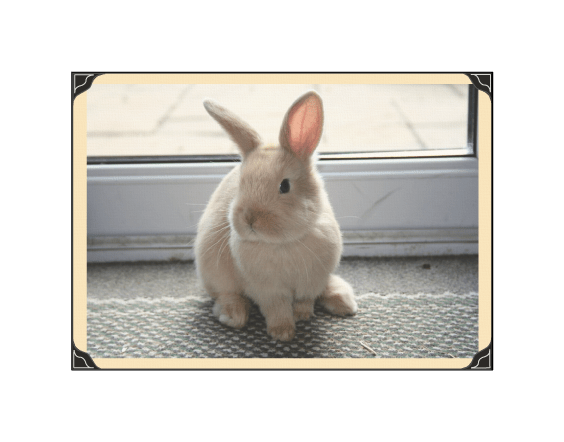
Now that we’re officially into the second year of Nightwolf’s Corner shenanigans, I think it’s time to dredge up another post from the archives. And since last week’s stats rundown showed this fluffy little guy was languishing in the Basket of the Unwanted, I thought, why not dust it off and let it hop its way back up the popularity charts. (Yikes, could I have stuffed any more rabbit puns into that sentence? Clearly, my snark-fund is running low this week.)

Anyway, I hope you enjoy this sarcasm-fueled look at a plague writers know all too well,  complete with my somewhat lame strategy for how to deal with them.
 

Plot Bunnies; Friend or Foe?

By Kisa Whipkey

(Originally Posted on 5/18/12)


Firstly, what the heck is a plot bunny? According to Urban Dictionary, it’s “an idea for a story (usually referring to Fanfiction [writing your own version of someone else’s story]) that gnaws at the brain until written.”

I stumbled upon this amusing little moniker while reading through the blog of one of my favorite authors, Maggie Stiefvater (check her out, she’s very entertaining). I’d never heard the term before, not being prone to write stories featuring other people’s characters/worlds. I mean, really, why would I want to mooch off someone else’s ideas when I’m drowning in hundreds of my own? Literally, hundreds. But anyway, I found the term endearing and adopted it. So you’ll hear me refer to plot bunnies quite a bit. Which prompted this post. Before I started throwing that term around and no one would know what I was talking about, I figured I’d better explain it.

Despite their adorable name, I actually define plot bunnies as procrastination and fear-of-failure personified. Every writer suffers from them. Usually, when you least want them around. And if you aren’t graced with their obnoxious presence, well, then, good for you. You’re one of the lucky few, and probably a bit inspirationally challenged. The rest of us carry around overflowing cages, bursting to the brim with plot bunnies that breed like, well, bunnies. Every so often, a few will make a run for it, escaping from their confinement to wreak havoc in whatever project we’re currently bordering on boredom with, and completely distracting us from anything productive until we wrangle them back into a newly-constructed, extra cage, and the process starts all over again. (Whew! That was a long one. Is there some kind of award for that?)

So, are they friend, or foe? I’ve found that it really depends on the day. Some days, (like those rare moments between projects when you can step away from your computer and realize the world actually still exists), they can be your best friend, bringing you bright, shiny paths of freshly minted inspiration and leading you ever closer to the coveted title of “prolific.” Other days, (like when you’re in the middle of an important, complex, pulling-teeth kind of scene that you’d rather jump in front of a bus than write), you really just want to take them out back and shoot them in the head.

This week, they’re heading toward being on my kill list. They’ve gotten decidedly more rampant since I finally figured out where my aimless work-in-progress (aptly and ironically titled Unmoving) was going. In the past two months alone, I’ve had 8 of the little buggers spring up . . . oh, nope, better make that 9. (Stupid radio, playing random-song-I’ve-never-heard-before and spawning yet another plot bunny.) Some are more demanding than others, requiring my complete attention and blocking out any hope of moving Unmoving forward. Others are just a tiny glimmer of an idea, a baby bunny shyly showing its whiskers for the first time. But all of them are extremely annoying.

Don’t get me wrong, I’m grateful to be drowning in overflowing inspiration. But when you suffer from a distinct lack of ability to finish anything, prolific ideas only get you so far. Maybe I have writer’s ADD, growing bored with projects well before they’re done and becoming easily distracted by the shiny new fur and whispered promises of plot bunnies. Or maybe I just have a hard time sticking with something that, for me, has been finished for months, and continuing to write it feels like sludging my way through a movie I’ve seen 8 million times. (There are many days I fervently wish my brain had a USB port and a download button. That would make life so much easier! Wouldn’t it?) Or maybe I’m just lazy, and completing a story on paper, to the level my perfectionist side demands, requires far more work than I really want to expend. Whatever my problem, plot bunnies equal bad news.

How do I deal with them? Since they’re a figment of my imagination, I can’t really take them out back and kill them. Well, I could, but that might make me a candidate for the title of Schizophrenic Bunny Murderer. Besides, I’ll need those shiny new ideas when I finally finish my current project, (or when I can’t stand it anymore and move on, adding yet another unfinished story to my Drawer of Fragments). You never know, one of those cute little fur-balls driving me insane might just land me on the NY Times Bestseller List. Eventually. Someday. If I can ever finish something again.

No, my strategy for dealing with plot bunnies isn’t violent at all. I actually humor them. I give them their moment in the spotlight and let them rule the creative half of my brain, until eventually, they run themselves into exhaustion and shut up. Sometimes, it only requires giving the new idea a title, solidifying it into existence by the sheer power of naming it. Other times, I have to write the whole plot in my head, complete with character bios, description and dialogue. And recently, one super annoying bunny decided I had to pinpoint the exact, and very real, setting before it’d leave me in peace.

Eventually though, they do all quiet down. I can then add them to my ever-growing to-do list of ideas (seriously, at last count I had 164 potential stories, including the 9 that just popped up) and return to the task at hand — the grueling process of moving Unmoving closer to completion.

So my advice to writers debating whether or not to turn their plot bunnies into new fur coats is this; try giving them the reins for just a short period of time. Do whatever it is that will satisfy that insatiable urge to follow them down the rabbit hole. Whether it be my method, or (as I’ve seen suggested by other authors) writing a short story/synopsis of the premise, or something else of your own creation, I promise, they do eventually shut up and let you work.

And let’s face it, until you learn what your particular method for dealing with them is, you’re probably going to find yourself as unmoving as my current project.

"Bunny--Better Quality" by Vic-the-Raccon

“Bunny–Better Quality” by Vic-The-Raccoon

Copyright 2012

Conquering the Publishing Divide: An Interview With Author Jessa Russo

Anyone who knows me knows that I absolutely adore Beauty and the Beast.  So when I stumbled on the announcement for Jessa Russo’s young adult novel, Divide, I knew I couldn’t pass it up. I haven’t finished reading it yet, so rather than bring you my thoughts on it, I’ve invited Jessa to stop by and regale us about her publication journey. This wasn’t her first time at the rodeo, as they say, but what she’s learned should be very insightful for those of us still waiting at the gates.

First, let me introduce you:

Photo of Jessa Russo


Jessa Russo believes in fairytales, ghosts, and Jake Ryan. She insists mimosas were created for Sundays, and that’s not up for discussion. She’s obsessed with the great city of New Orleans — where she’s collected too many beads to count, eventually married her sweetheart, and visited graveyards they don’t include on maps.

She’s loud, painfully honest, and passionate about living life to the fullest, because she’s seen how abruptly it can be taken away.

What began as a desire for reading and writing young adult paranormal has bled into stories of all kinds. From fantasy to pre-dystopian to erotic contemporary, Jessa’s stories always include romance, though she’s given up on pigeonholing her work into a category or genre box.

Jessa was born and raised in Southern California, and remains there to this day with her husband (a classic car fanatic), their daughter (a Tim Burton superfan), and a Great Dane who thinks he’s the same size as his Chihuahua sister.

Entwined, the final installment of Russo’s Ever Trilogy, will be released late 2014, as well as an erotic romance written under a pseudonym. Stay tuned!

~~~

Cover Design for Divide by Jessa Russo

From senior class president to dejected social outcast, with just the flick of a match.

After accusations of torching her ex-boyfriend’s home are followed by the mysterious poisoning of her ex-best friend, seventeen-year-old Holland Briggs assumes her life is over. And it is. But not in the way she thinks.

As Holland learns the truth about her cursed fate—that she is descended from the Beast most have only ever heard of in fairytales—she unites with an unlikely ally, good-looking newcomer Mick Stevenson. 

Mick knows more about Holland’s twisted history than she does, and enlightening as it is to learn about, his suggestion for a cure is unsettling at best. Holland must fall in love with Mick in order to break the spell, and save their future generations from repeating her cursed fate. Having sworn off love after the betrayals of her ex-boyfriend and ex-best friend, this may be difficult to accomplish. 

Complicating things further for Holland and Mick, time runs out, and Holland’s change begins way before schedule. With Holland quickly morphing into a dangerous mythical creature, Mick struggles to save her.

Should they fail, Holland will be lost to the beast inside her forever.

How could you not want to read that? Seriously. Which is why, in honor of Divide’s release last week, I’m going to give you a chance to get your hands on this amazing story. But not until after the interview. Which starts in three . . . two . . . one . . . 😉

~~~

Hi, Jessa! Thanks for being with us today. To kick things off, please tell us a little about Divide. Where did the inspiration come from? What makes it unique from all the other Beauty and the Beast retellings out there?

I’m not sure where the inspiration for any of my projects comes from, honestly. Ideas often pop into my head while I’m driving — which is what happened with DIVIDE — and then I stew on it for a bit until the idea turns into a story or fades away. In this case, I know I’d been hearing a lot about retellings, and I loved the idea, but I wondered how I could make mine different. Then it occurred to me that my beauty was the beast. She was both, both were her. So when NanoWrimo came along in 2012, I sat down to work on The Ever Trilogy, and DIVIDE came out instead.

What’s your favorite (non-spoiler) part of the story?

Honestly, I love the villain in DIVIDE. He’s arrogant and a bit dark, and . . . sexy. I think his introduction to the story is my favorite part of the book. (As well as a private moment down the road with him and my main character, where she happens across him in the middle of the night. But I don’t want to spoil anything.)

What kind of experience should readers expect from your work?

Truth be told, I want readers to escape into my books. It’s as simple as that. Escape. Sometimes I wish I was one of these authors with a great lesson to teach, or a beautiful, moving story of overcoming abuse or self-destruction — which I do have a story of, but won’t be sharing anytime soon as it takes a lot to get that story out on paper — but I honestly think that my creative energy is more focused on the escapism side of fiction. When I read, it’s for that reason alone, so I guess it’s probably normal that my writing is the same way. Day to day life can become repetitive at times — not that I don’t love my life and my family — but I often wake up to a sink full of dishes, or laundry that is never-ending, a tween whose attitude is starting to really, painfully, mirror my own . . . stuff like that. So when I read, I want to escape into the beautiful, butterfly-inducing joy of young love or magical fantasies about Princes and vampires and Vampire Princes. I want that escapism for my readers. I won’t beat you over the head with my beliefs or try to change your mind about yours — you can just pick up my book and find your alternate happily ever after.

Divide will be your third novel. How has its journey differed from that of Ever and Evade? Did it face challenges that the others didn’t, and vice versa?

Um . . . that’s hard to pinpoint. I queried both EVER and DIVIDE, but I was a bit wiser with DIVIDE, a bit more seasoned. With EVER, I thought I was supposed to cast a wide net, querying everyone who’d ever been an agent, seen an agent or known an agent. (A common rookie mistake, I’ve since learned.) I received an insane amount of rejection for EVER — something that probably also had to do with not just the wide net I cast, but the fact that I didn’t hear about critique partners until well into my querying, and by then, I think it was a bit too late for that book, as far as literary agents go. They’d all seen it (all 80 of them), rejected it, and didn’t much care to see the revisions. Anyway, with DIVIDE, I entered a couple contests, then queried a handful or two of agents — one of which was a friend who’d already hinted at wanting to sign me. So DIVIDE had a bit of an easier go at things, but then, second children often do, don’t they? The first child is the one with the gallons of hand sanitizer and safety EVERYTHING, then that second kiddo comes along and can be a dirty little daredevil without the parent so much as blinking an eye. That’s EVER and DIVIDE. 😉

A lot of people assume that once you have an agent, publication is a sure thing. But it isn’t. Can you tell us a little about what it’s like to work with an agency, as opposed to going it alone? Are there any times you would recommend against looking for an agent?

I assumed that too. It’s funny how I continue to grow and learn in this industry — right when I think I’ve figured it all out, something happens to humble me all over again. With EVER, I thought “Okay, well, I wrote ‘The End’, so now I get to publish.” Then I looked up Scholastic — because obviously that’s who I would let have EVER — and realized it wasn’t that easy. Doh! With DIVIDE, I just knew my agent would find a Big 5 publishing house for me right away. Unfortunately, as many of us have found, that just isn’t the case. Rejections began to trickle in. Part of me couldn’t believe it. The other part of me told me my story sucked. (Gotta love that inner writer — she’s not very nice.) What I came to discover was that I’d missed the boat on fairytale retellings. Editors said things like “We already signed all the fairytale retellings we want.” Or, “This is too similar to something we just signed.” It was heartbreaking. I would have to shelve my story. And then I realized that way of thinking was wrong. Maybe I wasn’t the first to remix an old classic, but DIVIDE wasn’t bad because of that fact. And then I realized that DIVIDE didn’t deserve to be shelved.

The fairytale redux genre is incredibly popular right now. What kind of challenges do you think authors face as the market becomes more and more flooded?

Haha, um, see above. 😉 I’d say that if you’re working on a fairytale redux right now (and really, this can go for many other genres as well — paranormal, to name a big one), make it amazing. Make it unique. Make it unlike anything anyone has EVER seen before. But even then, go into it knowing that you may have missed the boat, and if you did, that doesn’t mean your story isn’t worth reading. That doesn’t mean you shouldn’t share it with the world. If I’ve learned one thing about publishing, it’s that just because a large house may not want your story (and there are a number of factors that go into that decision) it doesn’t mean a fanbase of readers won’t gobble up your words as if they are the very oxygen needed to breathe. Because at the heart of every reader is, after all, a desire to read. A hunger for your words. So write the words, create the stories, and share them. Someone will thank you for it, I promise.

What advice would you give to those authors facing the gauntlet of publishing?

Again, see above. Lol! Basically, go into it with an open mind, ready to learn. Then realize that you know nothing, and even after you think you’ve learned it all, you still know nothing. 😉 Why? Because publishing is constantly evolving, constantly growing, changing, spinning, morphing . . . so be open to learning as you go. Always. Oh, and be patient. Rushing something that means the world to you is never a good idea. Don’t race into publishing. You’ll regret it for one reason or another. That I can guarantee.

~~~

Some fantastic words of wisdom in there, no? Thank you, Jessa!

Which leaves only one thing — the giveaway. Because what better way to thank Jessa for her time than to help her celebrate the release of her book? In one week, three lucky people will be walking away with an eBook of Divide. Want it to be you? Click here to enter: Divide eBook Giveaway!

And if you’re feeling extra lucky, the giveaway for my blogiversary is still happening too. The drawings for both will happen on the same day, so be sure to head over there and enter for a chance at some of the other amazing titles up for grabs. 🙂