2015 Holiday Giveaway — Bookapalooza

Books!

As most of you know, I do giveaways twice a year — one in the spring (in celebration of my blog’s birthday) and one in celebration of the holidays. Which means it’s time to introduce the Holiday Giveaway for 2015! Yay!

In previous years, this has been the giveaway where things like editorial services and other goodies have been handed out, but unfortunately, I have such a backlog of projects from previous giveaways that I can’t feasibly add any more without also adding a massive dose of guilt to my already Atlas-sized ball. So this year, I’m going to do a bookapalooza giveaway instead. Below, you’ll find four different eBook bundles, categorized by genre. These are some of my favorite reads, and I’m really excited to share them with you. I would have loved to give them all away as physical copies, but shipping costs have become prohibitively expensive, and I wanted this to be open to everyone, not just to those in the US. Therefore, all books will be delivered in the digital format of the winner’s choosing.

On January 8th, 2016, I will select four winners — one for each bundle. These are some truly fantastic books, no matter which genre you select. Many have been reviewed here, so feel free to locate them in the archives if you want to see my opinions in detail. Otherwise, I’ll leave you to peruse the titles up for grabs before sending you off to enter via the link at the end. Happy shopping!

(Note: each set of books contains a mix of YA & NA, so I would say these are appropriate for age 16+. Some contain swearing, some contain sexual situations, and several contain both, so be advised. 😉 )

The Four Options

Romance:

Meta-Fantasy:

Dark Fantasy:

Science Fiction:

Got your favorites picked out? Good. Now go enter!

ENTER HERE

Featured From the Archives: What To Do WHILE Querying

I had an entirely different post planned for today — about the good, bad, and ugly of prologues –but then I got hit with what I’m not-so-affectionately calling the Rip Van Winkle flu and was forced to sleep away any writing time I may have had. So the dissection of everyone’s most hated literary device will have to wait for another week, I’m afraid.

Instead, I’m going to give you an encore of an article I wrote earlier this year, which is especially pertinent now, when hundreds of writers with freshly finished NaNoWriMo drafts are preparing to brave the query trenches and Twitter is heading into what’s otherwise known as Pitch Party Season. Be sure you check out the counterpoint article referenced as well, for the full spectrum of both good and bad behaviors found in querying.

Good luck to all those participating in #pitmad today! And until next week, happy writing!

What To Do WHILE Querying

by Kisa Whipkey

Originally Posted on 7/3/15

A few months ago (okay, six months ago), I posted a surprisingly popular piece about what not to do when querying, detailing all the things authors should avoid, as well as some of the things they shouldn’t (I posted a reprise of it last week too, in case you were wondering). But that only covered the initial part of the process, the actual act of querying. Today, I want to talk about things you, as an author, can do while you wait oh-so-patiently (yes, that was sarcasm, people) for those elusive responses. And in keeping with the tone of the previous post, there will probably be at least a tiny bit of snark, so be ready.

What To Do WHILE Querying

(aka How to Avoid the Finger-Drumming Lure of Bad Decisions)

Let’s face it, waiting sucks. It has always sucked. And it will continue to suck, because it’s waiting. And waiting — say it with me now — SUCKS. Humans aren’t wired to be patient, and the age of the internet, with its instant gratification and its lightning fast access to information and entertainment, has done absolutely zip when it comes to instilling the virtue of said trait.

Well, publishing isn’t the internet. At all. Publishing is a relic, a dinosaur founded on the very essence of patience. Yes, there have been advances that minimize the time it takes for an author to see their name in print, and yes, there will continue to be avenues and improvements that further move us toward that as yet unattainable moment when a decision is instantaneous. But today is not that day. Today, a querying author faces weeks, months, and possibly even years before they’ll finally hold their book-baby in their hands. Today, you wait.

I’m sure you can see how this scenario often leads to behaviors and decisions that can be problematic, many of which I listed in the previous post. No one likes waiting. No one likes that nail-chewing anxiety of having their fate in someone else’s hands. But how do you get around it?

The easiest way to avoid becoming the poster child for what not to do is to find some other way to distract yourself. Agonizing over the wait, refreshing your inbox every twenty seconds, is only going to drive you crazy. So here are some things to try instead.

1. Learn the Ins & Outs of the Industry

This is especially important for the newbies out there, which is why it’s going to be the biggest section. Debut authors are like fledgling birds, testing their wings for the first time. And that’s a special, unique place to be. But it’s also dangerous. Just like baby birds have no idea what waits for them as soon as they leave that cozy nest, debut authors often have little to no understanding of the industry beyond the steps required to query. It’s okay if this sounds like you. We were all there once. I promise.

One of the deadliest poisons to the author/publisher relationship is unrealistic expectations. Let me paint the picture for you: as a kid, you decided you wanted to become a writer. You loved reading and the act of putting words on paper, and stories just seemed to flow magically from your fingertips. You envisioned topping the New York Times Bestseller list, landing that triple-figure book deal with a Big 5 publisher, instantaneous fame, book-signing tours, movie deals, and quitting your crappy day job with money to spare. Right? Don’t lie, we’ve all done it.

Enter reality.

The sad fact is that only the top 1% of the top 1% ever reach any of those things. The rest of us slum it out in the query trenches, find a nice home at a small to moderate-sized press or even forge our own paths and do the self-publishing thing. You will see more rejections than accolades. Sales will be slow because no one knows who you are yet. Marketing budgets, if offered at all, will be tiny and heavily reliant on the author’s own willingness to do the majority of the work. There are no book tours, probably no movie deals, and you’ll be stuck at that crappy day job for probably several more novels. If you’re lucky.

But as discouraging as all that is, you can combat it. Do your research. Learn the way the publishing industry actually  works. Set aside those shiny expectations that will label you a diva author and figure out how to attain success within the system that already exists. Read blogs by industry professionals, attend writing conferences, research publishers and agents and contracts and marketing and every other tidbit you can get your hands on. A firm understanding of the way the industry operates will prepare you for what’s to come when you land that offer of a contract and will help you avoid becoming prey to the cats waiting below your nest.

2. Befriend Agents & Editors

Social media is fantastic for this sort of thing. Find and follow agents and editors, and even publishers, to see first-hand what they’re looking for. Get to know the people behind the “gate,” as it were. Because we are just people. People who love books just as much as you do.

When you’re on the outside, publishing seems like a big, scary world. But it’s actually not. Industry pros talk to each other as well as to authors, so if you can befriend a couple, guess what? Your chances of success just went up. You’re no longer just a name on the 800th query in the pile; you’re a person. They know you. They may even like you. And when that happens, you can guess what comes next: they dig your query out of that massive pile of submissions.

So don’t fall for the us vs. them mentality. Agents and editors are your friends. Just be careful you don’t abuse the privilege. You can read last week’s post for the cautionary note on that. 😉

3. Read Widely, Both Inside and Outside Your Target Genre

By now, you should be sensing a theme. Research, research, research. All of these are great ways to bide your time during the painstaking months of waiting. If you’re a writer, you really should be doing this anyway. But we all know how few those reading hours become when you’re wrapped in the thrall of writing. Which is why it’s perfect to spend some time catching up on the latest releases while your query works its way through the pipeline.

Why is this necessary? Well, for starters, it will give you a chance to see what the current trends in your genre are, or rather, were. Remember, the books releasing now are a few years old, because unlike the internet, publishing operates at a pace not unlike a sloth on Valium, which is to say, it’s slow. So by the time they’re on the shelf, those trends are pretty much dead. Which means that if your book fits in that trend, you can already guess it’s going to be a hard sell.

But the other reason is that you grow as a writer by reading the work of your peers. You’ll learn new styles, new approaches to storytelling, and possibly even new ways to combine genres. It will also come in extremely handy when an agent or editor asks you for comp titles (comparative books that appeal to the readership you’re targeting) for your work.

4. Start Something New

This is the last piece of advice I have, not because it’s less important, but because it should be the most obvious. Writers write. It what you do. Yes, you poured your heart and soul into that manuscript you just sent out into the world, but there’s nothing more you can do for it. It’s time to turn your attention to the next one. Because it may be years before your first-born novel sees the light at the end of the publishing tunnel, if it does at all. Many writers don’t succeed with their first, or second, or even third novel. Sometimes it’s the sixth or seventh that lands them their first book deal. And that’s perfectly normal. Those first attempts aren’t wasted effort. You learned and developed and grew, and now, now you have a back-list.

Back-lists and archives of “new” content are an author’s secret weapon. Because guess what? Readers are impatient too. Just like you don’t like waiting for agents and editors to respond, readers don’t like waiting for a new installment from their new favorite author. Which is why the best thing you can do while querying is to continue working. Continue honing your craft, be it on novels, short stories, or novellas. Continue generating new content, be it blog posts, contest entries, or platform-building endeavors. Just continue working. Because at the very least, it’ll keep you from drumming your fingers on the desk and falling prey to all the bad choices I mentioned last week. And you never know, one of those other projects could be the very thing that gets you noticed.

All right, those are my top suggestions for ways to make the waiting less agonizing, but they’re certainly not the only ways. I’d like to hear some of yours. So, authors and other editors, what do you do or recommend to keep the query-trench madness at bay? Sound off in the comments below! 🙂
From the Editor’s Desk: Sachael Desires by Melody Winter

Happy Black Friday to my followers in the US. I know most of you are out there trying not to be trampled in that sacred tradition of scoring the best deal and likely won’t see this until next week. That’s okay. I understand. I’m not online either. 😉

But for everyone else, I bring new content. Yay! Yes, it’s a book review, brought to you by this here lovely book tour:

Sachael Desires Blog Tour Banner

But it’s still new content. That counts for something, right?

Anyway, on to the book! It’s a great one, and it’s brand new. So be sure to go grab a copy if you think it sounds like your cup of tea.

Sachael Desires

by Melody Winter

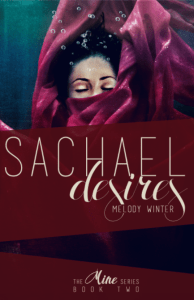
Sachael Desires by Melody Winter

During her ordeal with the Sect, Estelle Bailey dreamt of escaping back into the arms of the sea—and Azariah. But freedom came at a price, and though she’s back with the Sachael who’s stolen her heart, she’s also land-bound until the next full moon. And with the threat of Orontes looming ever larger behind them, Azariah, Estelle, and Michael—her once-captor turned rescuer and friend—are on the run.

Following Michael’s lead, they seek sanctuary amidst the natural beauty of the Orkney and Shetland Islands until Estelle can complete her next submergence ritual and Azariah can whisk her away to the safety of Saicean.
​ ​
Secrets, betrayals, and old enemies await them, though, and as events spiral out of control, Azariah makes a decision that puts all their lives at risk, forcing Estelle to face a journey she never wanted to take. With time running out and tempers running high, her only hope to save the man she loves lies in a reconciliation between two kingdoms who despise each other.

Book Two in the Mine Series, Sachael Desires further expands on the intricate underwater world of the Sachaels, and the hostility and isolation of not belonging.

Picking up where Sachael Dreams left off, Sachael Desires is exactly what you hope for in a sequel, suffering none of the sophomore-book blues that plague so many other series. Everything we loved about the original is back — the setting, the characters, the romance — but paired with all the excitement of something new.

One of my favorite aspects, apart from seeing the cast again, was the attention Winter paid to the world-building. We finally get to see the mythical Saicean, but even more importantly, we get to see the underwater world of the Sachaels and Oceanids in all its brutality. Richly described and realistic, Winter paints a portrait that is both fantastically imaginative and thought-provoking, providing subtle commentary on things like human nature, identity, sexism, ableism, and racial profiling within the fabric of Estelle’s journey.

Filled with twists and turns (and several pretty notable revelations about some of the characters that I won’t spoil), Sachael Desires is much more action driven than its predecessor.

The first book featured a plot that felt like romantic suspense with fantasy elements, but this one feels like an action-adventure blockbuster, with sweeping settings, beautifully crafted and well-imagined worlds, and an epic battle just waiting to be interpreted on the silver screen. And Winter manages to do all of this while still developing her characters and their relationships, peeling back the layers of their lives piece by piece to give us carefully timed glimpses of the whole.

While entirely satisfying as a follow-up, it is clear that there is much more still to be discovered in this world and series. And I, for one, cannot wait to see what happens next.

Book Links: Amazon | Goodreads

Featured From the Archives: The Difference Between Editing & Ghostwriting

Apologies for the abrupt and unexpected hiatus of the past couple weeks. Between illness and back-to-back deadlines, I sort of lost all concept of time for a bit there. But, as you can see, I’m back. Which means I also have new things to say. (Well, in theory, anyway.)

Coming off the heels of the guest post I wrote about the differences between editors, critique partners, and beta readers seems like the perfect time to pull this out of the archives, blow off the dust, give it a few tweaks, and expand on your vocabulary of book-doctor specialties. So, without further ado, I give you the encore presentation of . . .

The Difference Between Editing & Ghostwriting

by Kisa Whipkey

Originally Posted on 3/22/13

I’m sure the more astute of you already know that I moonlight as a freelance editor (there’s a handy little tab at the top of the page that will tell you all about it if you somehow managed to miss it), as well as working on the editorial staff at REUTS Publications. But I’ve also been known to work as a ghostwriter (very infrequently; it’s not really my cup of tea). This week had me doing both. And it got me thinking about the differences between the two; how they can often be confused by those outside the literary world. So, in the interest of clarity, I’m going to take a moment to break each of them down, starting with editing.

There are three types of editing a freelance editor (or an editorial staff) will perform:

  • Developmental Editing: This deals with the underlying structure of a piece, focusing on things like flow, POV, character consistency, and plot. Sometimes called Substantive or Structural Editing, it’s usually the first part of the process, as there’s no point in fine-tuning a scene that will just get cut later on. Developmental Editors have a firm understanding of storytelling basics and can rearrange a work like pieces in a puzzle, requiring dramatic changes that will ultimately make the story stronger. It’s the part that most feels like honing a diamond from a rough piece of rock and is my favorite style of editing. (2015 addition: The key thing that makes this different from ghostwriting is that it requires at least a base of story to work with — a first draft, an outline, something the author has already put on the page.)
  • Line Editing: The second stage of the process, line editing dissects individual sentences, working on tightening the prose and overall smoothing, as well as things like spelling and grammar. Similar to the layered approach of painting and sculpture, line editing builds on the foundation developmental editing provides, focusing on the details rather than the work at large. This can be extremely painful for people that dislike dealing with minutiae, but it’s an important step in creating the final outcome.
  • Proofreading: Generally the last stage of the process, proofreading gives a manuscript a final pass, looking for any typos, misspelled words, or wonky punctuation that might have slipped through the cracks. There should be relatively few revisions made in this stage, and often, the proofreader will simply make the necessary changes without requiring the author to step in. Proofreaders are the last defense before a manuscript heads to the printer, so it’s a good idea to have them be a fresh set of eyes from the prior stages.

You’ll notice that none of those definitions included rewriting. That’s because it’s not the editor’s job to actually fix the problems. This is where the confusion kicks in. It’s a common misconception that editors help with the actual writing. But editing isn’t that kind of hands-on, instant fix. In fact, most editors won’t even look at a piece that hasn’t already been completed and polished to a high standard. (2015 addition: Except for developmental editors, that is, whose job is often comprised of brainstorming advice and other coaching.)

An editor is like a personal trainer for words. And just like a personal trainer can’t lose weight for their client, an editor can’t rewrite a manuscript for their author. The author does all the heavy-lifting in the relationship, working out the kinks and fixing the rough spots under the editor’s guidance and moral support (even though it can feel like the complete opposite when you get your manuscript back covered in red “delete” suggestions). When they do their job well, the end result is like the movie-star version of the original work, but it’s the author that actually gets it there.

So who, then, helps the people that can’t quite articulate their brilliant idea into words on a page?

Ghostwriters.

Ghostwriting and editing are two completely different things. Editors are passive observers, guiding the author from the sidelines, while ghostwriters are active, aggressively transforming the author’s loose, un-articulated thoughts into a commercial literary product. Unlike editors, a ghostwriter’s job is to actually write the manuscript. To take the vision, voice, and generalized, messy thoughts of the author and actually write in their stead. In short, ghostwriting is hard. Which is why I only do it on very rare occasions, and why you won’t see it listed in the services I offer.

That’s not to say that there aren’t some small similarities between the two, though. For instance, both require the ability to see past a rough exterior to the heart of the story, to be able to understand the final vision for the piece and the best way to present that to the world. They both require a firm grasp of language and storytelling (although ghostwriting mostly happens in the non-fiction world), as well as a keen understanding of voice, so that the final product sounds like the original author, not the ghostwriter/editor.

They both have their place, but editing is more akin to reading with annotations, while ghostwriting involves the more rigorous creative process of actually putting words on paper, complete with stipulations and expectations attached. They both require someone well-versed in the craft of writing, but rarely will you find someone who likes to do both. Just like writers have preferences when it comes to style and genre, those on the book-doctoring side of the fence have preferences on the types of surgery they like to perform. So before you ask for help, make sure you’re asking the right person. If your manuscript is finished and you just need polishing, you’re looking for an editor. If you have a brilliant idea but something just isn’t quite clicking, you’re looking for an editor. But if you need help actually constructing your manuscript, as in literally writing the words, you might actually be better off looking for a ghostwriter to collaborate with. Knowing the difference will save you a lot of headaches.

Beta Readers, Critique Partners, Editors; They’re all the Same, Right?

Today’s post is a little different from the usual. I was asked to write a guest post over at Live, Love, Read, and I chose to write about something I feel could have value to all of you here as well — the difference between critique partners, beta readers, and editors. Rather than copy the article in full though, I’m going to use the handy re-blog feature and turn you over to the lovely ladies that host the Musings of the Eternal Dreamers series, for which the post was written. There a lot of other articles from that series which might also be of interest, so be sure to check them out as well. Enjoy! 🙂

Live, Love, Read's avatarLive, Love, Read

eternaldreamers

Beta Readers, Critique Partners, Editors: They’re all the Same, Right?
by Kisa Whipkey
Acquisitions and Editorial Director, REUTS Publications

Beta Readers. Critique Partners. Editors. These are all terms that swirl around the writing community, and authors are encouraged to collect them all, like Pokemon. But that advice, while true, rarely includes the order in which you should use them. And there is an order, trust me. We’ll get to that in a minute, though. First, let’s look at what each of these important roles entails and how they impact your journey as an author, because, contrary to what some believe, they are most definitely not the same.

I’ve written about the different types of critiques several times on my own blog, so feel free to check out that article as well. For now, here’s a small preview detailing the three review types pertinent to today’s discussion.

The Critique Partner

Every…

View original post 1,115 more words