Storytellers & Grammarians: The Different Types of Editors

A few months ago, Hubs and I were at one of our favorite restaurants, enjoying a nice basket of Cajunized tots and a couple cold beers. And, being the creepers that we are, we eavesdropped, I mean overheard, a conversation from the next table that started me thinking. While waiting for their food, the boy at the table would challenge his sister on rules of writing, definitions of obscure words, and other English-related stuff. After the first couple rounds, Hubs started looking to me for verification, mouthing, “Is he right?” Because, as an editor, this should be my realm of expertise, yes?

Eventually, though, I honestly wasn’t sure without having to use some sort of reference guide. See, the boy had transitioned from the basic rules of grammar we all abide by into things like the roots of words and obscure facts about the structure of language and grammar that I rarely need to know while editing. But he clearly loved it as much as I love talking about the techniques of storytelling. And right there, the proverbial light bulb went off, clarifying something I’d been witnessing for a while, but that I hadn’t put into words — there are two fundamental types of editors.

I know what you’re thinking: there are way more than two types of editing. And you’re right, there are. For argument’s sake, here’s the list of the most common editing activities:

  • Developmental (Overall storytelling)
  • Line Editing (Word Choice, Smoothness, Clarity, etc.)
  • Copy Editing (Grammar, Spelling & Punctuation)
  • Technical Editing (One specific aspect of a manuscript)
  • Proofreading (Formatting issues, Typos, etc.)

Note that I called those editing activities. Because, while there are five different areas an editor can be skilled in, there are still only two types of editors — the storytellers, and the grammarians. What I’ve witnessed over the past few years is that, regardless of the type of editing activity, the person doing it will invariably fall into one of these two categories. Why? Because I’m talking about the core way they view a manuscript, their fundamental perspective.

You’ve heard me talk before about how editors are not all the same, how it’s important to know whether you’re working with a copy editor or a developmental one. And this is why. The core philosophy of your editor will dictate the quality and type of editing you receive.

Grammarians are fantastic line editors because they’re brilliant with the actual words. They love the English language will the zeal of an English professor and will be the first to call you out when you deviate from the grammar laws. In short, they’re the grammar Nazis I mentioned in my post on the different types of critiques. But in the grand scheme of things, they’re superficial editors. Meaning they never dive past the actual words on the page, the specific combinations of letters and symbols on a white background. This is the main reason you’ll see some editors charge tiny little fees and have a turn-around rate of two weeks. Because all they’re doing is polishing the surface of your work, putting a band-aid on wounds they may or may not even see.

I’m sure I’ve just offended a large portion of the editors out there, and for that, I’m sorry. But it’s true. A grammarian editor will never look at the deeper problems of a story. For that, you need a storyteller. Storyteller editors are a rare breed, capable of doing the same level of line edit quality as a grammarian, but also capable of seeing past the words to the story underneath. They’re the equivalent of literary surgeons. They’ll spot the weird bone spurs, the fractured character arcs, the fatal plot holes that bleed the life from your story, the illness that keeps the emotional context from resonating with readers. And this is true whether you hire them to only do line edits, or whether you want the developmental side. Because they can’t help but see those things.

Storytellers understand elusive concepts like voice and style, and they’ll help you bend the rules of grammar to fit your story. Grammarian editors won’t. To them, that’s a cardinal sin, and they don’t understand why you would want to do that. Storyteller editors will ensure all the pieces of your manuscript work to form a cohesive narrative. Grammarians won’t. They’ll make sure all your words look pretty. Storyteller editors will challenge you, pushing you become a better writer. Grammarians will fix your typos and call it good. I’m sure you’re starting to see the pattern here.

So, how can you tell the difference? When you’re looking for a freelance editor, or you meet your publishing-house-assigned person for the first time, how can you know which type of editor you’re getting? That’s the tricky part. Ideally, you’ll want to look at any previous work they’ve done. Buy (or borrow) one of the books listed on their resume and see how you feel about it. Is it solid grammatically, but riddled with storytelling problems? (Readers are surprisingly attuned to these kinds of issues, so you’ll be able to feel it, even if you don’t know exactly why it didn’t work.) Chances are, they’re a grammarian.

Another option would be to track down other authors the editor has worked with and ask them for their impressions. Did the editor help them with a particularly tricky part of their story, or were they fast? (Speed is an indication of quality, remember? It’s much faster to skim the surface of something than it is to really internalize and think about someone’s work.)

The final clue will be in the feedback itself. If you’ve found a storyteller, they’ll always start with in-depth feedback that delves into the core of your story. Their first email to you will likely contain information on theme, character development, pacing, and any potential problems with those areas. Or, alternatively, if you’ve hired someone solely for line edits, watch for feedback that steps out of that territory. Trust me, storytellers can’t help but point out flaws in logic or areas that are murky/underdeveloped. Whereas grammarians will stick exactly to that — the grammar.

It is my opinion, in case you couldn’t guess, that storytellers are the stronger editors, and whenever possible, you should seek one of them. But grammarians have their place as well. They’re excellent proofreaders, and if you’re confident in the integrity of your story (as in it passes your critique partners and beta readers with flying colors) and simply need someone to double-check/polish your grammar, they’re perfectly acceptable.  The important thing to take away from this is that there is a difference. So know exactly what you’re looking for, and who the best editor is for that. Don’t ask a grammarian to do developmental edits, and don’t expect a storyteller to ignore structural flaws while line editing. Understanding the way your editor is likely to view your manuscript will give you a better idea of what to expect in terms of feedback. Which, in turn, leads to a better working relationship, and everyone likes when projects go smoothly, right?

Featured From the Archives: The Pros & Cons of Posting Work Online

Today, I released the first chapter of Unmoving into the truly unmonitored (otherwise known as free) pool of internet fiction. The dedicated among you will remember me talking about doing this very thing over a year ago. And while I did launch half of my master plan (the VIP Subscription option), I never did take the plunge into widespread distribution. That’s right, I chickened out. Because putting your work out into the ether, for free, is scary.

But today, I changed that. Unmoving is now available for your perusal on StarterSerials.com and will be joining the ranks of Wattpad and Figment soon. In honor of finally taking that leap, I thought it would be fitting to pull this particular article out of the archives, dust it off, and send it back into the world to help any of you wrestling with this very decision.

But before I let you go, I’d also like to announce a slight change in the posting schedule here on Nightwolf’s Corner. Due to the unexpected popularity of my book review option and the almost split personality my blog’s starting to take on, I’m adding a new addition to the roster: Book Review Wednesday. Yep, I’m splitting the book reviews off and giving them their own dedicated space, which leaves Friday’s post free and clear to resume the articles I’m sure some of you are missing — the snarky, informative ones about all things publishing, writing, martial arts, or whatever. Book Review Wednesday won’t happen every week, but the regular Friday posts will. I simply don’t read fast enough to post reviews on a weekly basis, but I think we can all safely assume I’ll be able to maintain the content you’ve come to expect every Friday.

And speaking of, let’s get back to the original point of this post . . .
 

The Pros & Cons of Posting Work Online

by Kisa Whipkey

(Originally Posted on 3/8/13)

 
It’s been 6 months since I posted about my bold marketing plan involving Wattpad & Authonomy. (Yikes! Where did the time go? Feels like I blinked and it was already March!) Those of you who follow me regularly will have noticed the distinct lack of announcements pertaining to said marketing plan. Why? Because I’m afraid. Afraid of making the wrong move; afraid of ruining my chances at becoming a successful author; afraid of facing down the ultimate demon of failure. I’ve second-guessed myself into a frozen stupor instead of trusting my instincts and jumping in head-first.

This isn’t the first time I’ve shot myself in the foot, letting fear keep me from pursuing my dreams. But it will hopefully be the last. In an effort to convince myself that the naysayer in my brain needs to be duct-taped to a chair in the corner and silenced, I spent the past week revisiting the reasons I created my crazy marketing scheme in the first place. And since my OCD side loves to make lists whenever I find myself spinning in circles like a confused dog, here are my top 3 pros and cons for posting work online.

PROS:

The internet is full of horror stories about how posting online can backfire like a pipe bomb, obliterating your chances at a successful writing career. And for someone like me, with a crippling fear of failure shackled to my every move, it can be incredibly hard to see past these anecdotes. But the truth of the matter is that posting your work online can also be the best move an indie author ever makes. In fact, there are even a few hope-inspiring articles popping up about the success you can find this way, such as this one by Lindsay Buroker on the merits of Wattpad. So before we wander down the more easily traveled road of negativity, let’s explore some of the good things about posting online.

  • Exposure:

The most obvious perk is the unlimited access to potential readers. The hardest job for any author is getting their book in front of people; something that’s becoming increasingly more difficult as the market gets flooded. So why wouldn’t you want to exploit every possible avenue of exposure? Manuscript Display Sites like Wattpad, Authonomy & Figment open windows into audiences you may not have found otherwise. Similar to the library, you offer your work for free (in serialized form) and gain instant access to thousands of readers. Some of whom are bound to become fans. Right?

  • Feedback:

The second big reason writers post their work online is for the feedback. Since you don’t need a completed manuscript to start generating interest, you can use the internet as a giant pool of beta readers. The critiques obviously range in value, but the chance to gauge reader response while your work’s still in process is pretty awesome. The trick is not to let the feedback you receive compromise your work. You can’t please everyone, after all.

  • Motivation:

Personally, I work best under a deadline. But it has to be imposed by someone else. I’m notoriously good at breaking deadlines I’ve set for myself, brushing them aside with flimsy excuses and promises to get them done later, because there are no repercussions. Aside from being a slacker and not getting my work done, that is. But as soon as you post something online, you answer to someone else. I don’t know about you, but the thought of disappointing my fans (all four of them) is a better source of motivation than caffeine. And Lord knows I could use some help in the motivational department these days.

CONS:

The world of online literature isn’t all rainbows and butterflies though. There are just as many reasons not to post your work as there are reasons to do it. In fact, I daresay there are more reasons why you shouldn’t. Here’s just a few of the major points:

  • Loss of First Publication Rights:

The biggest deterrent to posting online is the fact that you basically throw away your First Publication Rights. This doesn’t matter much to authors planning on self-publishing, but it’s death to any project trying to go the traditional route. Unfortunately, publishing online does count as being previously published. Which means that once you’ve posted online, you’ve basically committed to being an indie author. If you think your work has even a shred of marketability via traditional means, you’d be best to avoid this route like the plague.

  • Giving Work Away for Free:

It goes against most writer’s instincts to take a project they’ve invested in for so long and just give it away. It feels like you’re devaluing your time, declaring that your work isn’t good enough to deserve compensation. But is that really true?

In a market that sees thousands of books published every day, (with a majority of those being questionable in quality), it can be nearly impossible to get readers to take a chance on someone new. In this economy, consumers are appropriately stingy with their money, trusting in names and products they’ve been previously exposed to. By giving your work away for free, you offer them a chance to try something new without financial risk. If they like your work, you’re then on the list of trusted names and will likely see sales on your subsequent titles. But that still means sacrificing one of your projects to something intangible that may not ever turn into monetary reward. Like all gambles, it’s hard to tell if it’s worth it.

  • Plagiarism:

Any time you publish something online, it’s immediately exposed to the possibility of theft. That’s just the nature of the art world. Yes, there is recourse for artists/authors that have been wronged, falling victim to the pirates of plagiarism, but it doesn’t lessen the blow. Which is why you’ll see this fear thrown around in nearly every literary forum. The thing is, the likelihood of plagiarism is a lot slimmer than people think. Yes, it happens, and yes, it sucks. But the majority of people aren’t interested in stealing from you.

If you’re a creative person, then chances are good this isn’t your only project. And as much as it would suck to lose it to plagiarism, it really wouldn’t be the end of the world, would it? You could always go on to write more; create another masterpiece. The thief doesn’t have that luxury. So even though this is a definite negative to posting online, it’s also an inevitable risk that every writer will have to take if they want to become an author. Your book can’t become a bestseller if it never leaves your desk drawer.

As you can see, there are some pretty strong arguments on both sides. And, as with everything in publishing, there doesn’t seem to be a clear-cut answer, no matter how much we might wish it to be black and white. The best I can tell is that you should assess each of these points on a project by project basis. In my particular circumstance, with this particular title, posting online makes sense. I was never intending to pursue traditional publishing with this series, so why not start gaining some momentum now by getting my name out there? I’m definitely still scared of taking the leap, but no one ever found success by playing it safe.

What do you think? Do the pros outweigh the cons? How many of you have posted your work online and to what result? I’d love to hear your experiences. 🙂

From the Editor’s Desk: Forever Kinda Love by Clara Stone

I know, I know. Another book review? This one’s a little different though, as it features one I actually had a part in bringing about. Remember that series of posts? No? Well, here’s your refresher then:

As an editor, (both freelance and under REUTS Publications), I have the wonderful opportunity to see amazing novels during their developmental phase. And I wanted to find a way to share them with all of you as they became available. (I also wanted to find a way to help support the authors that trusted me with their manuscripts.) So think of these posts as my own personal book recommendations, straight from the editor’s desk.

Today’s edition brings you the latest release from Clara Stone (aka Priya Kanaparti):

Forever Kinda Love

by Clara Stone

Forever Kinda Love by Clara Stone

Life’s. Little. Surprises.

The last thing seven-year-old Carrigan “Ace” Casper foresaw was an eight-year-old Heath Lovelly walking into her life the day her mother died. From that moment on, Heath sticks by her side, slowly becoming her strength, her confidant, and her entire world. What she doesn’t know is, she’s his saving grace, too.

Ten years later, Ace is handed another crippling challenge that threatens everything in her almost perfect life. Only, this time, she doesn’t turn to Heath, hiding the truth instead. But Heath knows Ace too well and won’t back down easily. He’s ready to do whatever it takes and will stay by her side until she accepts that their love is the kinda love worth fighting for.

Will he be her forever triumph or her unexpected downfall?

Two lives.

One story.

And an unexpected journey to falling in love.

Forever Kinda Love is a special breed of romance. Romance authors (and probably some readers) refer to it as a “best friends to lovers” story. Having married my best friend, I can attest to the fact that this type of love resonates deeply. Who wouldn’t want to end up with someone they can call their best friend? It brings a sweet innocence to the relationship, a bond that’s as solid as steel. And Clara Stone has captured it perfectly.

Carrigan (Ace, as she’s called throughout most of the book) first meets Heath when she’s seven. Huddled in a hospital waiting area, the last thing she expects to find is a friendship that will last. But that’s exactly what happens. Flash forward ten years and Heath and Ace are seniors in high school on the cusp of graduation, and they’re inseparable.  But they’re best friends, and nothing more. Heath has kept his silent promise to watch over the little girl who lost her mom, keeping her carefully shielded from his player status and parade of non-relationships.

When Ace meets the mysterious Vincent, though, Heath starts to realize that his feelings for her go far beyond his promise to protect her. He’s jealous. And he doesn’t like it.

But what he doesn’t know is that Ace feels the same way. She secretly wishes for more with Heath, but can’t fathom the idea that he’d view her that way. It’s not until an unexpected illness threatens to break the two apart that they both discover the courage to speak up.

Told in a split POV, Forever Kinda Love is an emotional roller-coaster, full of “will they/won’t they” moments and heart-wrenching beauty. Stone brilliantly weaves an authentic, teenage voice throughout, and every single moment–from the fast, head-first rush of young love to the battles with insecurities we’ve all felt–rings true. The voyeuristic way readers are allowed to see things the characters haven’t grasped yet creates a dynamic pull that will hook you and keep you reading to the end. We know they belong together, and we know how they both feel, but the back-and-forth dance as the characters discover those truths is simultaneously frustrating and completely honest.

I read this in draft form, and I can honestly say that even in its roughest phase, Ms. Stone was able to bring me to tears several times. This is easily the most powerful romance I’ve read in a long time and I highly recommend it. In fact, it’s even on sale right now, so you really have no excuse for not buying it immediately! (It’ll be $.99 through the end of the weekend.)

And, in case you’ve already read it and are looking for more from Clara Stone, you might want to check out her other book, Dracian Legacy, published earlier this year (some of you may remember it being featured here) and it’s upcoming sequel, Dracian Origins. Both are paranormal romance, rather than contemporary, but Clara/Priya’s signature mix of romance, best friends, and feisty leading ladies is just as present. At the very least, they’ll tide you over until her next “secret project” is announced. 😉

To connect with Priya and learn more about all her writings, be sure to check out her website, her FB page, and of course, her Twitter profile. And remember, Forever Kinda Love is only on sale for $.99 until Sunday, 8/17. Don’t miss out!

**Content Note: This is classed as a YA, but parents should be aware that the content, in my opinion, is appropriate for 17+ years.  It contains heavy swearing and steamy make-out sessions that will leave adults looking for a cold shower.**

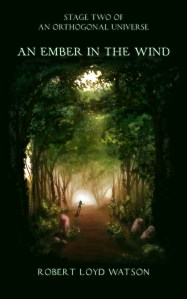
From the Editor’s Desk: An Ember in the Wind by Robert Loyd Watson

This week, I’m interrupting our regularly scheduled programming to bring you an announcement. (See what I did there? ;P )

As an editor, (both freelance and under REUTS Publications), I have the wonderful opportunity to see amazing novels during their developmental phase. And I wanted to find a way to share them with all of you as they became available. (I also wanted to find a way to help support the authors that trusted me with their manuscripts.) So think of these posts as my own personal book recommendations, straight from the editor’s desk.

Today’s edition brings you the latest release from Robert Loyd Watson’s An Orthogonal Universe series:
 

An Ember in the Wind

By Robert Loyd Watson

 
An Ember in the Wind by Robert Loyd Watson
 

Ideas are like embers; they spark from some great fire, fly free, and glow for a while on their own. Some flicker out before they land. Others, though, ignite a new fire, which will cast a great light upon the world.

Mara is a young girl living in the height of the Italian Renaissance. When she runs away from home to join a group of scholars, she is ushered into an unseen world of fantasies – where the forests, flowers, and fields all have words to say. They clue her into the existence of the “sequence,” an intangible medium that governs the world like the gears of a clock, and instruct her to uncover it.

Just as she is about to unravel the riddle, she is forced from her home by an unknown assailant. Her grief causes her to lose her grasp of the magical world she once knew. Desperate to not completely let go, she travels to the city of Locana and employs the help of “the Ori,” a mysterious tutor who promises to help her see the world with the clarity she once had.

Meanwhile, her activities in the city draw the attention of a powerful and rising cult. They know that knowledge of the “sequence” bears implications of powers beyond even Mara’s own wild imagination, and seek to stop her. Mara realizes that in order to unravel the inner clockwork of the world, she must be able to see it with unadulterated eyes. But this means turning a blind eye to the impending perils of the cult and a brewing war. She must choose between dealing with the realities of a cruel world, or attempting to regain the innocence she lost.

 
An Ember in the Wind is the second book in the An Orthogonal Universe series (book 1 was featured here). Picking up where A Foundation in Wisdom ends, it continues Watson’s unique blend of thought-provoking fantasy and quirky humor.

John (the traveling history professor) and Sheridan (the eccentric hitchhiker who isn’t quite what he seems) have escaped the ominous clouds that threatened to swallow them at the end of book 1, but that doesn’t mean things are back to normal. The world still seems suspiciously empty, and Sheridan still insists that it’s ending. With Marcus’s story finished though, he has to turn to a new protagonist — Mara, a young girl living in the Italian Renaissance — to try and support his claim.

Like Marcus, Mara is exceptionally curious about the world around her and after drinking from the Well of Enlightenment, soon finds herself on a quest not unlike the one Marcus was sent on — though hers starts under slightly more traumatic circumstances. Having lost everything except her enhanced insight into the world’s workings, Mara travels to a nearby city, finding a few quirky companions (and even love) along the way. Once there though, she comes face to face with the uglier side of humanity. She is shunned for being different, and the prejudice being spread by the local cult eventually turns the city’s distrust into fear. But Mara ignores the brewing unrest, trying to unravel the mysterious “sequence” she’s been charged with finding before it’s too late.

Meanwhile, John and Sheridan are continuing their trip west, punctuating the long hours with witty interjections and thought-provoking insights gleaned from Mara’s tale. John doesn’t care for the picture Sheridan is painting of him though, and eventually decides to do something about it, resulting in one of the worst (and I mean that in the best possible way) cliff-hangers I’ve come across.

An action-packed, emotional roller coaster, Watson will leave you on the edge of your seat, hoping that book 3 drops soon. Posing questions like “what it means to be human” and “what the true definition of free will is,” Watson has once again created a story that will resonate with readers looking for a dash of intellect in their fantasy. With a decidedly Alice in Wonderland feel, An Ember in the Wind is easily my favorite of the series. Book 3 has some big shoes to fill, but I look forward to seeing what comes next.

If you’d like to check it out for yourself, it is available in both print and eBook formats at all the usual locations (handy list located here). For more information on the author and series as a whole, be sure to meander your way to the official website, where, for a limited time, you can find book 1 (A Foundation in Wisdom) as a free download.  And for anyone in the Jacksonville, NC area, there’s this:

 
Book Launch Part Flier

 
Next week, we’ll return to the post I promised last week. Until then, happy reading, writing, or whatever! 😉
 

Introducing Two New Features (of Interest to Writers)

Some of the observant out there may have already noticed a couple new additions to the site. But those who don’t regularly stalk my online hub of awesome may not be aware yet. So, here’s your handy little announcement. (Listen up, writers! I think you’ll find what I’m about to say especially interesting. ;))

The first new addition is an expansion of my freelance editing menu. I understand that hiring a freelance editor can be extremely expensive, and that sometimes, you simply don’t have the budget for that. So, in the interest of assisting authors, I’ve created a few (more cost effective) options. You can check out the full details of everything I offer here. But these are the new items, what I’m calling the Misc. Editorial Goodies:

  • Back Cover/Query Blurb: $50 (eARC of entire manuscript required)

Whether you’re a self-published author who loathes writing jacket copy, or a querying author searching for the perfect hook, I can help. With a background in film, and experience as an acquisitions editor, I have the insight to help you make your blurb shine.

  • Reader Report: $200-$500 (depending on page count)

Curious what reviewers/acquisitions editors think when they read your story? Here’s your chance to find out. Using my talents as a developmental editor, I’ll read your work and analyze it from top to bottom, providing you with an in-depth response that will help you refine your work and possibly even land that elusive publishing offer. 😉

  • First Chapter Polish: $0.02 per word

Are you querying and would really just love to make your first chapter sing? Then this is the option for you. Let me guide you to the strongest opening chapter for your book. Because, as we all know, first impressions are everything. Why not make a good one? (Includes content/line edits and proofreading on the first chapter only.)

  • Technical Martial Arts Fight Scene Editor: $75-$150 (depending on number of fight scenes)

This is perhaps the most unusual item on the menu, but it’s one I think many of you could find valuable. Capitalize on my 15+ years of martial arts experience and championship-winning choreography skills. Let me help your fight scenes be dynamic, and most importantly, believable. Whether you just want the seal of approval, or need a little assistance in figuring out the logistics of a fight, I’m your girl. (Requires full disclosure of the entire manuscript, but I will only offer critique and advice on the fights specifically, including adjustments to the choreography, as well as the standard editorial assistance.)

Interesting stuff, yes?

The second addition to my site is a new section for book reviews. As part of my continuing efforts to provide content that’s both helpful and inspiring, I’ll be reviewing and/or recommending books I come across that I feel are deserving of your attention. In a marketplace inundated by titles, it’s hard to know where the gems are. I’d like to showcase the ones I stumble across, and in the process, help my fellow authors and indie publishers gain some much-needed exposure.

I’ll use my insight into storytelling to help you wade through the ocean of books out there, and promise to give honest, thoughtful opinions with only a modicum of snark. 😉

If you have a book you’d like me to review, please let me know via the contact page. I will happily accept ARCs (in any form) in exchange for my opinion, and will read just about anything (although I’d prefer if it were in the realm of Fiction, and preferably not Erotica). Due to my fluctuating schedule, I can’t give a flat turn-around time, but you can always inquire before sending me your book.

I’ll still be featuring those titles I’ve had the privilege of working on under my “From the Editor’s Desk” series, so make sure you check that as well. Otherwise, click on the book review link above and potentially discover your next favorite read!

Well, that’s all I’ve got for this week. I’m pretty excited about these new features and hope you are as well. If you’d like to see even more awesome added to the site, please feel free to send me suggestions! 🙂