From the Editor’s Desk: Flux by Ellie Carstens

Another one?

I know, I know. You’d think this was turning into a bona fide review blog or something. (It’s not, don’t worry. These two just happened to release almost simultaneously. 😉 )

For those who haven’t seen it, here’s the blurb about what these posts are about: (everyone else, feel free to skip it!)

As an editor, (both freelance and under REUTS Publications), I have the wonderful opportunity to see amazing novels during their developmental phase. And I wanted to find a way to share them with all of you as they became available. (I also wanted to find a way to help support the authors that trusted me with their manuscripts.) So think of these posts as my own personal book recommendations, straight from the editor’s desk.

Today’s edition brings you the latest release from REUTS Publications:

Flux

By Ellie Carstens

Flux by Ellie Carstens

The last thing sixteen-year-old Alaina Oftedahl-Miller expected was to watch her mom brutally destroy their life.

But, in the wake of tragedy, strength forms. Shipped off to live with her birth father, Alaina finds herself dealing with more than just being the new Canadian girl in a Norwegian school. Juggling the formation of a relationship with the man who abandoned her as a child, and a budding attraction to Kaius Vargøy — the mysterious, beautiful classmate who’s been assigned as her personal translator — Alaina can’t shake the feeling that every move she makes is being watched. Judged.

She soon learns there’s far more to this sleepy Norwegian town than she ever imagined. Kaius and his friends aren’t exactly what they seem, and the repercussions of that could send her traveling through the most unexpected experience of her life. Murder and relocation is one thing, but add in supernatural occurrences and Vikings, and even she may not have the strength to survive.

Okay, so before I jump into my review of Flux, can we just take a moment to admire that cover? Creative Director Ashely Ruggirello really outdid herself on this one. She’s a brilliant designer, and in case any of you are interested in acquiring some of her brilliance for yourself, she freelances. (Her website is here.)

All right, back to business. Flux is an intriguing title, blending historical fiction with paranormal romance in a way I really hadn’t ever seen before. It starts, quite literally, with a bang as fifteen-year-old Alaina witnesses the brutal murder of her step-father at the hands of her deranged mother. This event becomes the catalyst for her journey to Norway nine months later, where she’s reunited with the birth father she thought had abandoned her. What seems like a simple story of tragedy and healing soon takes an interesting twist though — otherwise known as Kaius Vargøy, the next-door neighbor who also happens to have been assigned as her translator at school.

It’s immediately apparent that Kaius and his friends are not entirely what they seem, and while there are shades of Twilight echoing through that mystery, the reality couldn’t be further from that. I won’t give away the twist, but suffice it to say, it’s not one you will be expecting. Once the truth is revealed, the story takes yet another unexpected turn, catapulting Alaina and friends back in time to 12th century Norway. Surrounded by Vikings, strange customs, and a looming war with an evil she knew nothing about, Alaina’s strength is put to the test.

But despite the fantastical elements, this is, at its heart, a very human story. Fraught with emotional struggles and very real choices, Flux is about the strength of the human spirit, overcoming demons, and ultimately, the importance of love and acceptance. Steeped in Norwegian culture, Carstens has provided a refreshing voice in a genre that is bordering on stale. It is the first in a trilogy, but doesn’t leave you with an intense cliff-hanger. For that, I’m thankful, but I’m also definitely looking forward to the next installment.

If you’d like to find out more about Flux or Ellie, be sure to check out the REUTS Publications official website. And if you just want to buy it, it can be found in both print and eBook at the usual online retailers. Happy reading! 🙂

From the Editor’s Desk: An Ember in the Wind by Robert Loyd Watson

This week, I’m interrupting our regularly scheduled programming to bring you an announcement. (See what I did there? ;P )

As an editor, (both freelance and under REUTS Publications), I have the wonderful opportunity to see amazing novels during their developmental phase. And I wanted to find a way to share them with all of you as they became available. (I also wanted to find a way to help support the authors that trusted me with their manuscripts.) So think of these posts as my own personal book recommendations, straight from the editor’s desk.

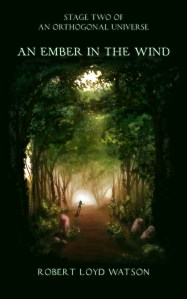
Today’s edition brings you the latest release from Robert Loyd Watson’s An Orthogonal Universe series:
 

An Ember in the Wind

By Robert Loyd Watson

 
An Ember in the Wind by Robert Loyd Watson
 

Ideas are like embers; they spark from some great fire, fly free, and glow for a while on their own. Some flicker out before they land. Others, though, ignite a new fire, which will cast a great light upon the world.

Mara is a young girl living in the height of the Italian Renaissance. When she runs away from home to join a group of scholars, she is ushered into an unseen world of fantasies – where the forests, flowers, and fields all have words to say. They clue her into the existence of the “sequence,” an intangible medium that governs the world like the gears of a clock, and instruct her to uncover it.

Just as she is about to unravel the riddle, she is forced from her home by an unknown assailant. Her grief causes her to lose her grasp of the magical world she once knew. Desperate to not completely let go, she travels to the city of Locana and employs the help of “the Ori,” a mysterious tutor who promises to help her see the world with the clarity she once had.

Meanwhile, her activities in the city draw the attention of a powerful and rising cult. They know that knowledge of the “sequence” bears implications of powers beyond even Mara’s own wild imagination, and seek to stop her. Mara realizes that in order to unravel the inner clockwork of the world, she must be able to see it with unadulterated eyes. But this means turning a blind eye to the impending perils of the cult and a brewing war. She must choose between dealing with the realities of a cruel world, or attempting to regain the innocence she lost.

 
An Ember in the Wind is the second book in the An Orthogonal Universe series (book 1 was featured here). Picking up where A Foundation in Wisdom ends, it continues Watson’s unique blend of thought-provoking fantasy and quirky humor.

John (the traveling history professor) and Sheridan (the eccentric hitchhiker who isn’t quite what he seems) have escaped the ominous clouds that threatened to swallow them at the end of book 1, but that doesn’t mean things are back to normal. The world still seems suspiciously empty, and Sheridan still insists that it’s ending. With Marcus’s story finished though, he has to turn to a new protagonist — Mara, a young girl living in the Italian Renaissance — to try and support his claim.

Like Marcus, Mara is exceptionally curious about the world around her and after drinking from the Well of Enlightenment, soon finds herself on a quest not unlike the one Marcus was sent on — though hers starts under slightly more traumatic circumstances. Having lost everything except her enhanced insight into the world’s workings, Mara travels to a nearby city, finding a few quirky companions (and even love) along the way. Once there though, she comes face to face with the uglier side of humanity. She is shunned for being different, and the prejudice being spread by the local cult eventually turns the city’s distrust into fear. But Mara ignores the brewing unrest, trying to unravel the mysterious “sequence” she’s been charged with finding before it’s too late.

Meanwhile, John and Sheridan are continuing their trip west, punctuating the long hours with witty interjections and thought-provoking insights gleaned from Mara’s tale. John doesn’t care for the picture Sheridan is painting of him though, and eventually decides to do something about it, resulting in one of the worst (and I mean that in the best possible way) cliff-hangers I’ve come across.

An action-packed, emotional roller coaster, Watson will leave you on the edge of your seat, hoping that book 3 drops soon. Posing questions like “what it means to be human” and “what the true definition of free will is,” Watson has once again created a story that will resonate with readers looking for a dash of intellect in their fantasy. With a decidedly Alice in Wonderland feel, An Ember in the Wind is easily my favorite of the series. Book 3 has some big shoes to fill, but I look forward to seeing what comes next.

If you’d like to check it out for yourself, it is available in both print and eBook formats at all the usual locations (handy list located here). For more information on the author and series as a whole, be sure to meander your way to the official website, where, for a limited time, you can find book 1 (A Foundation in Wisdom) as a free download.  And for anyone in the Jacksonville, NC area, there’s this:

 
Book Launch Part Flier

 
Next week, we’ll return to the post I promised last week. Until then, happy reading, writing, or whatever! 😉
 

Featured From the Archives: The Different Types of Critiques

This has always been one of my more popular posts, and I’m sure a lot of you still remember it (or are still stumbling on it — internet crumbs are awesome, aren’t they?). But there’s a reason I’m dredging it up from the archives this week — I have a similar post planned for next week that will expand on the ideas contained in this one, with a slight twist. So what better way to prep for that post, than to revisit the foundation for it?

Since this also happens to be one of my longer articles, I won’t waste too much time with an intro. I think the information contained below pretty much speaks for itself, no?

The Different Types of Critiques

By Kisa Whipkey

(Originally Posted on 6/14/13)

(Yes, I realize that’s frighteningly close to today’s date, and no, that was not done on purpose. 😉 )

Every writer knows there are varying levels of quality in the critiques they’ll receive. Some will be extremely helpful, offering ideas for fixing particularly troublesome areas, or finding plot holes/inconsistencies you missed during your 142 times reading the manuscript. Others will be glowing, fluff-filled ego strokes that feel amazing, but offer virtually no help. Still others will be harsh, brutal, and make you want to curl up in a hole, never to write again. And the worst part is, you can never predict which type you’re going to get. Sometimes the horrible, hate-filled ones come from the people closest to you, and the fluff-filled ego strokes come from the professionals you’d expected to tear it to pieces. So how are you supposed to deal?

The most common advice you’ll receive is to simply “grow a thicker skin.” But that’s right up there with “show, don’t tell” and “kill your darlings” in terms of prosaic, vague responses that ultimately provide no help at all. Instead, I suggest learning the various categories of critique, that way you’ll know instantly what you’re dealing with and whether or not to pay it much mind.

(Disclaimer, these are not official categories. They are completely fabricated by me, and therefore, contain the appropriate amount of tongue in cheek — lots.)

The Fanboy/Fangirl

These are the ego-flatterers. The “OMG!!!! I LOVED IT! SQUEEEEE!” type critiques we all secretly want to receive by the millions. But as much as they puff our chests with pride, they actually aren’t very helpful. Once you come down off your pedestal of hot air and strip away the loudly screamed outpouring of emotion, you realize that you’ve learned absolutely nothing of value. Except how awesome you are, and you already knew that, didn’t you?

A helpful critique, even a glowing one, should tell you why — why they loved it, what they identified with, what the strong points were. But the overwhelming, star-struck gushing of love from a Fanboy/Fangirl doesn’t usually contain a shred of this. You have their reaction to your work (and probably a new stalker), but you don’t have anything you can take away and replicate in your new project. So at the end of the day, soak up the adoration, but know that these kinds of critiques are fairly worthless.

The Thinly Veiled Swap Request

Similar to a Fanboy/Fangirl critique, these will include a generally positive diatribe of how brilliant you are and how you’re the best author they’ve ever read ever, and oh, by the way, would you read and critique their story now too, please? Yep, the Thinly Veiled Swap Request is really just a bait and switch. A cleverly positioned “I scratched your back, now you scratch mine, because you owe me.” You’ll usually see these kinds of critiques on public writing sites like Wattpad, Figment, and Authonomy, where the popularity system relies on the number of favorable reviews (or hearts) a story gets. These requests are vaguely insulting and usually best ignored. Upon close inspection, many will reveal that the person asking for a return critique hasn’t truly read your work at all. So be careful with these ones. Don’t fall for the fluff.

Your Mom (a.k.a. Friends and Family)

No, that’s not meant to be a badly worded “Your Mom” joke.  (I can’t believe you would think that of me! 😉 )

One of the scariest groups of people to share your work with are those closest to you. I’m sure it stems from the fact that they are close to you, and we tend to trust them over strangers. But that’s a double-edged sword. How many people really believe their mom won’t wax poetic over everything they’ve created, even if it’s the worst thing on the planet? She loved your stick-figure blobs and macaroni/toilet-paper-roll art, didn’t she? Yeah, exactly. Now, tell me again why you’re worried she’ll hate something you’re hoping people will pay for?

This category is its own special blend of helpful and unhelpful. Chances are good that even though you’re more terrified of showing your friends and family your work than having your wisdom teeth removed, these reviews will generally come back positive. Even if they hate it, these are the people that love you, so they’ll pull their punches. Which is also what makes this batch of reviews hard to trust. Instinctively, we do, because we value their input, but that can lead to a skewed perspective if we’re not careful.

The best approach is to bask in the positivity, but then cull the review for anything valuable. Surprisingly, this is where you’ll get your first truly helpful tidbits, as these readers are comfortable enough with you to point out potential plot-holes or problems with your story. Just make sure you keep your ears open and take the criticism graciously. You do have to live with them, after all.

The Critique Partner

Every writer should have at least one of these. Seriously! Every. Writer.

Critique Partners are an amazing blend of friendship and writing ability. Typically writers themselves, these are the people you can be your absolute strangest with. The people who won’t just smile and nod when you start talking about your characters like they’re real people, but actually join in! They understand all your writerly eccentricities because they have them too. But the best part about a critique partner is that they’ll give you brutally honest, valuable feedback. Of all the critique categories, listen closest to this one. Critique Partners are a step away from the professionals, and their suggestions are usually right. They can be the difference between handing an editor the equivalent of dog-poo and a beautiful, ready-to-publish masterpiece.

The Aspiring Writer Knock-down, Drag-out

All right, on to one of the less happy styles of critique. The Aspiring Writer Knock-down, Drag-out is a particularly nasty one. Stemming from insecurity and a fear that success is a limited resource, this critique will unfairly rip your work to shreds in an effort to beat you to the finish line. Most writers don’t fall into this category. Most of us are genuinely friendly and want to help our fellow authors succeed. But there are those out there with superiority complexes that thrive by tearing others down.

The worst part about these is that they come from people who sound knowledgeable. These insidious, evil creatures are armed with an intimate familiarity of the writing process, and they’ll attack your work at its core. The key to surviving one of these critiques is to see past the intentionally hurtful language and look for something positive you can use to grow. Don’t listen to the individual words, but look at the overall viewpoint. If they’re going after your character development with a butcher knife, consider that might actually be a weak spot in your story and use that clue to improve. The best way to defeat a bully is not to give them any power, so turn their negativity into something good that helps you, or ignore them completely. (Easier said than done, I know.) Politely thank them for their feedback and then go home and stab the voo-doo doll you made of them in the eye.

The Editing Writer

This is another insidious type of critique that masquerades as helpful. These reviewers assume that because they’ve written some drafts of novels, or some short stories that were well-received in school, they’re qualified to offer feedback as an editor. But that’s a slippery slope to go down. Not every writer is a good editor. And not every English degree equates to mastery of storytelling. Writing and Editing really are two completely different skill sets. Some writers, like me, genuinely do possess both. (You’ll be able to tell by the solid feedback that can be easily verified against known writing rules.)  But it’s not as common as you would think.

Usually, these critiques will try to rewrite your work. They’ll be couched in personal preferences and will try to get your writing style to conform to theirs, citing made-up rules and questionable storytelling approaches. A good editor will preserve an author’s voice, offering suggestions that strengthen it rather than try to replace it with their own. Take these critiques with a grain of salt. Likely there will be some beneficial morsels regarding areas that need work, but find your own path. Don’t necessarily take theirs.

The Grammar Nazi

Who doesn’t love a good Grammar Nazi? These people go through your work and pick it apart punctuation by punctuation. Their review will consist entirely of technical suggestions and pretentious gloating over every mistake you made. It will feel like you’ve suddenly been sent back to your least favorite English class, with dangling participles, evil adverbs and misplaced commas haunting your every move. But as horrible as it can feel to be schooled by a Grammar Nazi, these critiques are actually helpful. They did just flag all the really technical stuff that needs fixing, after all. So, as painful as it is, listen to these people. Someone has to be the Grammar Nazi, and thankfully, now it doesn’t have to be you.

The Beta Reader 

Next to the Critique Partner, the Beta Reader is probably the most hailed tool writers turn to. However, they are not the same as a professional editor. Don’t be fooled by their lengthy reports and the marked-up manuscript they hand you. These critiques fall under a wide range of possibilities on the helpfulness scale. A conglomeration of every category I’ve listed above, their feedback can range from exceedingly helpful, to downright missing the mark. So your best strategy is not to rely on any single one.

The beauty of Beta Readers is that they’re most valuable in groups, like a pack of wolves or a pride of lions. (Yes, those are meant to be slightly ironic choices. Though Beta Readers are best in large numbers, they’re also more likely to corroborate the things you didn’t want to hear when in a group, tearing your book apart limb by limb.) Take the feedback provided by one and compare it with that from others in the group, looking for the recurring things that consistently pop up. Those are the problems you might want to consider addressing. The rest? Well, that could be anything from personal preference to Grammar Nazi, Fanboy/Fangirl to the Editing Writer, or even, God forbid, the Aspiring Writer Knock-down, Drag-out. In other words, take it with a grain of salt.

The Structural Editor

Now we start to get to the really meaty types of reviews. The ones you’ll receive from the professionals if you’re lucky. And from the freelance professionals if you’ve got money. 😉

Structural editing focuses on the actual elements of storytelling, the underlying framework of your story. Critiques of this type will talk about things like character/world development, pacing, dramatic tension and suspense, to name a few. They won’t go into detail on the mechanics of writing, but will go into heavy detail about what’s working and what isn’t, and most importantly, why. This is one of the most valuable critiques you’ll receive during the pre-publication phase. Often, your book won’t go to press until the issues found by a Structural Editor are taken care of. So they’re definitely good people to pay attention to.

The Copy/Line Editor

Right up there with the Structural Editor is the Copy/Line Editor. Where the Structural Editor’s domain is everything storytelling, the Copy/Line Editor lords over all things technical. Similar to the Grammar Nazi, but with a bit less pretension, the Copy/Line Editor will go over your manuscript with a fine-toothed comb (and this handy little thing called a Style Guide — an editing bible, so to speak), providing valuable suggestions on everything from word choice to sentence phrasing to punctuation usage. These people are masters of the English language and will help you refine your work into it’s most clarified form. Also similar to the Structural Editor, they tend to stand between you and your final goal of publication, so it’s wise to listen to their advice.

The Reader Review

This is the holy grail of critiques. Ideally, the Reader Review is a coveted blend of Fanboy/Fangirl, Your Mom, and the Structural Editor. The best ones will go into detail about what they loved and why, convincing other readers of your awesomeness without you having to lift a finger and providing insight into what you should include in your next book. But, though these are the reviews that matter most, they can vary widely in quality. Readers are just that, readers. They won’t have the expertise that some of the other critique categories do, nor will they try to sugarcoat their thoughts. You can get everything from a Fanboy/Fangirl reaction, to the complete opposite — the Hateboy/Hategirl (Yes, I totally made that up, but it could be a thing, right?) — to everything in between.

A lot of writers recommend not even reading these reviews, as the negative ones will undermine every shred of self-confidence you have. But if you don’t know why your book is bombing, how will you know what not to do in the next one? I think you should periodically check up on what people have to say, just don’t obsess over it. (Again, easier said than done, right?) Negative reviews happen, and the internet allows people to be far less civil than necessary, but regardless of whether it’s good or bad, the Reader Review trumps everything else. So it’s smart to pay attention to it.

The important lesson here is that feedback of any kind is good. Even the worst review can be helpful, once you learn how to see past the negativity. (There’s that darned thick-skin requirement again.) No matter what, thank the person for giving their time to your work, and for bothering to review it. Receiving a bad review hurts, but I can imagine nothing worse than receiving absolutely no feedback at all. I’d rather hear that someone felt passionately enough about my work to voice their thoughts, even the nasty, hurtful ones, than fade away into obscurity to a symphony of crickets. Wouldn’t you?
Introducing Two New Features (of Interest to Writers)

Some of the observant out there may have already noticed a couple new additions to the site. But those who don’t regularly stalk my online hub of awesome may not be aware yet. So, here’s your handy little announcement. (Listen up, writers! I think you’ll find what I’m about to say especially interesting. ;))

The first new addition is an expansion of my freelance editing menu. I understand that hiring a freelance editor can be extremely expensive, and that sometimes, you simply don’t have the budget for that. So, in the interest of assisting authors, I’ve created a few (more cost effective) options. You can check out the full details of everything I offer here. But these are the new items, what I’m calling the Misc. Editorial Goodies:

  • Back Cover/Query Blurb: $50 (eARC of entire manuscript required)

Whether you’re a self-published author who loathes writing jacket copy, or a querying author searching for the perfect hook, I can help. With a background in film, and experience as an acquisitions editor, I have the insight to help you make your blurb shine.

  • Reader Report: $200-$500 (depending on page count)

Curious what reviewers/acquisitions editors think when they read your story? Here’s your chance to find out. Using my talents as a developmental editor, I’ll read your work and analyze it from top to bottom, providing you with an in-depth response that will help you refine your work and possibly even land that elusive publishing offer. 😉

  • First Chapter Polish: $0.02 per word

Are you querying and would really just love to make your first chapter sing? Then this is the option for you. Let me guide you to the strongest opening chapter for your book. Because, as we all know, first impressions are everything. Why not make a good one? (Includes content/line edits and proofreading on the first chapter only.)

  • Technical Martial Arts Fight Scene Editor: $75-$150 (depending on number of fight scenes)

This is perhaps the most unusual item on the menu, but it’s one I think many of you could find valuable. Capitalize on my 15+ years of martial arts experience and championship-winning choreography skills. Let me help your fight scenes be dynamic, and most importantly, believable. Whether you just want the seal of approval, or need a little assistance in figuring out the logistics of a fight, I’m your girl. (Requires full disclosure of the entire manuscript, but I will only offer critique and advice on the fights specifically, including adjustments to the choreography, as well as the standard editorial assistance.)

Interesting stuff, yes?

The second addition to my site is a new section for book reviews. As part of my continuing efforts to provide content that’s both helpful and inspiring, I’ll be reviewing and/or recommending books I come across that I feel are deserving of your attention. In a marketplace inundated by titles, it’s hard to know where the gems are. I’d like to showcase the ones I stumble across, and in the process, help my fellow authors and indie publishers gain some much-needed exposure.

I’ll use my insight into storytelling to help you wade through the ocean of books out there, and promise to give honest, thoughtful opinions with only a modicum of snark. 😉

If you have a book you’d like me to review, please let me know via the contact page. I will happily accept ARCs (in any form) in exchange for my opinion, and will read just about anything (although I’d prefer if it were in the realm of Fiction, and preferably not Erotica). Due to my fluctuating schedule, I can’t give a flat turn-around time, but you can always inquire before sending me your book.

I’ll still be featuring those titles I’ve had the privilege of working on under my “From the Editor’s Desk” series, so make sure you check that as well. Otherwise, click on the book review link above and potentially discover your next favorite read!

Well, that’s all I’ve got for this week. I’m pretty excited about these new features and hope you are as well. If you’d like to see even more awesome added to the site, please feel free to send me suggestions! 🙂

Featured From the Archives: The Definition of Black Belt

It feels like I’ve done so many of these lately, but this will only be the fourth one ever. Still, I know you come here for new material, and I promise, I am working on that. (In fact, some of the observant out there may notice a new addition to the menu — Book Reviews. Check it out if you’re curious what I’ve got happening behind the scenes. 😉 ) But there’s a reason I decided to feature this post today. Tonight (right now, actually) is the annual WTSDA Region One Black Belt Test. And though I’m not there, I still want to acknowledge it. So this is my way of honoring those testing, of imparting the lessons I learned in my own journey. Yes, it is specifically geared toward martial artists, but give it a glance anyway — I think you might be surprised to find many of things apply to you whether or not you have ever trained.


The Definition of Black Belt

By Kisa Whipkey

(Originally Posted on 5/25/12)


I promised there would be posts about martial arts. And so far, I haven’t delivered. **2014 Note: Technically not true anymore. Disregard. There’s a whole slew of them in the index if you’re interested.** So, in honor of the annual WTSDA Region 1 Championship, (which I’m not attending for the first time in, well, ever! **2014 Note: Also untrue. I’ve now missed like three. And yes, that does make me a slacker. Thank you for noticing.**),  I present my first post dedicated to the martial arts. But be warned, my opinions on this topic can be either melodramatic and preachy, or poetically accurate, depending on whether or not you agree with me.

Regardless of which side of the fence you land on after reading this, here’s my interpretation of . . .

What it means to be a black belt

A black belt is more than the strip of fabric around your waist.

It’s helping those close to you because they need it,
not because it boosts your ego.

It’s knowing when to pick your battles and when to walk away.

It’s the dignity you have in the face of adversity,
and the grace with which you take criticism.

It’s the humility you show others,
and the respect you give to the people and
places that offered you this gift.

It’s the wisdom to realize that it’s better to be selfless,
but the strength to stand up for your convictions.

It’s the integrity you put behind your promises,
and the obligation to teach those that follow in
your footsteps these same lessons.

It is an achievement to be worn proudly,
but it’s not the color of the fabric that makes you a black belt;
it’s the attitude you present to the world.

–Kisa Whipkey
(Originally Posted to Facebook on May 17, 2011)

Shame so many forget that, or never bothered to learn it at all. So often, you’ll run into martial artists whose sole reason for training seems to be bragging rights; they’ve taken all these different styles (and mastered none of them); they’ve beaten X number of opponents to a bloody pulp in cage fights (proving their ability to brawl like a school-yard bully); they’ve won X amount of awards and trophies (Fantastic! So they’re basically a mockingbird attracted by shinies?); and they’ve done absolutely nothing of value to anyone but themselves.

Does the definition of black belt really have to be limited to the physical ability to kick ass? I don’t think so. True, you should be able to defend yourself effectively — why else did you learn to fight? But that’s not the main definition of the rank. You don’t need skill to be a good fighter. Luck, maybe, but not skill. Some people are simply born with natural ability, and the advent of technology has ensured that the rest of us can survive with little to no physical skill involved. So why go through the process of earning a black belt? Investing 2-4 years of your life, sweating and screaming in some archaic form of military practice? Because there’s more to it than that.

Being a black belt is a lifestyle choice, like choosing to eat healthy and exercise, or choosing to believe in the power of religious faith. It’s not about bragging at all. It’s about honor, dignity, respect, discipline, and integrity. No one said that being a black belt was easy. In fact, it’s usually the opposite. The martial arts were originally intended for the elite, for the warriors who protected their country (like our soldiers today), and was not offered to anyone and everyone. Attaining black belt was a grueling process that required dedication, physical prowess, and spiritual development. Something that’s been sadly watered down over the centuries. But that doesn’t mean we have to let it slip away into the forgotten realms of ancient history. We can still embody everything the martial arts was supposed to represent, whether we’re training or not.

I’ve learned that people who take the philosophical meaning behind the martial arts seriously, exhibit subtle traits you learn to notice — it’s the way they walk or stand, the way they present themselves to the world, the way they interact with others. Allthose things are the marks of a true black belt. And they are only gained if  the student is willing to pay attention. Each belt color represents a new set of techniques to be memorized, yes, but it also represents a new challenge that will refine their character if they let it. There are so many out there who only care about the fighting portion and completely look past the rest of it; becoming the black belts who puff themselves up with glorified victories, leaving nothing but an impression of arrogance and brutality as their legacy. Personally, I prefer meeting martial artists who are quietly proud and let their actions speak for themselves. Poise, respectfulness, and integrity are always more pleasant to encounter than arrogance, inflated egos, and superiority complexes. Don’t you think?

Simply put, the goal of the martial arts was (and is) to be the best person you could (can) be. Which is why the black belt spirit can be found even in those who have never trained. It’s in those who volunteer to help the homeless/disabled/elderly/anyone-who-needs-help. It’s in those that donate their fortunes to charities, enriching the lives of others while living modestly themselves. It’s in the teacher that goes above and beyond to help a troubled student reach graduation. And it’s in you whenever you choose to do the right thing instead of the easy one. Being a black belt is a commitment to values, whether you gained them from religion, martial arts, or simply had them imparted to you by your parents. You don’t have to wear a strip of fabric around your waist to be a black belt, you just have to be a good person who cares more for their family, community, or world than themselves. In my eyes, anyone fighting for a noble cause, who earns accolades with dignity and humility, or who presents themselves to their daily tasks of school, work, and socialization with integrity and respect is a black belt. An honorary one, anyway.

So the next time you run into a black belt/instructor who seems intent only on wowing you with their peacock display of achievements, smile and respectfully give them the ego boost they’re really seeking. Then walk away, safe in the comfort of knowing something they missed. That respect is never taken, it’s earned. And that strip of fabric around their waste doesn’t entitle them to it anymore than if they didn’t have it.

And to my fellow martial artists, please remember that being a black belt doesn’t end when you walk out the door of the studio. It’s a commitment that should reflect in every aspect of your life. Decide for yourself what black belt means and then embody that to the best of your ability. If you want respect, earn it. Don’t just do things to bask in the glory of a good deed.

That’s what it really means to be a black belt.