Book Spotlight: Review of “Fred” by Drew Hayes

Some of you may have noticed that I now feature book reviews here at Nightwolf’s Corner. And for those who haven’t noticed (or who missed the announcement a while back), now you know. Why does this matter, you ask? Because along with that new feature comes a new post series to sprinkle into my ever-growing list of subjects. Periodically, I’ll be doing a book spotlight on select reviews, either because I feel like they are extra deserving of your attention and I don’t expect you to actually explore every page and corner of my site, or because I foolishly signed up to be part of a blog tour and am required to help spread the word about said book as much as possible. Either way, you get to learn about titles you may not have crossed paths with otherwise, so it’s a win-win, right? (And trust me, I only sign up to be part of blog tours for awesome books and you’d want to know about them anyway. 😉 )

This week’s candidate is the first option. So, without further ado, I give you my review of . . .
 

The Utterly Uninteresting & Unadventurous Tales of Fred, The Vampire Accountant

by Drew Hayes


Fred by Drew Hayes

My Rating: 5/5 Stars


Some people are born boring. Some live boring. Some even die boring. Fred managed to do all three, and when he woke up as a vampire, he did so as a boring one. Timid, socially awkward, and plagued by self-esteem issues, Fred has never been the adventurous sort.

One fateful night – different from the night he died, which was more inconvenient than fateful – Fred reconnects with an old friend at his high school reunion. This rekindled relationship sets off a chain of events thrusting him right into the chaos that is the parahuman world, a world with chipper zombies, truck driver wereponies, maniacal necromancers, ancient dragons, and now one undead accountant trying his best to “survive.” Because even after it’s over, life can still be a downright bloody mess.

 
I’m honestly not sure where to start with this one, except to say that this book is anything but uninteresting. Fred (as it was affectionately nicknamed in the digital hallways of REUTS Publications — and no, I did not work on this one) is, in a word, unique. As much because of its unusual structure as for the protagonist himself. Hayes has once again managed to take stereotypes and turn them on their head — a talent I continually find refreshing.

Frederick Frankford Fletcher was just a normal CPA until the night he was turned into a vampire, when he became exactly the same, just with fangs. Within pages, Hayes presents us with an interesting take on the age-old creatures of the night, playing within the mythology to create something new and yet familiar at the same time. And he continues to do that with a cast of quirky, off-the-wall characters that include such brilliant inventions as  a truck-driver werepony named Bubba. Yes, take a moment to process that. The image you’re picturing is exactly correct.

Through myriad adventures that literally had me laughing out loud at times (and I never do that), Fred discovers what it means to live, coming to terms with his new identity as a vampire, learning to love, and even finding a group of friends more loyal than any he had during life. While the shenanigans are awesomely ridiculous at times, the heart of the story is one I think many twenty-something people can relate to, and those of us past that mark can look back on with nostalgia.

The one thing that may deter some people from fully enjoying the story is the format. Broken into five novelettes and presented as excerpts from Fred’s journal, it doesn’t quite have the flow of a full-fledged, stand-alone novel. It breaks the fourth wall (which I normally have a hard time with), but does so in a way that helps the story connect with the reader, much like Mystery Science Theater 3000 did — with self-deprecating mockery and sarcasm. My advice to potential readers is to view this not as a complete novel, but as an omnibus of vignettes. Each story is complete unto itself, and while the entire thing does flow into a larger narrative arc, there is some overlap between them that can be a tad annoying.

I, for one, feel like Hayes’s signature wit and brilliant imagination overcome the uncommon format though. And I applaud him for trying a literary structure that has, perhaps, fallen out of favor in modern literature. I highly recommend this to anyone who enjoys shorter fiction, or who’s looking for a fun, entertaining, and heart-warming read.

And to prove it, here are all the links:

Purchase it here: Amazon, REUTS Publications

Connect with Drew: Twitter, Website

Understanding Point-of-View

POV. Love it or hate it, this is one of the most crucial decisions a writer makes. And yet, it often seems like writers overlook that fact, defaulting into whatever format they tend to read most. True, there’s something familiar and comfortable about mimicking a style you spend a large portion of your reading time in. But we’re not parrots, and choosing the right POV can make or break a story. It’s like the cinematography of literature, unseen and yet so incredibly crucial to the way you convey your tale. An invisible camera, it translates your ideas into images your viewers (readers in this case) can imagine. Whether it’s a sweeping panorama of landscape, or a close-up of your character’s soul, each style is specifically built to capture the mind’s eye in a variety of ways.

Why wouldn’t you want to put thought into how to wield a tool that powerful?

So let’s take a quick look at the various options, as well as their strengths and weaknesses, that way you can make educated choices about your next WIP: (Note, these will not talk about tense choice, as that opens a whole other can of worms. This is just the basic format for whose eyes we see through.)

First Person

May as well kick it off with the one that currently dominates a lot of genres. This one should be familiar to all of you — it’s the self-centered diva of the ball. In cinematography, this would be the camera that’s tethered to your character, perched on their shoulder like some kind of weird growth. It faithfully follows their every move and puts readers firmly in their heads. We experience what they do — their thoughts, their physical sensations, their fears and emotions, all of it.

The downside to using this format? Well, you’re stuck with that one character. Literally. The point of this POV is to let readers live vicariously as someone else. When you do your job well, they figuratively step into your character’s skin. Which means that they can only know what your character does. Want to show us what their potential lover is thinking when they stare at your MC? Too bad, you can’t. Want to clue us in to the nefarious plotting of your villain that’s taking place halfway across Fictitious-land from your leading man? Sorry. No can do.

Don’t get me wrong, First Person is a very powerful POV, but it’s limited. When deciding whether or not to use this one, look at the way your story is structured. Is it most effectively told from inside your character? Or do you want to be able to pull the camera back a little bit and show us more than just that character’s inner emotions?

Second Person

This is actually a fairly unusual POV, but you will occasionally stumble across it, more frequently in short stories than novels, though there are a few of those out there too. The cinematic version most akin to this would be a GoPro camera attached to your character’s head, where you’re literally shown the story through the character’s eyes. But not like the version seen in First Person. No, here, you never see the character’s face, because you are the character. This is my least favorite style of fiction because it always comes across as bossy. If First Person is the self-centered sibling, this is the bossy older sister who never lets you get away with crap.

Populated by an abundance of “you did this, you did that,” Second Person strives to get you to experience the story as if it were truly happening to you. The problem I have with it is a) I don’t like being told what to do, and b) it’s heavy-handed use of breaking the fourth wall (talking directly to the reader) actually makes immersion into the story that much more difficult. At least for me. I have seen it done well, but trust me, if you’re going to try this one, you better be a master storyteller. Not only is it extremely limited, but it takes a brilliantly light touch to achieve the escapism people are looking for when they read.

Third Person Limited

Another common one, this is the popular, people-pleasing twin to First Person, most frequently abused by those just starting out and often unappreciated for its generous gifts. The camera equivalent is the film style most often seen in video games. It follows a select character around, but at a slightly more respectable distance than that seen in First Person. Where First Person is all up in your character’s business, Third Person Limited is the quietly observing stalker in the bushes. You’re allowed to showcase more of the world outside of the character’s head, but also still allowed to show us their thoughts. But only their thoughts.

The key here is that “limited” tacked on to the end. Often, writers confuse the fact that they get to say things like “he did this” and “she said that” for the ability to jump between characters. But that’s incorrect, and is the biggest danger in using this style — head-hopping. Though you are most definitely outside of your character, you’re still tied to their movements. It’s a tight close-up or medium shot, not a free-roaming scenario that can pan across whatever part of the story you feel like. For that, you need . . .

Third Person Omniscient

Poor Third Person Omniscient is the wicked step-child. Once the favored style of fantasy and sci-fi authors everywhere, it now frequently falls beneath the mislabeled sword of head-hopping and is swiftly nixed from every manuscript. Except for a few stalwart authors in the know. Why the confusion? Because of the definition of that lovely “O” word in the title. “Omniscient” means that the narrator knows everything. This is the free-floating camera, disconnected from any one character and free to weave in and out of everyone’s thoughts at whim. This is actually the most versatile of the POVs, which also makes it the hardest to do effectively.

The trick to using this one is understanding the fine line between head-hopping and omniscient narrative (if you’d like me to go into further detail about this specifically, let me know in the comments, and I’ll do a separate post about it). Namely, you need to have a firm grasp on your characters and how to move the camera around effectively. The most visual example I can think of is where you watch a conversation between two or more characters in a movie and the camera switches back and forth between close-ups of each speaker.

Objective

Who here has never heard of this one at all? It’s okay. It’s not often talked about for some reason. To keep with our family analogy, Objective POV is the distant fourth cousin three times removed that you never knew you had. And there’s a reason — it’s hard. In Objective POV, you’re only allowed to impart the facts. That means no access to any of your characters’ heads. At all. No telling, no inner monologues, only observable details.

Have a bad habit of telling instead of showing? Try writing in this for awhile — it’ll break that habit real fast, because all you can do is show. Facial expressions, body language, physical details in the environment and characters’ appearances, these are the only tools you have to convey what your characters are thinking and feeling. In short, this is the literary equivalent of film. That same distance you feel between yourself and a movie? Yep, you’ll run into that here too, which is its biggest downfall — a lack of intimacy. But, when done well, this can be one of the more powerful writing tools.

So, there you have it, the five main POV choices. I’m sure some of you are wondering, if there’s an Objective POV, shouldn’t there be a Subjective one? You’re right, there is. It’s called the other four I listed. They’re considered subjective because all four allow you inside at least one character’s head. Satisfied?

This is by no means a detailed tutorial on how to wield each style effectively, but it does give you the basics of what each is good for, as well as what pitfalls you should be aware of. A good writer will experiment with all the tools at their disposal. Not every story will be best told in First Person, and not every character will shine in Third. So spend some time exploring the different techniques; the only thing it will do is increase your skill set. Make POV a conscious decision and gain one more level of control in your work. Understand how the camera moves, and you’ll gain a firmer grasp of storytelling in general. Humans are visual creatures, so use POV to help us see your story the way you do.

Any questions?


Viewer’s Choice Poll

When considering what I should post this week, it occurred to me that I’ve offered quite a variety of topics. And, like clockwork sometimes, I’ve seemed to gain followers from every type. Which means that ultimately, I’m not sure what all you lovely people are looking for when you open that weekly announcement telling you I’ve managed to post something. So, in the spirit of all the award shows that most of us probably don’t even watch, I’d like to give you a chance to choose: what should next week’s post be about?

Simply choose the category of post you’d like to see in the menu below (RSS users, you’ll likely have to click through to the actual site to participate), and the winning category is what I’ll feature next Friday. Plus, it will help me tailor the overall content of this blog to you, my all important readers. Win-win, no?


From the Editor’s Desk: The Rose Master by Valentina Cano

I wasn’t going to post this one yet, but I’m just too darn excited about it to hold back. This is the last one for a while though, so next week will return to my snarky, information-filled posts. (Was that a sigh of relief I heard just now?) But first, the blurb, for those who are uninitiated into this series of posts:

As an editor, (both freelance and under REUTS Publications), I have the wonderful opportunity to see amazing novels during their developmental phase. And I wanted to find a way to share them with all of you as they became available. (I also wanted to find a way to help support the authors that trusted me with their manuscripts.) So think of these posts as my own personal book recommendations, straight from the editor’s desk.

Today’s edition brings you the latest release from REUTS Publications (and I do mean latest — it just dropped on Tues):

The Rose Master

by Valentina Cano


The Rose Master by Valentina Cano


The day Anne Tinning turns seventeen, birds fall from the sky. But that’s hardly the most upsetting news. She’s being dismissed from the home she’s served at since she was a child, and shipped off to become the newly hired parlor maid for a place she’s never heard of. And when she sees the run-down, isolated house, she instantly knows why:

There’s something wrong with Rosewood Manor.

Staffed with only three other servants, all gripped by icy silence and inexplicable bruises, and inhabited by a young master who is as cold as the place itself, the house is shrouded in neglect and thick with fear. Her questions are met with hushed whispers, and she soon finds herself alone in the empty halls, left to tidy and clean rooms no one visits.

As the feeling of being watched grows, she begins to realize there is something else in the house with them–some creature that stalks the frozen halls and claws at her door. A creature that seems intent on harming her.

When a fire leaves Anne trapped in the manor with its Master, she finally demands to know why. But as she forces the truth about what haunts the grounds from Lord Grey, she learns secrets she isn’t prepared for. The creature is very real, and she’s the only one who can help him stop it.

Now, Anne must either risk her life for the young man she’s grown to admire, or abandon her post while she still can.

Where do I start? This book is amazing! A blend of Gothic literature and fairy tale with a splash of horror, it can best be described as Beauty and the Beast meets Jane Eyre. And since those are two of my all-time most beloved stories, it’s no surprise that I fell hard for this one.

The Rose Master starts with Anne, a parlor maid in a prominent London estate, being surrounded by falling birds. But that’s only the beginning of the strange events that mark her seventeenth birthday. She’s soon summoned by Lady Caldwell and informed that she’s being shipped off to one of Lady Caldwell’s distant relations in the middle of nowhere. Dismissed from the home she’s grown up in and torn away from the servants she views as family, Anne has no choice but to embark on the journey to Rosewood Manor.

She can tell instantly that there’s something wrong with the place. Silence cloaks its run-down exterior, and a profusion of roses covers everything, stifling the winter air with their pungent scent. The staff is small — only three others — and covered in suspicious bruises and scratches, the manor is colder inside than the frigid air without, and the Lord of the manor is nowhere to be seen. Confused, Anne tries to settle into the house’s routine, which can only be described as unconventional. She knows there’s something her fellow servants aren’t telling her, but she has no idea what.

When strange noises start following her around and eerie scratching haunts her door at night, she begins to realize that the manor is haunted. But it’s not until she finally meets Lord Grey and demands answers that she learns the truth — she’s the only one who can help save the manor from the creature roaming its halls.

The description sounds fairly benign, but don’t let that fool you. The Rose Master is definitely a horror; it will leave you creeped out and questioning what the heck is going on as surely as Anne herself does. Written in a style reminiscent of the Bronte sisters and Jane Austen, it’s lyrical prose is well-crafted, with some of the most beautiful analogies I’ve ever come across. A modern fairy tale, set against a Victorian backdrop, it’s sure to become a classic and would be perfect for adaptation to the silver screen (Disney, if you’re out there, this one has you written all over it!). Whether you’re a fan of the romantic, Gothic stylings of the Bronte sisters, or are simply looking for a creepy take on the fairy tale genre, I can’t recommend this one enough.

It’s currently available in eBook form via Amazon (with additional retailers coming soon), and will be in paperback on 7/8/14.  To find out more about The Rose Master, be sure to check out Valentina’s official website or the REUTS Publications page.

Happy reading! 🙂

From the Editor’s Desk: An Ember in the Wind by Robert Loyd Watson

This week, I’m interrupting our regularly scheduled programming to bring you an announcement. (See what I did there? ;P )

As an editor, (both freelance and under REUTS Publications), I have the wonderful opportunity to see amazing novels during their developmental phase. And I wanted to find a way to share them with all of you as they became available. (I also wanted to find a way to help support the authors that trusted me with their manuscripts.) So think of these posts as my own personal book recommendations, straight from the editor’s desk.

Today’s edition brings you the latest release from Robert Loyd Watson’s An Orthogonal Universe series:
 

An Ember in the Wind

By Robert Loyd Watson

 
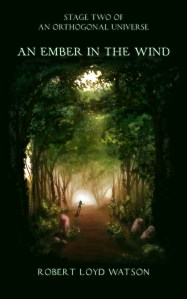
An Ember in the Wind by Robert Loyd Watson
 

Ideas are like embers; they spark from some great fire, fly free, and glow for a while on their own. Some flicker out before they land. Others, though, ignite a new fire, which will cast a great light upon the world.

Mara is a young girl living in the height of the Italian Renaissance. When she runs away from home to join a group of scholars, she is ushered into an unseen world of fantasies – where the forests, flowers, and fields all have words to say. They clue her into the existence of the “sequence,” an intangible medium that governs the world like the gears of a clock, and instruct her to uncover it.

Just as she is about to unravel the riddle, she is forced from her home by an unknown assailant. Her grief causes her to lose her grasp of the magical world she once knew. Desperate to not completely let go, she travels to the city of Locana and employs the help of “the Ori,” a mysterious tutor who promises to help her see the world with the clarity she once had.

Meanwhile, her activities in the city draw the attention of a powerful and rising cult. They know that knowledge of the “sequence” bears implications of powers beyond even Mara’s own wild imagination, and seek to stop her. Mara realizes that in order to unravel the inner clockwork of the world, she must be able to see it with unadulterated eyes. But this means turning a blind eye to the impending perils of the cult and a brewing war. She must choose between dealing with the realities of a cruel world, or attempting to regain the innocence she lost.

 
An Ember in the Wind is the second book in the An Orthogonal Universe series (book 1 was featured here). Picking up where A Foundation in Wisdom ends, it continues Watson’s unique blend of thought-provoking fantasy and quirky humor.

John (the traveling history professor) and Sheridan (the eccentric hitchhiker who isn’t quite what he seems) have escaped the ominous clouds that threatened to swallow them at the end of book 1, but that doesn’t mean things are back to normal. The world still seems suspiciously empty, and Sheridan still insists that it’s ending. With Marcus’s story finished though, he has to turn to a new protagonist — Mara, a young girl living in the Italian Renaissance — to try and support his claim.

Like Marcus, Mara is exceptionally curious about the world around her and after drinking from the Well of Enlightenment, soon finds herself on a quest not unlike the one Marcus was sent on — though hers starts under slightly more traumatic circumstances. Having lost everything except her enhanced insight into the world’s workings, Mara travels to a nearby city, finding a few quirky companions (and even love) along the way. Once there though, she comes face to face with the uglier side of humanity. She is shunned for being different, and the prejudice being spread by the local cult eventually turns the city’s distrust into fear. But Mara ignores the brewing unrest, trying to unravel the mysterious “sequence” she’s been charged with finding before it’s too late.

Meanwhile, John and Sheridan are continuing their trip west, punctuating the long hours with witty interjections and thought-provoking insights gleaned from Mara’s tale. John doesn’t care for the picture Sheridan is painting of him though, and eventually decides to do something about it, resulting in one of the worst (and I mean that in the best possible way) cliff-hangers I’ve come across.

An action-packed, emotional roller coaster, Watson will leave you on the edge of your seat, hoping that book 3 drops soon. Posing questions like “what it means to be human” and “what the true definition of free will is,” Watson has once again created a story that will resonate with readers looking for a dash of intellect in their fantasy. With a decidedly Alice in Wonderland feel, An Ember in the Wind is easily my favorite of the series. Book 3 has some big shoes to fill, but I look forward to seeing what comes next.

If you’d like to check it out for yourself, it is available in both print and eBook formats at all the usual locations (handy list located here). For more information on the author and series as a whole, be sure to meander your way to the official website, where, for a limited time, you can find book 1 (A Foundation in Wisdom) as a free download.  And for anyone in the Jacksonville, NC area, there’s this:

 
Book Launch Part Flier

 
Next week, we’ll return to the post I promised last week. Until then, happy reading, writing, or whatever! 😉