Featured From the Archives: The Definition of Black Belt

It feels like I’ve done so many of these lately, but this will only be the fourth one ever. Still, I know you come here for new material, and I promise, I am working on that. (In fact, some of the observant out there may notice a new addition to the menu — Book Reviews. Check it out if you’re curious what I’ve got happening behind the scenes. 😉 ) But there’s a reason I decided to feature this post today. Tonight (right now, actually) is the annual WTSDA Region One Black Belt Test. And though I’m not there, I still want to acknowledge it. So this is my way of honoring those testing, of imparting the lessons I learned in my own journey. Yes, it is specifically geared toward martial artists, but give it a glance anyway — I think you might be surprised to find many of things apply to you whether or not you have ever trained.


The Definition of Black Belt

By Kisa Whipkey

(Originally Posted on 5/25/12)


I promised there would be posts about martial arts. And so far, I haven’t delivered. **2014 Note: Technically not true anymore. Disregard. There’s a whole slew of them in the index if you’re interested.** So, in honor of the annual WTSDA Region 1 Championship, (which I’m not attending for the first time in, well, ever! **2014 Note: Also untrue. I’ve now missed like three. And yes, that does make me a slacker. Thank you for noticing.**),  I present my first post dedicated to the martial arts. But be warned, my opinions on this topic can be either melodramatic and preachy, or poetically accurate, depending on whether or not you agree with me.

Regardless of which side of the fence you land on after reading this, here’s my interpretation of . . .

What it means to be a black belt

A black belt is more than the strip of fabric around your waist.

It’s helping those close to you because they need it,
not because it boosts your ego.

It’s knowing when to pick your battles and when to walk away.

It’s the dignity you have in the face of adversity,
and the grace with which you take criticism.

It’s the humility you show others,
and the respect you give to the people and
places that offered you this gift.

It’s the wisdom to realize that it’s better to be selfless,
but the strength to stand up for your convictions.

It’s the integrity you put behind your promises,
and the obligation to teach those that follow in
your footsteps these same lessons.

It is an achievement to be worn proudly,
but it’s not the color of the fabric that makes you a black belt;
it’s the attitude you present to the world.

–Kisa Whipkey
(Originally Posted to Facebook on May 17, 2011)

Shame so many forget that, or never bothered to learn it at all. So often, you’ll run into martial artists whose sole reason for training seems to be bragging rights; they’ve taken all these different styles (and mastered none of them); they’ve beaten X number of opponents to a bloody pulp in cage fights (proving their ability to brawl like a school-yard bully); they’ve won X amount of awards and trophies (Fantastic! So they’re basically a mockingbird attracted by shinies?); and they’ve done absolutely nothing of value to anyone but themselves.

Does the definition of black belt really have to be limited to the physical ability to kick ass? I don’t think so. True, you should be able to defend yourself effectively — why else did you learn to fight? But that’s not the main definition of the rank. You don’t need skill to be a good fighter. Luck, maybe, but not skill. Some people are simply born with natural ability, and the advent of technology has ensured that the rest of us can survive with little to no physical skill involved. So why go through the process of earning a black belt? Investing 2-4 years of your life, sweating and screaming in some archaic form of military practice? Because there’s more to it than that.

Being a black belt is a lifestyle choice, like choosing to eat healthy and exercise, or choosing to believe in the power of religious faith. It’s not about bragging at all. It’s about honor, dignity, respect, discipline, and integrity. No one said that being a black belt was easy. In fact, it’s usually the opposite. The martial arts were originally intended for the elite, for the warriors who protected their country (like our soldiers today), and was not offered to anyone and everyone. Attaining black belt was a grueling process that required dedication, physical prowess, and spiritual development. Something that’s been sadly watered down over the centuries. But that doesn’t mean we have to let it slip away into the forgotten realms of ancient history. We can still embody everything the martial arts was supposed to represent, whether we’re training or not.

I’ve learned that people who take the philosophical meaning behind the martial arts seriously, exhibit subtle traits you learn to notice — it’s the way they walk or stand, the way they present themselves to the world, the way they interact with others. Allthose things are the marks of a true black belt. And they are only gained if  the student is willing to pay attention. Each belt color represents a new set of techniques to be memorized, yes, but it also represents a new challenge that will refine their character if they let it. There are so many out there who only care about the fighting portion and completely look past the rest of it; becoming the black belts who puff themselves up with glorified victories, leaving nothing but an impression of arrogance and brutality as their legacy. Personally, I prefer meeting martial artists who are quietly proud and let their actions speak for themselves. Poise, respectfulness, and integrity are always more pleasant to encounter than arrogance, inflated egos, and superiority complexes. Don’t you think?

Simply put, the goal of the martial arts was (and is) to be the best person you could (can) be. Which is why the black belt spirit can be found even in those who have never trained. It’s in those who volunteer to help the homeless/disabled/elderly/anyone-who-needs-help. It’s in those that donate their fortunes to charities, enriching the lives of others while living modestly themselves. It’s in the teacher that goes above and beyond to help a troubled student reach graduation. And it’s in you whenever you choose to do the right thing instead of the easy one. Being a black belt is a commitment to values, whether you gained them from religion, martial arts, or simply had them imparted to you by your parents. You don’t have to wear a strip of fabric around your waist to be a black belt, you just have to be a good person who cares more for their family, community, or world than themselves. In my eyes, anyone fighting for a noble cause, who earns accolades with dignity and humility, or who presents themselves to their daily tasks of school, work, and socialization with integrity and respect is a black belt. An honorary one, anyway.

So the next time you run into a black belt/instructor who seems intent only on wowing you with their peacock display of achievements, smile and respectfully give them the ego boost they’re really seeking. Then walk away, safe in the comfort of knowing something they missed. That respect is never taken, it’s earned. And that strip of fabric around their waste doesn’t entitle them to it anymore than if they didn’t have it.

And to my fellow martial artists, please remember that being a black belt doesn’t end when you walk out the door of the studio. It’s a commitment that should reflect in every aspect of your life. Decide for yourself what black belt means and then embody that to the best of your ability. If you want respect, earn it. Don’t just do things to bask in the glory of a good deed.

That’s what it really means to be a black belt.
Featured From the Archives: What’s in a Name?

My muse failed me this week. Like straight-up turned tail and ran, laughing maniacally as she went. So I apologize for once more having to cull something interesting from the archives. I promise, there will be new material next week. Even if I have to drag my muse, kicking and screaming, from her beach sanctuary and duct tape her skinny butt to the chair. It will happen.  In the meantime, here’s a snarky look at every writer’s favorite task — naming things. Enjoy!

What’s in a Name?

By Kisa Whipkey

(Originally Posted on 6/29/12)


Maybe I’m part Fey, or maybe I’m Rumpelstiltskin’s great-granddaughter, but I believe names are extremely important. Probably because I’ve been graced with a somewhat unusual name myself. Wait, did I say graced? I meant cursed. Doomed to endure countless mutilations, including: “Keisha,” “Kissah,” “Kye-sha”, and my favorite, just plain old “Lisa,” because obviously that “K” has to be a typo. There was even an unfortunate incident where, after explaining the spelling of my name as “Lisa, with a K,” the person responded with, “okay, Ms. Withakay, will there be anything else?” Seriously! No joke. So now, I actually do give my name as “Lisa” at fast food places, or anywhere they’ll be calling it out randomly, because it’s just easier. As long as I remember I’m answering to that. And who knows, Lisa Withakay might just make an excellent pen-name someday. Everyone needs a good alias, right?

For the record, my name is pronounced “Key-saw.” Difficult, isn’t it? But I respond to pretty much any variation thereof, as evidenced above. I think I already mentioned that it’s Russian for kitten, didn’t I? Well, it is, as confirmed by several people I’ve met who actually speak Russian. And no, I’m not Russian, nor is anyone in my family tree that I’m aware of. German, English, a little Scottish, yes. Russian? Sadly, no.

So how did I end up with this charming, pain-in-my-ass name?  Let’s just say this is what happens when soon-to-be parents stumble on those lovely little baby-name books in the bookstore. And trust me, after seeing the other options my parents had circled, I ended up with the best one. As much as it has irritated me over the years.

Anyway, back to the topic at hand — names.

Finding a title for a work can be the hardest part, whether it be a novel, a masterpiece of art, or a choreographed routine. It’s one of the first impressions your audience will get, so it has to accomplish a lot of things: summarize the plot, theme, and overall tone; provide something catchy that will make your work stand out among the masses; create a lasting impression that’s easily remembered; and build a sense of mystery and intrigue about your work’s content. All in just a few short words. No wonder many people find the process of naming a daunting task.

For me, this is a critical part of the creative process, and often, I have a title before I have anything else. Naming something is my favorite part. It’s the moment when whatever I’m working on becomes a thing of substance, its existence clicking into place like the final piece of a puzzle. It’s no longer just a vague concept floating around in my head — it’s a declaration of identity. And I rarely change a title once I’ve found it, whether it’s on a story, an image, or a character.

Others aren’t so lucky, struggling under the burden of working titles or simply leaving something as “Untitled.” And still others completely miss the mark, dubbing their spectacular work with a lame, uninspired title that dooms it to obscurity forever. They say you shouldn’t judge a book (or artwork, or choreography, etc) by its cover, but the truth is, everyone does. And the title is as crucial to your work’s success as the rest of the packaging. How often have you picked a book off the shelf solely for its title and cover art? Or browsed Itunes and found new artists because their album covers looked cool? Or rented a movie because it had an interesting name? And how often have you done the opposite? Scoffing at something because of a lame title, stupid cover, or lackluster blurb? I think you see my point.

So, what’s in a name? Everything!

Which is why you should spend as long as it takes to create the perfect title for your piece, whatever it may be. I’m afraid there aren’t any sure-fire techniques I can share for how best to choose a title, though. I’m sure there are others out there who would gladly try to tell you the correctness of their own process, but I believe creativity is too personal for that, and every artist, dancer, martial artist, writer, musician, has to find their own way of doing things. What I can offer you is a succinct version of how I go about it.

I remember reading somewhere, (and I apologize that I don’t have a direct quote for you), during my research of Disney’s story process, that they try to sum up each film’s plot in a single sentence. Being the complete fangirl I was back then, I thought that was a brilliant idea and adopted it for myself. It’s actually a lot harder than it seems to boil a complicated premise down to a simple sentence, but eventually, you get good at it. How does this pertain to titles? Well, once you can summarize your work with a single phrase (and this generally works best for writing, although it can apply to the concepts of art and choreography too), you can take it one step further and chop it down to only a few words. Something that single-handedly conveys the heart of your piece to your audience. Sometimes, that will be the name of your main character; sometimes, it will be an integral theme central to your work; and sometimes, it will be a metaphor summarizing the subtler messages you’re trying to convey. There are no hard and fast rules. The important thing is that it be inseparable with the larger work.

As an example, I’ll dissect the names of my three published short stories and show you the thought process behind them.

The Bardach was named for the race Amyli (Nameless) comes from. They’re a central key to that world because they have the link to its gods. All the conflict revolves around them fighting against the Mages who want to destroy that link and corrupt the gods for their own purposes. Since they are essentially the heart of the story, it seemed fitting to name it after them. Plus it’s a short, interesting title that might make someone click on the link, buy the magazine, or read the excerpt.

(2014 UPDATE: The rewrite of this story now goes by the name Kindred, as it’s a more character-driven, dual POV version that centers around the main character, rather than the culture. When its released, you’ll see. It’s been completely stripped down and rebuilt into what feels almost like an entirely different story, hence the need for a new name. The thought process I went through to choose the name, however, is the same as outlined above. 😉 )

Spinning has a more complicated meaning. It refers to the sect of people Taylor becomes part of, but it also refers to the ability to morph time that they all have, so named because it literally spins the world around them. It also refers to the emotional turmoil Taylor feels throughout, as his world is completely turned upside down, inside out, and sideways. He’s left with a confusing mess of half-answered questions, and is emotionally off-kilter for the entire story — spinning, as it were. It’s also a subtle tip-of-the-hat to the inspiring song by Jack’s Mannequin of the same name. Most of these connotations a reader wouldn’t grasp until after they’re read the piece (and some they might never know), but it adds layers to the title for them to discover along the way. Plus, it’s short, to the point, and hopefully mysterious enough to draw someone in.

Confessions has a dual meaning. It actually does refer to the characters confessing hidden truths, so it’s perhaps one of the more literal titles I’ve used. The thing that makes it interesting is its mysteriousness.  Its vague meaning hopefully makes a reader want to know what’s being confessed and would get them to buy the story to find out. But it’s multi-layered enough that they’ll get the full meaning only at the end. I can’t disclose much about this one without giving away spoilers, so I’ll just say that the obvious confession (Constia’s) isn’t the only one the reader comes across. Plus “Confessions” seemed like the perfect title for a story about losing faith.

Now, my process may not be your process, and that’s perfectly okay. The goal here was to get you to reconsider your approach to titles. The lesson in the above examples is that what appear to be simple one or two word statements, are actually layered with meaning and perfectly embody the message of the piece. Which is the ultimate goal of a title, isn’t it? (If you answered “no” to that, then I think you seriously need to reappraise your opinions of titles, and why did you bother to read this whole huge novel of a post? Just saying.) However you go about finding your names, the important thing to remember is that they are just that — important. Don’t spend months or years of your life on a project and then give it a half-assed name. You poured part of yourself into that thing! Give it enough respect to name it accordingly. You’ll be surprised how effective a marketing tool a simple title can be. It may just be the difference between massive success and complete failure. And I don’t know about you, but when so much hangs on a single decision, I think it deserves a few extra moments of my time to get right.

Featured From the Archives: Plot Bunnies; Friend or Foe?

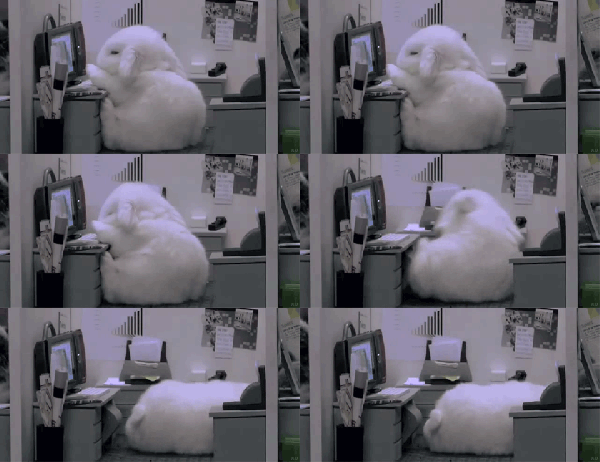
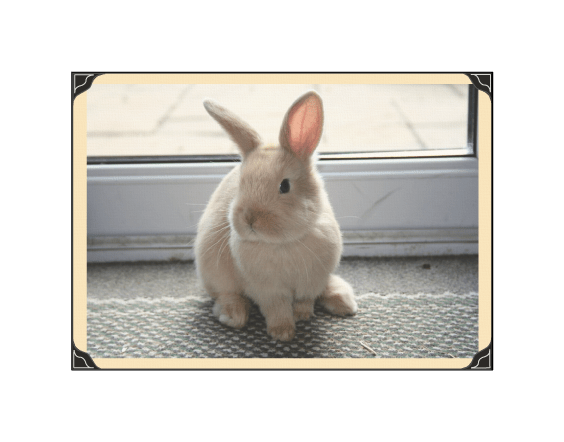
Now that we’re officially into the second year of Nightwolf’s Corner shenanigans, I think it’s time to dredge up another post from the archives. And since last week’s stats rundown showed this fluffy little guy was languishing in the Basket of the Unwanted, I thought, why not dust it off and let it hop its way back up the popularity charts. (Yikes, could I have stuffed any more rabbit puns into that sentence? Clearly, my snark-fund is running low this week.)

Anyway, I hope you enjoy this sarcasm-fueled look at a plague writers know all too well,  complete with my somewhat lame strategy for how to deal with them.
 

Plot Bunnies; Friend or Foe?

By Kisa Whipkey

(Originally Posted on 5/18/12)


Firstly, what the heck is a plot bunny? According to Urban Dictionary, it’s “an idea for a story (usually referring to Fanfiction [writing your own version of someone else’s story]) that gnaws at the brain until written.”

I stumbled upon this amusing little moniker while reading through the blog of one of my favorite authors, Maggie Stiefvater (check her out, she’s very entertaining). I’d never heard the term before, not being prone to write stories featuring other people’s characters/worlds. I mean, really, why would I want to mooch off someone else’s ideas when I’m drowning in hundreds of my own? Literally, hundreds. But anyway, I found the term endearing and adopted it. So you’ll hear me refer to plot bunnies quite a bit. Which prompted this post. Before I started throwing that term around and no one would know what I was talking about, I figured I’d better explain it.

Despite their adorable name, I actually define plot bunnies as procrastination and fear-of-failure personified. Every writer suffers from them. Usually, when you least want them around. And if you aren’t graced with their obnoxious presence, well, then, good for you. You’re one of the lucky few, and probably a bit inspirationally challenged. The rest of us carry around overflowing cages, bursting to the brim with plot bunnies that breed like, well, bunnies. Every so often, a few will make a run for it, escaping from their confinement to wreak havoc in whatever project we’re currently bordering on boredom with, and completely distracting us from anything productive until we wrangle them back into a newly-constructed, extra cage, and the process starts all over again. (Whew! That was a long one. Is there some kind of award for that?)

So, are they friend, or foe? I’ve found that it really depends on the day. Some days, (like those rare moments between projects when you can step away from your computer and realize the world actually still exists), they can be your best friend, bringing you bright, shiny paths of freshly minted inspiration and leading you ever closer to the coveted title of “prolific.” Other days, (like when you’re in the middle of an important, complex, pulling-teeth kind of scene that you’d rather jump in front of a bus than write), you really just want to take them out back and shoot them in the head.

This week, they’re heading toward being on my kill list. They’ve gotten decidedly more rampant since I finally figured out where my aimless work-in-progress (aptly and ironically titled Unmoving) was going. In the past two months alone, I’ve had 8 of the little buggers spring up . . . oh, nope, better make that 9. (Stupid radio, playing random-song-I’ve-never-heard-before and spawning yet another plot bunny.) Some are more demanding than others, requiring my complete attention and blocking out any hope of moving Unmoving forward. Others are just a tiny glimmer of an idea, a baby bunny shyly showing its whiskers for the first time. But all of them are extremely annoying.

Don’t get me wrong, I’m grateful to be drowning in overflowing inspiration. But when you suffer from a distinct lack of ability to finish anything, prolific ideas only get you so far. Maybe I have writer’s ADD, growing bored with projects well before they’re done and becoming easily distracted by the shiny new fur and whispered promises of plot bunnies. Or maybe I just have a hard time sticking with something that, for me, has been finished for months, and continuing to write it feels like sludging my way through a movie I’ve seen 8 million times. (There are many days I fervently wish my brain had a USB port and a download button. That would make life so much easier! Wouldn’t it?) Or maybe I’m just lazy, and completing a story on paper, to the level my perfectionist side demands, requires far more work than I really want to expend. Whatever my problem, plot bunnies equal bad news.

How do I deal with them? Since they’re a figment of my imagination, I can’t really take them out back and kill them. Well, I could, but that might make me a candidate for the title of Schizophrenic Bunny Murderer. Besides, I’ll need those shiny new ideas when I finally finish my current project, (or when I can’t stand it anymore and move on, adding yet another unfinished story to my Drawer of Fragments). You never know, one of those cute little fur-balls driving me insane might just land me on the NY Times Bestseller List. Eventually. Someday. If I can ever finish something again.

No, my strategy for dealing with plot bunnies isn’t violent at all. I actually humor them. I give them their moment in the spotlight and let them rule the creative half of my brain, until eventually, they run themselves into exhaustion and shut up. Sometimes, it only requires giving the new idea a title, solidifying it into existence by the sheer power of naming it. Other times, I have to write the whole plot in my head, complete with character bios, description and dialogue. And recently, one super annoying bunny decided I had to pinpoint the exact, and very real, setting before it’d leave me in peace.

Eventually though, they do all quiet down. I can then add them to my ever-growing to-do list of ideas (seriously, at last count I had 164 potential stories, including the 9 that just popped up) and return to the task at hand — the grueling process of moving Unmoving closer to completion.

So my advice to writers debating whether or not to turn their plot bunnies into new fur coats is this; try giving them the reins for just a short period of time. Do whatever it is that will satisfy that insatiable urge to follow them down the rabbit hole. Whether it be my method, or (as I’ve seen suggested by other authors) writing a short story/synopsis of the premise, or something else of your own creation, I promise, they do eventually shut up and let you work.

And let’s face it, until you learn what your particular method for dealing with them is, you’re probably going to find yourself as unmoving as my current project.

"Bunny--Better Quality" by Vic-the-Raccon

“Bunny–Better Quality” by Vic-The-Raccoon

Copyright 2012

My Average Day as an Editor (In GIFs)

There have been a lot of GIF posts about what the publishing or writing process is like, but I’ve never seen one for what it’s like on the other side of the fence. Until now. This week, I’m breaking the unspoken rule that writers are never allowed behind the publishing curtain and illustrating what my average day as an editor looks like. And, because I had a request for a post with GIFs, I’m going to use everyone’s favorite sarcastic medium (which means that any of you reading this via an email/mobile device may have to click through to the actual site to see them). Before we dive in, I do want to say that this is solely what my average day looks like — other editors will be slightly different. The moral of this story, though, is that editors need cheerleaders too. You’ll understand by the time we get to the end. Don’t worry. 😉
 

My Average Day as an Editor

 
The alarm goes off at 7:30 am and I’m all like:


and . . .


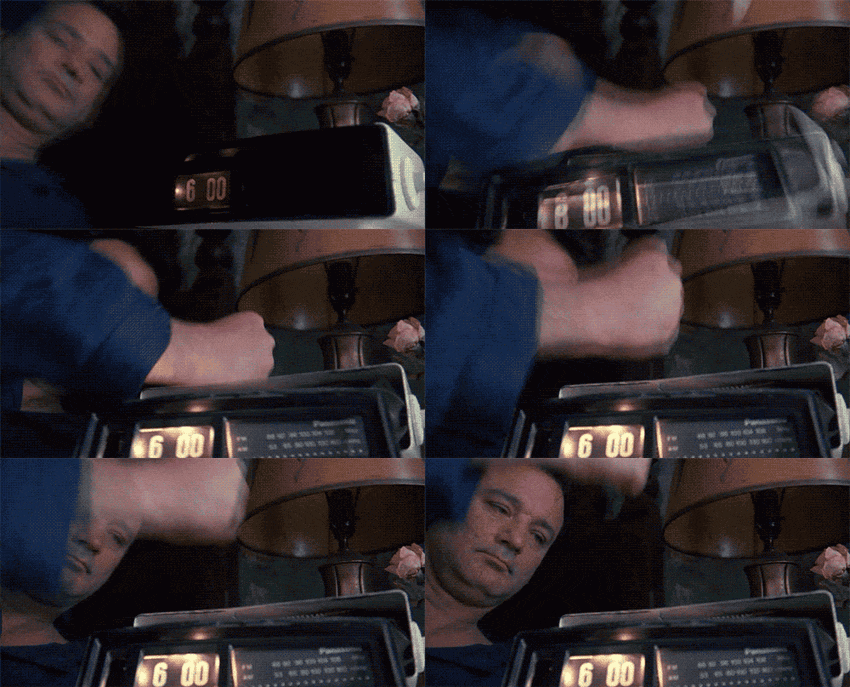
Okay, maybe that’s a lie. It’s actually a lot more like this:


bill-murray-beating-alarm-clock


But anyway, I’m up. I’m ready for the day. I’ve got all the things I need to do circling through my head, and I’m ready to tackle them all. Until . . .


louie


I remember that I have to go to work. Not editing work — work work. Because, you know, editing doesn’t pay as well as everyone thinks, and I still have to eat.

So, for the next five hours, I go punch the clock at the dreaded day job and secretly think to myself . . .
 
idiots


while outwardly doing this . . .


katy-nod-dance


Meanwhile, my inbox is filling up. By the time I actually get to start my day as an editor, I have 64 new emails (that’s a light day). Of those, approximately 1/3 will be submissions, 1/3 will be about the various tasks I assist with at REUTS, and some days, as many as 1/3 are authors freaking out over something. Those days, I tend to open my inbox and immediately think . . .
 
rudd-sucks
 
See, contrary to popular belief, editors work on a lot of projects at once. And writers (yes, you) are a high maintenance bunch, prone to neurotic freak-outs and requiring constant reassurance.
 
cat
 
That’s okay, though. We (as editors) understand, and we love you guys. Really, we do. But some days, you make us do this . . .
 
too-much


Anyway, I’m getting off topic. On those days where my inbox is full of people freaking out, I spend the next several hours holding their hands and providing reassurance. (See, the take away here, writers, is that every time you send one of those freak-out emails, the person on the other side loses valuable time they could have spent actually working on your project.)

**Note, I do not consider status requests and legitimate questions freak-out emails. Those are always welcomed and definitely allowed. 😉 **

By the time that’s done, it’s dinner time. But, before then, I’ll read through a couple of the submissions, which looks something like this:


umno
 
Or . . .
 
James-Earl-Jones-Totes-McGotes2
 
Or sometimes even . . .
 
jon-fan

FattyGenius


And occasionally this (if I’m the odd man out on the voting) . . .
 
not_having_it
 
Then it’s dinner time, and I step away from the computer for the first time all day.

By the time I get back, there’s at least one more freak-out email waiting not-so-patiently for me.
 
wut


frustrated
 
So, I deal with that one too (because I don’t like to leave anyone with more anxiety on their plate than necessary) and then finally, FINALLY, I get to edit. You know, that thing everyone thinks editors spend their days doing, but that we actually only get a few hours with. It’s a victorious moment when I finally get to this part of the day. Like . . .
 
fsa


Then, after investing several more solid hours into the thing I enjoy most, this happens . . .
 
tired
 
So I . . .
 
give-up
 
and . . .
 
exhausted
 
and the whole thing starts over.

And there you have it, my average day as an editor. Sounds like fun, right?
 
thumbs-up-matt-leblanc
 
The point of this (besides getting to have way too much fun with GIFs) is to show you just how hectic an editor’s life can be. We’re not robots who sit and do nothing but edit 24/7. We’re people, with lives and jobs, families and human needs. So cut your editor some slack if they don’t get back to you immediately, or it’s taking longer than you expected to edit your manuscript. We’re not purposely doing these things to hurt you. Editing is a time intensive job, and to do it right, you have to invest that time. The argument I always tell myself when stress threatens to overwhelm me, or someone’s pushing me to meet deadlines that aren’t possible without giving up sleeping, eating, and everyday life, is this — would you rather it be done right? Or be done fast? It’s not a perfect world, and those two can’t coexist. Anyone who claims otherwise is lying. Trust me.
 

**A big thanks to www.reactiongifs.com for supplying all the GIFtastic fun. Be sure to check them out! Their database is phenomenal. :)**

Featured From the Archives: Why do you . . . (Insert Creative Verb Here)?

As the 2nd year anniversary of my blogging experiment draws near, I realize I’ve reached the point where many of my followers probably haven’t read the older posts. So periodically, I’m going to feature one of those archived gems (which pretty much means I ran out of time and/or motivation that week) and give you a chance to discover them again. (Or, for the first time, as the case may be.)

Today’s feature is one that hopefully doesn’t offend too many people. But with all the various blog hops going around (like the ones I, myself, have participated in recently), and posts about what it means to be a (insert whatever creative term you were reading about), it seemed like the perfect time to showcase this again. (Plus, I’m feeling a tad under the weather, and my pesky muse decided to high-tail herself out of the plague zone. ) So, to kick off my new/old series, I present: Why Do You . . . (Insert Creative Verb Here)? A snarky, honest post about what we’re all really thinking when you ask us this. (Warning, contains tongue-in-cheek sarcasm and blunt reality. Read with your serious-meter on half.)

Oh! And don’t forget, I still have that fantabulous (yes, that’s a word. Shut it before I hurl this NyQuil bottle at your head) giveaway I’m running in honor of my upcoming blogiversary. I’ve already received over 300 entries, so three lucky people will be receiving the book they chose from the list. And if you’d like to make it four (and to see whether or not what I’m saying is a cold-med induced hallucination) click here!

Back to the post!

Why Do You . . . (Insert Creative Verb Here)?

By Kisa Whipkey

(Originally Posted on 5/11/12)

This is probably the most-asked question of creative people -– sometimes even by other creative people. And it’s one of the more irritating ones, because it’s such a hard thing to quantify. It’s like asking someone why their eyes are blue, or why they were born in the morning. How do you answer that? So, understandably, the answers to why someone’s creative vary wildly depending on the person. You’ll hear things like:

“I’m not sure, I just do.”

“Because it makes me happy.”

“Because it’s therapy for me; it helps me express myself.”

And my personal favorite, “I do it for me.”

Now, the truth is, all of these answers are sugar-coated, watered-down replies meant to make the artist look more artsy; to make the listener think, “ooo, aren’t they cool? They’re so mysterious and vague.” Personal satisfaction is great, but you go to the gym for personal satisfaction, you don’t pour weeks, months, years, heart and soul into a project just for personal satisfaction. I mean, don’t answers like that just seem so full of themselves? Why narcissism is encouraged within the arts is beyond me, but the more self-involved the answer, the more prestige points an artist receives. And the more frequently you’ll hear responses like the above.

Personally, I view every one of those answers as a cop-out. Because ultimately, statements like that are rarely true. And before you get up on your high horse and scream “controversy!” while flooding my comment box with all the reasons I’m wrong, hear me out. If creativity is such a personal thing (which I’m actually not arguing, because it is), why would anyone share its products? All those artists, authors, and musicians that claim they only create for themselves are lying. The proof is in the sheer fact that they made said creation available for public consumption. If it was truly just for them, it would be stashed in a vault somewhere, guarded by large, vicious dogs, and fiercely protected until its location was lost in the afterlife. Not put on public display for all to judge. But that’s not the case, is it? Because they shared their work with the world.

(The only exception may be personal diaries and journals, which are never truly intended to be shared, but in reality, are almost always found and read anyway.)

When I’m asked this question of why I (insert creative verb here), I have a generalized, self-important, prosaic answer that I’ll give. (Who doesn’t want to earn some prestige points?) I simply say that the reason I (chosen creative verb of the moment) is that I never realized not (doing said creative verb) was an option. And this is partly true. Creativity just came naturally. Like breathing. But just like the answers I listed above, that lovely little sound-bite, while somewhat accurate, is not the real motivator behind my masterpieces. (See? Don’t I just automatically sound more brilliant because I called them that?)

The brutal, honest truth is something none of us “Artistes” like to admit, because it makes us seem desperate and needy, and those two adjectives are a far cry from cool and mysterious. We don’t want to be put in the same category as your psycho ex that Facebook stalks you. But the reason all those artists, authors, and musicians refuse to admit, is that we create because we want validation. Public approval. Fame, glory, and all that jazz. Just like when we were little kids and we ran to Mommy looking for approval on our latest blob of mismatched crayon wax we were certain looked like the cat, we offer up the fruits of our labor to the public eye. With the sole intent of being lavished in praise for our awesomeness.

When you think about it, it’s not really that hard to see why this is the real motivator behind creativity. It’s the same reason we post status updates several times a day and then check back obsessively, waiting for those little thumbs-up signs to appear that means someone likes us, someone agreed. We’re cool. It’s human nature to seek praise from those around us; it makes us feel good, worthwhile, valued. Does that mean all artists are shallow, attention-seeking ho-bags? No. Do we all secretly want to preen while you sing our praises and tell us how awesome we are, so we can humbly pretend we didn’t already know that? You betcha.

Ultimately, though, it’s receiving feedback of any kind (although preferably of the worship-my-brilliance variety) that motivates us to hit that upload button, to submit that manuscript, or to step out on that stage. It’s often said that creativity doesn’t happen in a vacuum. And I 100% agree. Without that input from others, your creative side will shrivel and die like a thirsty plant locked in a closet. Which is why, whenever someone answers with the angelically selfish response of , “I (whatever) for me,” I find myself annoyed. Why is it OK to feed your narcissistic ego by pretending that success means nothing to you and you don’t care what anyone else thinks, but not OK to admit the truth? You did it for the same reason I do –- to feel good when others tell you your creation is something wonderful.

And for those out there that feel this question, this “Why do you . . . (insert creative verb here)?” is a perfectly legitimate conversation starter, it’s really not. You’re just going to be lied to. Few of us will man up and admit, “I did it to be rich and famous. Duh.” You’re much better off asking questions that actually have quantifiable answers. Ask why we do things a certain way, or what did we mean with X, instead of something as innocuous as why do you create?

Hey, nobody said honesty always had to be pretty. And I did warn you that snarky rants were a definite possibility. But let the barrage of offended comments commence anyway. 😉