Two Steps Closer Giveaway

If you’ve ever considered self-publishing, then you know the two most expensive things you should invest in, (according to all the self-publishing gurus out there), are editing and cover design. But what if you don’t have the funds?

Or maybe you’re thinking of pursuing traditional publication, and would like to have an editor’s opinion on whether or not your manuscript’s ready. Do you really want to pay a freelance editor’s wage for that?

Maybe you’ve already had your book torn apart and pieced back together by a professional and you’re just missing the cover to complete the package.

Whatever your circumstance, listen up.

The folks over at REUTS Publications are generously donating their time to two lucky winners. One will win a full-scale editorial critique from Editor Kisa Whipkey. (Hey look! It’s me! :P) The other will win a custom, print-ready cover design by Creative Director Ashley Ruggirello. And the best part is, there are no strings attached. You get professional-grade services without the contract.

All you need to enter is a Facebook account and a finished manuscript. Sounds like a fantastic opportunity, no? For more information on how to enter, click here.

The giveaway runs until midnight on March 25th, 2013. Don’t miss out! Let the REUTS team help you get “Two Steps Closer” to publication.

Designed by REUTS Creative Director Ashley Ruggirello, 2013

Designed by REUTS Creative Director Ashley Ruggirello, 2013

How to Work With a Freelance Editor

The writer/editor relationship is an interesting one, built on trust, open communication, honesty…things which, let’s face it, most of us suck at. So it’s not surprising that for a lot of writers, it can be one of the more intimidating steps on the road to publication. It’s scary to send your manuscript, your baby, off to an agent or editor– otherwise known as Total Stranger Whose Sole Purpose is to Rip it to Shreds. But editors are not the enemy. In fact, they’re your best ally. And, as someone who toes the line between writer and editor, I can tell you that the process is just as nerve-wracking from the editor’s side of the fence.

Yes, our job is primarily to pass judgement on something you’ve slaved over for years. But it’s also our job to polish, refine, and help you present your work to the real jury– the readers– in the best form possible. Like jewelers honing an uncut diamond into the sparkly perfection adorning someone’s engagement ring, we hack and chop and tweak your manuscript until it shines like the brilliant gem you knew it was. We invest in your work, not nearly to the level that you did, of course, but enough that we care about it’s success. We want to see it make the bestseller’s list almost as badly as you do. Because the reality is, it’s success reflects on us as well. Which is why it can be just as scary for us to take on a client as it is for the client to hire us.

What if they don’t like our work? How will they react to all the changes that need to be done? What if the book flops because of me? These are just a few of the anxiety-producing thoughts that can run through an editor’s head. Not so different from the nail-biting that ensues while you wait for our verdict, is it? But this relationship doesn’t have to be a stress-producing, hair-graying, fear-fest. It all depends on the approach. This is the part you will be hard pressed to find information about. There are plenty of other posts that explain how an editor works, what the average rate is, how horrifying a process it is for the writer, etc. But very few will tell you the best practices for actually working with a freelance editor. Until now.

Things That Make a Writer/Editor Relationship Work Smoothly:

  • Open Communication. Yep, there’s that phrase again. But this is the heart of working with an editor. Be clear in what you expect from us. Do you just need a proofreader? Tell us that. Do you want a full, comprehensive, brutal strip-down type of edit? Tell us. If you have specific areas of concern in your work, yep, you guessed it, tell us. We’re not psychics, so don’t be afraid to provide directions. It helps ensure that we meet your expectations for the level of editing you wanted.
  • Ability to Accept Critique. So often, writers hire an editor thinking there’s nothing wrong with their manuscript beyond maybe a few typos, and that they’ll get to bask in the editor’s glowing review of their brilliance. And then they find out they’re wrong. They take the criticism of their work personally, bristling on the defensive and completely discounting the editor’s opinions. But no manuscript is ever perfect. That’s why you hire a second, or third, pair of eyes to look it over. So expect feedback. Harsh feedback. I’m sure you’ve heard that you need a thick skin as a writer, and this is why. Try to remember that as much as it stings to be told that your favorite scene really should be cut, that it’s not an attack on you personally or your ability to write. It’s a suggestion that will strengthen your story the way liposuction strengthens self-esteem.
  • Payment. This probably seems like something that shouldn’t have to be said. But sadly, it does. Editors don’t work for free. If you want that kind of superficial feedback, then what you really want are Beta Readers– people that will read your manuscript and offer the bare minimum of feedback in exchange for a free copy of something unreleased. Don’t get me wrong, Beta Readers provide an invaluable service too, and I firmly believe that any work should be read by as many willing eyes as possible before it faces the gauntlet of publishing. But they’re not editors. An editor will spend hours of detailed work, reading and re-reading passages, reorganizing and honing the text on a word-by-word basis, working with you on trouble areas and answering questions. Depending on the length of the manuscript, this can take a significant chunk of time. Time they couldn’t devote to other means of bill paying. Would you expect a lawyer to work for free? A contractor? An accountant? No? Then why would you expect an editor to work for free? Suffice to say that if you plan on hiring an editor, expect to pay a decent wage for that person’s work. Or expect it to very quickly become a point of contention that can ruin an otherwise working relationship.
  • Provide a Reference. Think of this like a review. You know how important those are to the success of your book, right? Well references are equally as important to an editor’s continued success. If you were happy with the result of your time with the editor, let them use you and your work as a reference. It actually benefits you both. It will boost the editor’s portfolio, allowing them to attract new clients, but it also acts as free advertisement for your book. Win-win, no?

Those are the basics. A lot of them are really just common sense, or should be. The writer/editor relationship is just that, a relationship. It involves two human beings, and is subject to all the follies that implies. Realize that, and you should be able to conduct yourself in a manner which generates professionalism, mutual respect and even friendship.

But there’s one thing I haven’t covered, and I would be remiss if I didn’t– how you go about finding that perfect editorial partner. Since you aren’t working with a traditional publishing house, it’s your job to vet their qualifications. And as Dr. Gregory House used to say on Fox’s House, “Everybody lies.” Especially in job interviews. So here are a few things you can look at beyond the obvious resume and references.

Things to Look for When Hiring a Freelance Editor:

  • Samples. I mean samples of their own writing. A lot of freelance editors are also authors in their own right. So see if you can find a sample of their work. It will give you a more solid feel for their understanding of the craft, as well as a sense of their particular style and voice. The second can be a good indicator on whether or not you will work well together. If someone’s writing is too dissimilar from your own, you might end up with a clash of vision. But if they are similar to you, then chances are good they’ll be able to see your work the way you do. Plus, you don’t want to hire someone whose own work is riddled with typos and errors, do you?
  • Willingness to Listen. Just like you should have an open mind when it comes to receiving criticism, your editor should be open to listening to your concerns, opinions and ideas. So pay attention to the way they correspond with you initially. Are they respectful? Do they seem open to what you have to say? Or do they seem pompous and full of themselves, coming off like you should be honored they’d be willing to work with you? There is a fine line between arrogance and confidence. You want someone that seems sure of their abilities, but not someone that seems like they know everything about everything. A good editor will take your directions into account and add them to a list of things they already look for.
  • Contract. Always work under a contract. Always. This is a no-brainer for serious freelance editors, so if the candidate you’re considering doesn’t seem interested in talking shop over the details of a contract, you’d be wise to save your money. Contracts are the easiest way to keep everyone on the same page. They should detail not only what the editor will provide, but how much they are charging, the payment terms, the deadline (if there is one), and a clause protecting the author’s rights to the work. Any editor worth their salt will negotiate the terms of the contract well before any money changes hands or any work is started.
  • Gut Instinct. First impressions are often correct, so listen to your gut instinct when considering candidates. Oftentimes, something intangible will warn you away from someone who won’t be a good fit. The same goes for finding that perfect editorial soulmate. If you find yourself being drawn to one person over the others, go with it. There’s probably a reason and you might even end up with that coveted writer/editor relationship every author dreams of. And if not, hey, that’s why there’s a termination clause in that contract you signed. 😉

I hope I’ve helped demystify the process of working with an editor at least a little bit. It really isn’t that hard. All you have to do is remember that the editor isn’t out to get you; isn’t hell-bent on destroying your work and watching it burn in a massive bonfire while they laugh at your misery. Quite the opposite. Your editor believes in you, in your work. They wouldn’t have taken you on as a client if they didn’t. So trust that they’ll make your work the best it can be. When everyone behaves with respect and professionalism, the end result could easily be the bestseller both parties hope for.

Introducing REUTS Publications

I’m very excited to announce that I have joined the Editorial Staff at REUTS Publications. And I felt it was only right to celebrate with a shameless plug for my new employer. 😉

REUTS Publications is an independent Publishing Agency created by authors for authors. Our goal is to redefine the author/publisher relationship by shifting the balance of power to the author. In essence, when you join our family, we work for you, helping to realize the vision you see for your work. Which is why we offer higher than industry-standard royalty rates, and why we only get paid when you do. We’re not a vanity press; you never pay up front for our services. Rather, we’re like your support staff, people who are equally invested in the success of your project and can help shoulder the burden of publishing.

Our staff is experienced in a wide range of services, from editorial, to design and marketing, and most importantly, publishing. All of our staff members are authors themselves, and are well acquainted with what it takes to succeed in this ever-changing world of publishing. We’ve been through the agonizing process of querying, waiting and waiting for responses that never came, or letters that only contained rejection. We’ve experienced the joy and frustration of finally landing a book contract, only to realize we’d no longer have control over our work if we signed it. And we think there should be a better way. We believe that authors should direct the show. It’s your work; you slaved for hours and hours, months and years over it. You should reap the benefits.

We offer one-on-one feedback from one of our editors, (like me!), author-driven design elements, including cover design, interior layout and an author website hosted on REUTS.com, and marketing assistance to authors who don’t want to travel the daunting road to publication alone. Whether you’re tired of trying to catch the attention of a traditional publisher, or are interested in self-publishing but have limited funds, we can help.

For more information on who we are and what we do, including our submission guidelines, (we can’t accept everything unfortunately), check out our website, our Facebook page, or our Pinboard on Pinterest. And in honor of our launch, we’re giving away a Vintage Book Safe to one lucky recipient on Dec. 10, 2012. Click here for details.

This is an exciting time in publishing with many avenues to success. Help us redefine what it means to be an author.

Marketing via Wattpad & Authonomy– Smart?

If you wander around the online literary community, chances are you’ve heard whispers buzzing about names like Wattpad, Authonomy, Fictionpress and the like. But what are they? If you’re curious, and bored on a regular basis like I am, then you’ve probably already meandered your way over to these sites to investigate. But in case you haven’t, here’s the rundown:

All of these are Manuscript Display Sites, or in less glamorous terms, online slush piles.

The idea is that authors post their work online for free, gaining exposure to droves of readers, as well as peer feedback and critique, and the elusive possibility of being scouted by editors/agents prowling for new talent. Think Facebook for writing. And while there are accounts of authors finding success this way, they’re maybe a handful compared to the thousands of writers flooding these channels. Making the statistics for success about the same as they are via traditional routes.

So why would you want to use these sites when a) you’d be giving away your work for free, and b) you waste your first digital publication rights in the process, making the chances of finding a traditional publisher even less likely? That’s a surprisingly difficult question to find answers to. I was amazed at the lack of search results that really shed any light on the subject. After weeks of wading through pages and pages, I could only find 6 articles that had any real substance. (Links are below, if you’re interested.) So what follows is mostly conjecture– my own impressions of the situation. Feel free to correct me if I’m way off in my interpretation.

Typically, these sites are not recommended if you plan to pursue traditional methods of publication for the exact reason I mentioned above. Posting your work online counts as publication. And it’s difficult enough for a debut author to beat the slush pile without the added pressure of convincing publishers to republish their work. So, despite the attractive tag lines touting the possibility of being randomly selected by agents of the traditional publishing world, it’s really not worth the risk. Besides, there’s not much evidence to support the claims that agents/editors actually do use sites like these to find talent. Most publishing professionals are so inundated with manuscripts coming through traditional veins that I find it highly unlikely they would need to go scouting online for potential clients.

Where these sites do have potential is with self-published authors. Retaining publication rights in pristine condition is less of a concern in the self-publishing world. And in that regard, sites like these offer a tantalizing prospect– instantaneous access to potential readers. Success in publishing relies heavily on exposure, regardless of your mode of publication. And for indie authors, it’s absolutely crucial. You don’t have anyone backing you, helping you with promotion tips and steering you in the right direction. So how do you go about finding readers?

Enter sites like Wattpad and Authonomy. (I wasn’t impressed with Fictionpress, finding it’s layout rather clunky and visually uninteresting, so I’m going to focus on these two instead.)


Things to Know About Wattpad:

  • Better known than Authonomy, claiming to be the largest online reading/writing community complete with mobile app
  • Attracts about 8 million viewers monthly (according to them)
  • Users seem to be primarily teenaged girls, but this is changing as the site’s popularity grows
  • Most popular genres are those targeted at younger audiences
  • No minimum word count to start posting

Things to Know About Authonomy:

  • Founded by HarperCollins Publishing with the supposed premise of finding new authors to publish
  • Has a built-in system for potentially gaining feedback from a HarperCollins editor
  • Generally higher quality work than Wattpad
  • Typically users are slightly older than Wattpad’s with a serious approach to writing as a career
  • Must post at least 10,000 words initially

Both of these sites offer writers that coveted opportunity to get their work before the public, with the best part being that it doesn’t even have to be finished yet. Both sites display work in a serialized fashion where novels are broken into bite-sized chunks, making them more appealing to digital/mobile readers. And because you can upload your work chapter by chapter, you have the unparalleled ability to generate a reader base before your novel is even published. How cool would it be to already have an established fan base by the time your book is finally available for purchase?

True, you are giving your work away for free, which does have potential to cut into your profits, but it’s not like this is a new concept. Offering books for free has been a long-standing tradition in literature, whether it be through libraries, or sharing circles where members pass titles back and forth, or even just within your family. How many times have you borrowed a book from someone? It’s the same idea. Just because you read a book for free doesn’t mean you won’t go on to purchase it if you really liked it, or that you won’t buy the author’s future titles now that you know you’re a fan. This core philosophy is what prompted me to consider the marketing strategy I’m about to explain, which inherently goes against every normal thought process about earning a profit.

Using Wattpad and Authonomy, I’m going to start posting my work-in-progress online in the hopes of generating some interest, getting my name out there and accumulating a fan base. Because Unmoving is the first in a series I have no intention of publishing traditionally, it’s likely I would offer it for free on Amazon anyway, for the same reasons– to generate a reader base and potential sales for the subsequent titles. By using these sites as well, I’ll hopefully be able to reach more readers; readers I wouldn’t have been able to find otherwise.

Still need more convincing that I’m not completely insane?

Well, how about this: self-publishing is all about word-of-mouth. Without support from readers, your book will get lost in the digital ether that is Amazon. And indie authors, like indie musicians before them, are realizing that the best way to create this effect is through personal interaction with fans. Accessibility is one of the advantages of sites like Wattpad and Authonomy. They give fans the ability to communicate directly with their favorite authors, giving them a personal stake in the success of the book. Which translates into the exact type of grass-roots recommendations that spread like wildfire– networking at its finest.

Then there’s the potential feedback that could help me grow as a writer. I’ve been lucky to have an invaluable group of fellow writers for critique partners, (and I will continue to give them first run at chapters-in-progress), but that could be magnified tenfold by the sheer number of people that could now offer me their input and become part of my story’s journey. (Notice I’m optimistically ignoring the fact that the majority of feedback I’d receive, if any, would be entirely useless. I said I was crazy, not stupid. But it’s my fantasy. I can picture it however I want to.) It’s a pretty well-known fact that, despite all their claims otherwise, these sites are primarily filled with writers. But writers are also readers, are they not? With the added bonus of understanding the intricacies of writing.

So yes, you probably won’t get the casual readers, the people who only buy whatever’s hot on the shelves at the grocery store, or looking for something to bide their time with in the airport, but chances are good those people would never know about you anyway. And what’s wrong with targeting the hardcore readers? The ones who were labeled bookworms as children because they found reading a better pastime on a summer day than sports? The people who probably also have an inherent wealth of insight into the craft of writing because of that avid appetite for reading? The people who might one day become the very editors you’re looking for? Or at the very least, fellow writers? I don’t plan to discount them lightly. Those are the people who can catapult your success to the point you might actually register on a casual reader’s radar. A reader is a reader, right? Who cares how they found you?

Speaking of discounting, don’t discount the motivational potential that posting online can provide. One of the articles below talks specifically about the idea of “little wins.” And I wholeheartedly agree. Self-motivation is actually a weakness of mine, which is surprising given my background in home-schooling and martial arts. But the truth is, I need a deadline, a purpose, to keep my lazy side from winning over and plunking me squarely in front of the TV with promises that we’ll be productive later. Knowing that people are waiting on me is better than caffeine for my productivity. So the thought that I would have potential readers, even if it’s only my four friends and my mom, waiting for me to post the next bit would be a massive kick-in-the-pants for my inspiration. And is probably one of the main things I find attractive about my reckless experiment in marketing, if I’m being truly honest.

So there you have it, my maybe brilliant, maybe ridiculously stupid plan. Is it wrong to use a project I’ve spent two years of my life on as the sacrificial lamb on the altar of self-publishing? Maybe. Will it backfire? Probably. Am I gonna do it anyway? You bet! Just as soon as I get the cover art done. 😉

Writing itself is about experimentation, so why not take that philosophy to the publishing side as well? If I pick up even one more reader out of the process, it will have been worth it. And maybe, I’ll finally manage to finish my aptly titled novel that seems more than content to languish in its incomplete state. Heck, if that happens, it will definitely have been worth it!

What do you think? Is marketing through Wattpad and Authonomy smart or have I completely lost my marbles?

The 6 Helpful Articles:

An Inside Look at Publishing

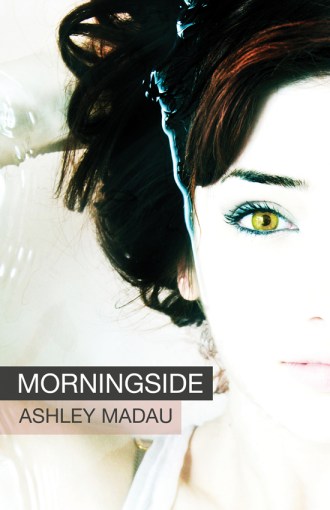
Morningside by Ashley Madau

Interview with Author Ashley Madau

Continuing with our topic for the past few weeks, author Ashley Madau has graciously agreed to share her journey from self-published indie author to traditionally published and on the brink of success. Ashley’s debut title, Morningside, is set to be released this November by Charles River Press. A Paranormal/Horror/Fantasy, Morningside features a fresh twist on the original vampire legends. Gone are the sparkly, vegetarian vampires popularized by the likes of Stephenie Meyer’s Twilight Saga, and in their place is a return to the roots of vampire mythology.  With a uniquely positioned heroine who straddles the line between mortal and immortal, vampire and human, Morningside is poised to breathe life back into a mythology that is starting to get a little stale.

Much like the story’s protagonist, Morningside’s journey through publication has been rather unique, spending time as a self-published title before being picked up by a traditional publisher. Which gives us a rare chance to learn more about both sides of the process from someone who’s actually been there.  But rather than listen to me paraphrase, I’ll let Ashley tell you more about it herself.

~

First, Thank you very much for joining us today and congratulations on the upcoming release of your debut novel, Morningside. Tell us a little about it; what kind of experience should readers expect?

Thank you for having me!

Expect blood, and a lot of it.

My main goal in writing from the protagonist’s first-person perspective started and ended with trying everything in my power to allow the reader to “fill in her shoes” as you learn more and interact with secondary characters. Since the Morningside protagonist is a woman, I imagine it’ll be more popular with the female reading population; of course there are strong male characters, and I hope it appeals to the guy who’s interested in a good adventure as well.  And first and foremost it is just that: an adventure. I often stress how the romantic “dilemma” (as I like to call it) should fall into the background, as the main story– the one about adventure and a struggle with self-discovery– takes center stage. All-in-all readers should expect a good, suspenseful tale with the vampires of old.

~


“Vampires were myths, childhood stories, as were werewolves, mermaids and dragons. I believed none of it.” –Morningside, 2012

~

Coming from a Romanian background, how important was it to you to move away from the glamorized variations of the vampire seen in current popular literature and return to the roots of the mythology? What would you say to people who might instantly shy away from your work as yet another Twilight copy-cat?

I often cringe at the thought of mentioning Morningside is about vampires because of the Twilight phenomenon. Of course I have taken creative liberties in writing about a vampire’s lifestyle (being fictional creatures, it’s safe to assume authors should use their imagination), but there were also key elements of the mythology I made sure to follow close– one of those key elements being their blood lust. It never seemed realistic (and I use that term loosely) for vampires to deny themselves their one craving, the very thing that keeps them alive: human blood. I touch on this idea in one of the later chapters of Morningside, and think vampire fans should appreciate the comparisons I make. I like the thrill of the hunt, and I think future Morningside readers will, too.

I also talk a lot about the idea of the sun, and how it affects vampires. There’s no sparkling involved, of course, but if you look back at Bram Stoker’s Dracula, he’s able to walk in the sunlight without bursting into flames. There are always repercussions, and Morningside vampires have those as well, but no sparkles.

Definitely no sparkles.

~


“Death no longer frightened me, though I wasn’t sure it ever did. If anything, there was always a part of me which looked forward to the morning I wouldn’t rise with the sun; trapped forever in my dreams of nothing.” –Morningside, 2012

~

Morningside was originally self-published in 2010, correct? Please tell us about your experiences with self-publishing– what led you to that decision?

You are correct. Self-publishing was a great experience, and taught me a lot about the publishing industry. I went into it thinking that as a designer I could make my story as appealing as the big name novels, you know, the ones on the New York Best Seller list. I didn’t take much else into consideration, other than wanting to see my words in print, and entertain people with the story. I used Amazon’s service, Createspace to publish, since I knew it’d be available at least on Amazon, and then hopefully syndicated to all the other online venues.

The tricky thing about any self-publishing POD service is how you end up being paid. Many times you have to reach a certain benchmark to get a paycheck, with the lowest amount allowed being $25. Keep in mind, when a book sells for $12, you don’t make 100% of the $12 in any situation. So it takes quite a few sales to make that mark, and if you don’t, the printer keeps all your profit. You’re really in a catch-22 situation at that point. It can be discouraging at times, but it’s an experience I will never regret, and has given me a new appreciation of a publisher’s role in producing a novel.

As an advertising professional, you had a slight advantage over most indie authors. How difficult was it to market a self-published title? Do you have any advice for other self-published/indie authors on the best way to gain exposure?

From working in advertising I’m able to realize how many different elements and disciplines go into successfully marketing a product, and then quickly realize after that that one person can’t do it alone. I had the advantage of a design background, which allowed me to brand myself fairly well, but I’m absolutely clueless when it comes to press releases, media buying, etc… So while everything I did looked “pretty,” pretty wasn’t enough.

Going the self-publish route, you have to put in a lot of work, and a lot of time (and at the moment, time I didn’t have). Expect to have to search for and recruit each and every one of your readers/followers/fans, and know just because you have their attention, doesn’t mean you have the sale. People, especially nowadays, are more likely to save their dollar than spend it on an unknown work. That said, it doesn’t mean you can’t be successful; we’ve seen our fair share of self-published novels making it big, but those people didn’t gain that success by sitting back.

One additional point, as an avid reader, I do tend to judge books by their covers (I know, we’re not supposed to), but I don’t think I’m alone in this thought. My suggestion if you’re self-publishing and wondering what or what not to invest in, do hire a design professional to make you a publishing-house quality book cover. Pulling images into Paint, or incorrectly using Photoshop to do it yourself is a disadvantage to your story. A poor book cover instantly makes people think: self-published, and they may soon overlook everything you’ve worked so hard on.

I noticed that you don’t have excerpts from Morningside on your Deviantart profile. How do you feel about sharing literary work for free on sites like Wattpad, Deviantart, Fictionpress, etc? Do you think that’s a wise move for self-published authors; an excellent way to grow your reader-base, or is it a detriment to potential sales?

I think writing communities online are a fantastic way to grow as an author, learn about the industry, and progress towards publication. In fact, in 2009 I had Morningside on the popular website Authonomy, and my story found its way to the front page, #3 in the “Weekly Book Chart.” Then, later on in 2010 when the young adult version of Authonomy– otherwise known as Inkpop debuted, Morningside reached #2 on their “Editor Desk” ranking, and the first few chapters were read by Harper-Collins Publishers Limited. Both stints on those website proved a huge asset in honing in on my story, fixing inconsistencies, and growing a fan-base. I would encourage any new or old authors to join one of these many communities; I promise your writing will improve exponentially.

When you posted your work to Authonomy and Inkpop, was it the entire manuscript, or just a few chapters/excerpts? There’s a lot of debate about how much is too much to post online. But when building a reader/fan base is so important, if you had a piece you could “sacrifice,” would you post the entire thing for free in the hopes of generating more exposure and possible sales for your other titles? 

On both websites I put my whole manuscript for the public to read. I felt it would be a good platform to advertise my story, especially for those agents/publishers who actively search for authors. The incentive with both those sites, too, was for more and more people to read, then push your story up to the editor’s desk to be reviewed by Harper-Collins. After publishing, I don’t think it’s fair to my publisher to post more than a couple chapters online for potential readers to have access to. There is such a thing as too much, and especially if you’re selling your novel, giving too much may deter people from spending the money.

Most potential writers fear that once they’ve self-published their work, they won’t be able to be published traditionally, but you’ve done exactly that. Tell me, how did you manage to snag a traditional publishing deal after already self-publishing Morningside? Were you able to leverage its success in the indie scene to gain the attention of a publisher, or did you continue to submit your manuscript via the traditional channels even after publishing Morningside yourself?

Great question! It’s scary to take the step towards self-publishing, when all you’ve ever been told is once you do, your chances at traditional publication go out the window. Not just scary, it’s terrifying! I went the self-published route after receiving a couple offers from small publishing houses, and being unhappy with their process and contracts. I did start with the traditional route, querying anyone who would listen, and after that long year, I hired an editor with every intention of making it big on my own. That’s great ambition to have, and even if you have a contract with a publishing house you should maintain that drive, but as I said, it’s damn hard work. I didn’t go into self-publishing expecting to be picked up by a traditional publisher, though I did continue the querying process until I found my home at Charles River Press. They said they were drawn to my characters, and the interesting twist I incorporated through the vampire mythology.

How has it differed working with a traditional publisher? What made you decide to go that route instead of staying self-published?

I made the switch after realizing I was at a point in my life where I couldn’t devote the time and effort necessary to make a self-published novel work. I had just transferred universities, and in my third year of studies I knew where my priorities had to be. It was a bittersweet moment when I pulled my book off the proverbial “shelves” and signed the contract with Charles River Press. Looking back, it became the best decision I ever made. My experience with a traditional publisher has been an adventure in and of itself. I’m able to give input where I have the experience to, and at other points sit back and watch as those areas where I’m less experienced are taken care of. And I realized it takes a small village to bring a story to publication, something I don’t think I had the knowledge or energy to pull off on my own; I’m determined, but sometimes you have to admit defeat and work with a team of professionals looking out for the greater good of your story.

After having experienced both methods of publication, what advice or recommendations do you have for aspiring authors confused about which path to take?

Self-publishing is a great option for aspiring authors to have… keep it in your back pocket. It’s true that publishers tend to shy away from novels that have been previously self-published, which is why I’d recommend start with querying, querying and more querying, to both publishing houses and agents. If, after some time, you’re not finding any traditional luck, you have the fall back of self-publishing without the doubt of asking yourself, “what if?”

The self-published version of Morningside is obviously no longer available, so when can we expect to see it released, and from where?

Right now the release date is November of this year, and you’ll be able to find it at all the popular online outlets, Barnes and Noble and Amazon are the two big ones. And of course it’ll be available for purchase off my publisher’s website, www.charlesriverpress.com. Morningside will be available for wholesale order, so it has the potential to be shelved at a bookstore near you– be sure to stop in your local store and request a copy!

There will also be pre-release digital copy giveaways on the official Morningside Facebook page for fans, as well as post-release hard-copy giveaways.

~


“When he whispered my name, that’s when I knew– this was how death felt.” –Morningside, 2012

~

After the whirlwind of releasing Morningside has subsided, what’s next? Can you tell us anything about your next project(s)?

I’ve been working on the sequel to Morningside for quite some time now, but took a break to pursue my design career a little bit more (especially since Morningside was still in the pre-production phase with my publishing company). The story continues with many of the same characters, but a new foe– one who is actually referenced in Morningside, but isn’t displayed as being a threat.
Along with that story, I’ve also been dabbling with the post-apocalyptic world in a different novel; definitely a change from my comfort-zone of vampires!

~

If you would like to find out more about Morningside, please visit the official website or the Morningside Facebook Page. I, for one, can’t wait to read it!