Conquering the Publishing Divide: An Interview With Author Jessa Russo

Anyone who knows me knows that I absolutely adore Beauty and the Beast.  So when I stumbled on the announcement for Jessa Russo’s young adult novel, Divide, I knew I couldn’t pass it up. I haven’t finished reading it yet, so rather than bring you my thoughts on it, I’ve invited Jessa to stop by and regale us about her publication journey. This wasn’t her first time at the rodeo, as they say, but what she’s learned should be very insightful for those of us still waiting at the gates.

First, let me introduce you:

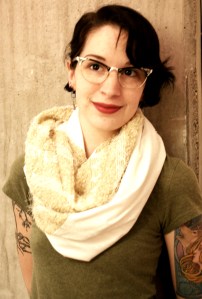
Photo of Jessa Russo


Jessa Russo believes in fairytales, ghosts, and Jake Ryan. She insists mimosas were created for Sundays, and that’s not up for discussion. She’s obsessed with the great city of New Orleans — where she’s collected too many beads to count, eventually married her sweetheart, and visited graveyards they don’t include on maps.

She’s loud, painfully honest, and passionate about living life to the fullest, because she’s seen how abruptly it can be taken away.

What began as a desire for reading and writing young adult paranormal has bled into stories of all kinds. From fantasy to pre-dystopian to erotic contemporary, Jessa’s stories always include romance, though she’s given up on pigeonholing her work into a category or genre box.

Jessa was born and raised in Southern California, and remains there to this day with her husband (a classic car fanatic), their daughter (a Tim Burton superfan), and a Great Dane who thinks he’s the same size as his Chihuahua sister.

Entwined, the final installment of Russo’s Ever Trilogy, will be released late 2014, as well as an erotic romance written under a pseudonym. Stay tuned!

~~~

Cover Design for Divide by Jessa Russo

From senior class president to dejected social outcast, with just the flick of a match.

After accusations of torching her ex-boyfriend’s home are followed by the mysterious poisoning of her ex-best friend, seventeen-year-old Holland Briggs assumes her life is over. And it is. But not in the way she thinks.

As Holland learns the truth about her cursed fate—that she is descended from the Beast most have only ever heard of in fairytales—she unites with an unlikely ally, good-looking newcomer Mick Stevenson. 

Mick knows more about Holland’s twisted history than she does, and enlightening as it is to learn about, his suggestion for a cure is unsettling at best. Holland must fall in love with Mick in order to break the spell, and save their future generations from repeating her cursed fate. Having sworn off love after the betrayals of her ex-boyfriend and ex-best friend, this may be difficult to accomplish. 

Complicating things further for Holland and Mick, time runs out, and Holland’s change begins way before schedule. With Holland quickly morphing into a dangerous mythical creature, Mick struggles to save her.

Should they fail, Holland will be lost to the beast inside her forever.

How could you not want to read that? Seriously. Which is why, in honor of Divide’s release last week, I’m going to give you a chance to get your hands on this amazing story. But not until after the interview. Which starts in three . . . two . . . one . . . 😉

~~~

Hi, Jessa! Thanks for being with us today. To kick things off, please tell us a little about Divide. Where did the inspiration come from? What makes it unique from all the other Beauty and the Beast retellings out there?

I’m not sure where the inspiration for any of my projects comes from, honestly. Ideas often pop into my head while I’m driving — which is what happened with DIVIDE — and then I stew on it for a bit until the idea turns into a story or fades away. In this case, I know I’d been hearing a lot about retellings, and I loved the idea, but I wondered how I could make mine different. Then it occurred to me that my beauty was the beast. She was both, both were her. So when NanoWrimo came along in 2012, I sat down to work on The Ever Trilogy, and DIVIDE came out instead.

What’s your favorite (non-spoiler) part of the story?

Honestly, I love the villain in DIVIDE. He’s arrogant and a bit dark, and . . . sexy. I think his introduction to the story is my favorite part of the book. (As well as a private moment down the road with him and my main character, where she happens across him in the middle of the night. But I don’t want to spoil anything.)

What kind of experience should readers expect from your work?

Truth be told, I want readers to escape into my books. It’s as simple as that. Escape. Sometimes I wish I was one of these authors with a great lesson to teach, or a beautiful, moving story of overcoming abuse or self-destruction — which I do have a story of, but won’t be sharing anytime soon as it takes a lot to get that story out on paper — but I honestly think that my creative energy is more focused on the escapism side of fiction. When I read, it’s for that reason alone, so I guess it’s probably normal that my writing is the same way. Day to day life can become repetitive at times — not that I don’t love my life and my family — but I often wake up to a sink full of dishes, or laundry that is never-ending, a tween whose attitude is starting to really, painfully, mirror my own . . . stuff like that. So when I read, I want to escape into the beautiful, butterfly-inducing joy of young love or magical fantasies about Princes and vampires and Vampire Princes. I want that escapism for my readers. I won’t beat you over the head with my beliefs or try to change your mind about yours — you can just pick up my book and find your alternate happily ever after.

Divide will be your third novel. How has its journey differed from that of Ever and Evade? Did it face challenges that the others didn’t, and vice versa?

Um . . . that’s hard to pinpoint. I queried both EVER and DIVIDE, but I was a bit wiser with DIVIDE, a bit more seasoned. With EVER, I thought I was supposed to cast a wide net, querying everyone who’d ever been an agent, seen an agent or known an agent. (A common rookie mistake, I’ve since learned.) I received an insane amount of rejection for EVER — something that probably also had to do with not just the wide net I cast, but the fact that I didn’t hear about critique partners until well into my querying, and by then, I think it was a bit too late for that book, as far as literary agents go. They’d all seen it (all 80 of them), rejected it, and didn’t much care to see the revisions. Anyway, with DIVIDE, I entered a couple contests, then queried a handful or two of agents — one of which was a friend who’d already hinted at wanting to sign me. So DIVIDE had a bit of an easier go at things, but then, second children often do, don’t they? The first child is the one with the gallons of hand sanitizer and safety EVERYTHING, then that second kiddo comes along and can be a dirty little daredevil without the parent so much as blinking an eye. That’s EVER and DIVIDE. 😉

A lot of people assume that once you have an agent, publication is a sure thing. But it isn’t. Can you tell us a little about what it’s like to work with an agency, as opposed to going it alone? Are there any times you would recommend against looking for an agent?

I assumed that too. It’s funny how I continue to grow and learn in this industry — right when I think I’ve figured it all out, something happens to humble me all over again. With EVER, I thought “Okay, well, I wrote ‘The End’, so now I get to publish.” Then I looked up Scholastic — because obviously that’s who I would let have EVER — and realized it wasn’t that easy. Doh! With DIVIDE, I just knew my agent would find a Big 5 publishing house for me right away. Unfortunately, as many of us have found, that just isn’t the case. Rejections began to trickle in. Part of me couldn’t believe it. The other part of me told me my story sucked. (Gotta love that inner writer — she’s not very nice.) What I came to discover was that I’d missed the boat on fairytale retellings. Editors said things like “We already signed all the fairytale retellings we want.” Or, “This is too similar to something we just signed.” It was heartbreaking. I would have to shelve my story. And then I realized that way of thinking was wrong. Maybe I wasn’t the first to remix an old classic, but DIVIDE wasn’t bad because of that fact. And then I realized that DIVIDE didn’t deserve to be shelved.

The fairytale redux genre is incredibly popular right now. What kind of challenges do you think authors face as the market becomes more and more flooded?

Haha, um, see above. 😉 I’d say that if you’re working on a fairytale redux right now (and really, this can go for many other genres as well — paranormal, to name a big one), make it amazing. Make it unique. Make it unlike anything anyone has EVER seen before. But even then, go into it knowing that you may have missed the boat, and if you did, that doesn’t mean your story isn’t worth reading. That doesn’t mean you shouldn’t share it with the world. If I’ve learned one thing about publishing, it’s that just because a large house may not want your story (and there are a number of factors that go into that decision) it doesn’t mean a fanbase of readers won’t gobble up your words as if they are the very oxygen needed to breathe. Because at the heart of every reader is, after all, a desire to read. A hunger for your words. So write the words, create the stories, and share them. Someone will thank you for it, I promise.

What advice would you give to those authors facing the gauntlet of publishing?

Again, see above. Lol! Basically, go into it with an open mind, ready to learn. Then realize that you know nothing, and even after you think you’ve learned it all, you still know nothing. 😉 Why? Because publishing is constantly evolving, constantly growing, changing, spinning, morphing . . . so be open to learning as you go. Always. Oh, and be patient. Rushing something that means the world to you is never a good idea. Don’t race into publishing. You’ll regret it for one reason or another. That I can guarantee.

~~~

Some fantastic words of wisdom in there, no? Thank you, Jessa!

Which leaves only one thing — the giveaway. Because what better way to thank Jessa for her time than to help her celebrate the release of her book? In one week, three lucky people will be walking away with an eBook of Divide. Want it to be you? Click here to enter: Divide eBook Giveaway!

And if you’re feeling extra lucky, the giveaway for my blogiversary is still happening too. The drawings for both will happen on the same day, so be sure to head over there and enter for a chance at some of the other amazing titles up for grabs. 🙂
My Average Day as an Editor (In GIFs)

There have been a lot of GIF posts about what the publishing or writing process is like, but I’ve never seen one for what it’s like on the other side of the fence. Until now. This week, I’m breaking the unspoken rule that writers are never allowed behind the publishing curtain and illustrating what my average day as an editor looks like. And, because I had a request for a post with GIFs, I’m going to use everyone’s favorite sarcastic medium (which means that any of you reading this via an email/mobile device may have to click through to the actual site to see them). Before we dive in, I do want to say that this is solely what my average day looks like — other editors will be slightly different. The moral of this story, though, is that editors need cheerleaders too. You’ll understand by the time we get to the end. Don’t worry. 😉
 

My Average Day as an Editor

 
The alarm goes off at 7:30 am and I’m all like:


and . . .


Okay, maybe that’s a lie. It’s actually a lot more like this:


bill-murray-beating-alarm-clock


But anyway, I’m up. I’m ready for the day. I’ve got all the things I need to do circling through my head, and I’m ready to tackle them all. Until . . .


louie


I remember that I have to go to work. Not editing work — work work. Because, you know, editing doesn’t pay as well as everyone thinks, and I still have to eat.

So, for the next five hours, I go punch the clock at the dreaded day job and secretly think to myself . . .
 
idiots


while outwardly doing this . . .


katy-nod-dance


Meanwhile, my inbox is filling up. By the time I actually get to start my day as an editor, I have 64 new emails (that’s a light day). Of those, approximately 1/3 will be submissions, 1/3 will be about the various tasks I assist with at REUTS, and some days, as many as 1/3 are authors freaking out over something. Those days, I tend to open my inbox and immediately think . . .
 
rudd-sucks
 
See, contrary to popular belief, editors work on a lot of projects at once. And writers (yes, you) are a high maintenance bunch, prone to neurotic freak-outs and requiring constant reassurance.
 
cat
 
That’s okay, though. We (as editors) understand, and we love you guys. Really, we do. But some days, you make us do this . . .
 
too-much


Anyway, I’m getting off topic. On those days where my inbox is full of people freaking out, I spend the next several hours holding their hands and providing reassurance. (See, the take away here, writers, is that every time you send one of those freak-out emails, the person on the other side loses valuable time they could have spent actually working on your project.)

**Note, I do not consider status requests and legitimate questions freak-out emails. Those are always welcomed and definitely allowed. 😉 **

By the time that’s done, it’s dinner time. But, before then, I’ll read through a couple of the submissions, which looks something like this:


umno
 
Or . . .
 
James-Earl-Jones-Totes-McGotes2
 
Or sometimes even . . .
 
jon-fan

FattyGenius


And occasionally this (if I’m the odd man out on the voting) . . .
 
not_having_it
 
Then it’s dinner time, and I step away from the computer for the first time all day.

By the time I get back, there’s at least one more freak-out email waiting not-so-patiently for me.
 
wut


frustrated
 
So, I deal with that one too (because I don’t like to leave anyone with more anxiety on their plate than necessary) and then finally, FINALLY, I get to edit. You know, that thing everyone thinks editors spend their days doing, but that we actually only get a few hours with. It’s a victorious moment when I finally get to this part of the day. Like . . .
 
fsa


Then, after investing several more solid hours into the thing I enjoy most, this happens . . .
 
tired
 
So I . . .
 
give-up
 
and . . .
 
exhausted
 
and the whole thing starts over.

And there you have it, my average day as an editor. Sounds like fun, right?
 
thumbs-up-matt-leblanc
 
The point of this (besides getting to have way too much fun with GIFs) is to show you just how hectic an editor’s life can be. We’re not robots who sit and do nothing but edit 24/7. We’re people, with lives and jobs, families and human needs. So cut your editor some slack if they don’t get back to you immediately, or it’s taking longer than you expected to edit your manuscript. We’re not purposely doing these things to hurt you. Editing is a time intensive job, and to do it right, you have to invest that time. The argument I always tell myself when stress threatens to overwhelm me, or someone’s pushing me to meet deadlines that aren’t possible without giving up sleeping, eating, and everyday life, is this — would you rather it be done right? Or be done fast? It’s not a perfect world, and those two can’t coexist. Anyone who claims otherwise is lying. Trust me.
 

**A big thanks to www.reactiongifs.com for supplying all the GIFtastic fun. Be sure to check them out! Their database is phenomenal. :)**

How I Became an Editor

I’ve had some requests recently for the story of how I became an editor. Which means I have to pull on my big girl shorts and do that thing I don’t like to — talk about myself. Blerg. (Yes, that’s a word. At least, in the House of Whipkey. ;P ) Those who have lingered around these parts for a while know that I do tend to make my posts personal, relying on self-deprecation and personal experience to impart advice, tips, and (I’d like to think) humor. But rarely do I actually talk about just me, as in my life story. Making what’s about to happen the perfect example of what I said not to do in my post about exposition a few weeks ago.

I’m not one to leave a request hanging though, so **deep breath** here goes:
 

How I Became an Editor

 
When someone sets out to become an editor, there’s a very clear path they usually take — love books, realize they’re kind of a nerd for grammar, excel in English classes, graduate with an English degree, move to New York, become someone’s coffee gofer for a bunch of years, and then poof! Editor status. Yeah, that’s not the path I took. My journey to editor-land looks more like the one taken by an ADD squirrel in the middle of nut season. In fact, I never set out to become an editor at all. Editing was always on my radar, but it was one of those mystical, unattainable jobs — like astronaut, or unicorn breeder. I never actually saw myself becoming one. I just didn’t understand how to get there, what series of life choices ended with that shiny prize.  And so, I set my sights on a different career altogether.

I’m getting a little ahead of myself though. If we go back to the very beginning of the story, you’ll see that I was always destined to find my way into editing. One of my first memories as a kid (like young, before I could read, kid) is taking every single picture book I owned and stacking them on the floor. I’d then sit next to that massive pile taller than I was, and read them one at a time. Except, as I just noted, I couldn’t read yet. So I would look at the pictures and make up my own version of the story. Now, some of you might be thinking that sounds like a writer more than an editor (and a massive red flag for OCD). But the thing is, I didn’t actually create new stories. I took what I knew of the existing one (because my parents were awesome and read to us a lot) and then changed accordingly. Which, in case you haven’t put two and two together yet, is one of the main things an editor does.

Reading remained one of my favorite activities as I grew up, often becoming the highlight of a lazy summer day. (When you live an hour away from civilization and the nearest neighbor kid is like two miles away, there’s not much else to keep you entertained.) I also dabbled in writing and drawing. I actually thought I’d be a writer, until I turned eleven and saw this:


And, like the proverbial spotlight from heaven, complete with angels singing, I found my calling. (Or so I thought.) From that point on, I was dead-set on the fact I wanted to be an animator. I taught myself everything I could about traditional animation, (via various Disney books) and even spent cold winter evenings out on the back porch with a light table my dad built for me, drawing away.

I kept that dream alive for a long time, intending to go to Cal Arts (California Institute of the Arts) for college and then, eventually, work for Disney. But, by the time I got to college-age, I chickened out. And then, shortly thereafter, the traditional 2D animation industry died. So I bounced around a couple of Junior Colleges for a while before finally transferring to a State University. What did I pursue there? English. I tried their art program for about a semester, but fine arts and I are like oil and water. They don’t like me because I’m too “commercial”, and I don’t like them because they’re pretentious and close-minded. But that’s a story for another time.

During my obsession with animation, I kept writing. (In fact, the majority of my current 300 + plot bunnies originally started life as animated movies.) I decided that if I couldn’t pursue art (which had been made abundantly clear by some horrible experiences with art professors), I’d fall back on my second love and become a writer. I loved my classes, and did well for a couple semesters. I started writing more frequently and finally felt like maybe I’d found a career path.

Enter the worst romantic mistake I ever made.

You know that ex that makes you shudder with revulsion and embarrassment when you think about them? Yeah, I happened to find mine right as I was trying to figure out my writing style. His lack of support and pretentious condescension (he’d already graduated with an English degree and thought he was better than, well, the world)  resulted in my giving up. On everything. I quit writing, I quit school, and I ended up working in the mall. Yes, the mall. It was a dark time in my life.

Fast forward about 3 years. I’d dumped his sorry ass, moved back home with my parents, and was floundering around for some direction. I worked on repairing the psychological damage that relationship had caused and picked up all the things I’d let go, but never forgotten about — writing, drawing, martial arts. Happiness returned, but I was still a twenty-four-year-old living with my parents. And that scared me. I refused to be thirty and living at home. So I started reconsidering applying to Cal Arts, breathing life into my original dream again. The animation industry had changed completely, though. 2D animation didn’t really exist anymore. 3D was all the rage. And I wasn’t (and am still not) that good at 3D.

Which brings us to career epiphany #2 — video games need animators too. I was playing Bioware‘s Jade Empire and watching the beautiful load screens rotate between levels, when I realized: “they must need artists for video games. Maybe I could do that.” (Don’t ask where I thought video games came from before that moment. Apparently, they just magically appeared out of thin air.) After a bit of research, I stumbled on Westwood College Online and their Game Art and Design degree program. Hallelujah! Direction. I enrolled, and three years later, walked away with a degree in video games. Still intending to pursue animation, mind you.

Overpriced piece of paper in hand, I started investigating my job options. I even attended the Game Developer’s Conference, where all the game industry professionals gather to trade notes. (Unlike the other gaming cons, you don’t see any costumes, just nerds in business suits.) I found myself gravitating toward the lectures/classes on writing more than the ones on animation though. Which led me to the idea of becoming a game writer. I’d been writing during all this flailing, so game writing seemed like a natural progression, combining two of my loves into one. All right, I thought, I’ve found my niche. I’ll apply to Bioware (which had taken over Disney’s exalted place as the ideal company to work for) and finally start my career.

Once again, fear kicked in and I chickened out. Instead, I opted to move (with my fiance, because during my flailing, I managed to meet the most amazing guy ever) to Portland to spend about a year near my sister. (Yes, I just said that move was supposed to be temporary. Clearly, I got stuck, because that was four years ago now and we’re still here.) Since Portland doesn’t have any game companies that I’m aware of (at least, they didn’t back then) I decided to pursue my own thing, going into freelance art instead. (Are you starting to wonder when we’ll get to the editing? Don’t worry, we’re almost there!)

I joined Deviantart in 2011, and started Nightwolf A.D.E. (which stands for art, design, and editing). Overwhelmed by the level of artistic talent on the site, I ended up frequenting the literature forums, and eventually realized I could try my hand at freelance editing. (I’d done a lot of editing over the years in writing groups, or as favors for friends, so I knew I was at least moderately talented at it.) I scored my first client in the summer of 2012, and, not three months later, stumbled on a call in the job postings about a new press looking for editors. And voilà! I became an editor.

So there you have it — my long and winding journey to becoming a professional editor. Was it something I always wanted to do? Yes, I think so. Though it was never at the forefront of my thoughts the way other careers were. (Remember, I viewed it as elusive and impossible to achieve). Did I set out to do it? No. It found me. But I do firmly believe in the idea of fate, and that everything happens for a reason. My path may not be the straightforward, traditional one, but that doesn’t mean I’m not exactly where I’m supposed to be. If I hadn’t chickened out of going to Cal Arts all those years ago, I wouldn’t have tested the waters of being a writer and published three short stories. If I hadn’t moved home when I was twenty-four, I wouldn’t have met my loving husband, or gotten my degree. If I hadn’t let fear drive me to Portland instead of Edmonton, I wouldn’t have joined Deviantart. And if I’d stayed focused solely on art, I never would have found REUTS and my true love of editing.

So, I suppose, the point I’m trying to make is that you don’t have to follow the beaten path to become an editor. If you love it, (and have what it takes), then you’ll find a way. Or, like me, it will find you. 😉

Freelance Editing: What You’re Actually Paying For

The following is a guest post by fellow freelance editor Cait Spivey. Cait contacted me after my post on what it takes to be an editor, asking for my input on the topic below. Realizing how important her subject really is, I asked her to come and share it with all of you. So, without further ado, I’ll turn you over to Cait and her fantastic post on what you’re actually paying for when you hire a freelance editor.

Take it away, Cait!


Freelance Editing: What You’re Actually Paying For


By Cait Spivey

 
With self-publishing on the rise, more and more freelance editors are offering their services. Along with this increase, the internet has provided plenty of articles on how to find a good freelance editor, why you need one, why you don’t need one, what to do if things go badly, etc.

In the comments on those articles, there’s almost always someone who asks why freelance editors charge so much. Many editors charge a flat rate per word or page–for example, Bear and Black Dog, my company, charges $6/pg for a single editor working on a full manuscript edit. It can add up quickly, and writers often balk at the $1500+ price tag. (The Editorial Freelancer’s Association has a page detailing average rates for various levels of service, emphasizing that these are a rough guideline.)

That’s fair — it’s quite a bit of money. In having this discussion, though, I’m reminded of graphics that make the round of the internet from time to time with headers like:
 

PHOTOGRAPHERS
What you think you’re paying for v. What you’re actually paying for

 
You’ve seen them. They typically have two columns. The one on the left has one line with the bare minimum of the job (whether photographer, event musician, etc) and the one on the right goes into more detail.

I figured it was about time we went into a little more detail about why freelance editors charge what they charge, so I put my head together with some of my editor friends and came up with this list.
 

What you think you’re paying for:

 
Someone to read your manuscript and provide feedback
 

What you’re actually paying for:


Time spent on the manuscript itself

 
Yes, we do read your manuscript and provide feedback, but it’s not as simple as all that. As Kisa Whipkey, freelancer and Editorial Director at REUTS Publications, said in her post What it Takes to be an Editor: it’s not just about fixing grammar. Nor is it just providing reactions to the story, the way a beta reader does.

An editor’s job is to see the story both as a series of components and as a whole organism. We’re basically mad scientists, optimizing the whole by tinkering with the parts. This requires hours of reading, and re-reading, and absorbing, and experimenting. And it is all on a case-by-case basis. Yes, there are problems we see a lot and we do have skeleton solutions ready — but we fill those in with your characters, your story, your world, your goals.

As my business partner Ash says: “How long did you spend writing your book? How easy do you think it is to take that work apart and improve it?”

Every editing project has its own challenges, and the kind of dedicated, personal attention good editors provide takes time, often quite a lot. It can also be as draining as writing a book. Editing is neither robotic nor formulaic.
 

Time spent on you

 
We know some comments can be hard to hear. Believe me, we are incredibly aware. Most editors are interested in helping writers improve, which means that we spend a lot of time crafting comments that explain why we changed what we did or why we think such and such needs to go. We also strive to give those critiques in a friendly and helpful tone, and balance criticism with praise.

Some editors take a more tough-love approach than others. It’s important to find an editor whose critique style you’re comfortable with, whether you don’t mind harsher comments or whether sarcasm in an edit letter is not your thing at all. Many editors can adapt their tone to your preference if you let them know which end of the spectrum you’re on — doing so is all part of the time spent on you as a valued client.

Editors want to form relationships with their clients, because trust makes it a lot easier to work together on a manuscript. For those clients who are self-publishing, we hope to form the kind of bond that traditionally published authors often experience with their in-house editors, and facilitate a long-term working arrangement.
 

Time and money for undergrad or graduate training

 
Like most professionals these days, we went to college, and like most former college students, we spent — and are still paying back — a lot of money to do it. A lot of people assume college is a given expense these days, but let us not forget that it’s meant to be an investment, and one that will eventually be returned in wages, and then fed back into the economy as spending dollars. That cycle gets broken without a living wage, in any line of work.
 

Time and money spent on books, conferences, and further education

 
But education doesn’t end with academia. Our job is dependent on our knowledge of literary trends and we can’t do our job well if we stick our heads in the same old sand. We buy new books on writing techniques (we write new books on writing techniques), we attend conferences and connect with our colleagues, with agents, with booksellers and with writers. We take classes to expand and hone our skill set.

All that costs money.
 

Time watching the market and identifying trends


Market trends (i.e. what books are selling) are as important as style trends for an editor. If your goal is to self-publish, we need to be aware of where your book sits on the proverbial shelf and what company it’s in. If your goal is traditional publishing, where agents and acquisitions editors look for originality with extreme prejudice, we need to be able to help your book stand out from recent sales and best sellers.

This means subscriptions to Publisher’s Weekly and Publisher’s Marketplace. It also means tons of time devoted to reading new releases. There’s a reason editors tend to specialize in genres or categories. There’s not enough time in the world for us to be well-versed in the market of every genre or category.
 

Business Costs

 
This includes maintaining a website and paid advertising, as well as time spent marketing and networking. It also includes promotional materials, such as the free first five pages critiques my company gives away on Twitter every month. Then there’s the cost of professional memberships with organizations like the Editorial Freelancer’s Association.

On top of all of that: taxes. A substantial amount of freelance revenue goes back in taxes, since we’re responsible for tracking and paying them ourselves as opposed to having an employer handle it.
 

Equipment

 
We often don’t think of computers or software as professional equipment, but for many people, they are. The laptop I’m working on right now is nearly five years old, ancient as far as computers are concerned. If it craps out, I need to be able to go and purchase a replacement immediately, because my job depends on it.

Microsoft Word, used by most writers, is also not free despite its ubiquity.
 

The cost of living

 
My company is still less than a year old, which means that the majority of our fees go straight back into the business account to build our presence and cover those business costs I mentioned. But, eventually it will contribute meaningfully to my household income.

– – – – –

Here’s a break-down for an example job to illustrate how the high payment might be spread across all the factors I’ve just outlined.

Time spent on a manuscript can vary quite a lot depending on many factors, but for simplicity’s sake we’ll use averages. I average about six pages per hour on a manuscript. So if you have a 300 page book, that takes me about fifty hours. If you pay me $1800, that’s about $36 dollars an hour (gross, meaning before taxes).

But: I only spend two, maybe three hours a day sitting down working on a manuscript. The rest of my day is devoted to blog posts, marketing, communication and networking, market research, etc. My wage for those things comes out of the payment I receive for editing. My $70 bucks for two hours of editing is my wage for an eight hour work day (often longer), so it ends up being a lot closer to $9/hr. 

Don’t let the lump sum fool you — for the most part, freelance editors are hardly swimming in profits.

If you’re interested in a freelance editor’s services but can’t afford a full edit, don’t think that’s the end of it! I can only speak for myself and my company on this matter, but Bear and Black Dog is always very happy to work with writers on staggered payment schedules. As freelancers, we are incredibly flexible in this way.

**Note from Kisa: I, too, am willing to work with writers on staggered payment schedules. So never be afraid to ask if the lump sum is more than you can manage. 😉 **

– – – – –

Photo of Freelance Editor Cait Spivey Cait Spivey is an editor with Curiosity Quills Press and managing member of Bear and Black Dog Editing, LLC. As an editor, Cait pulls from her lifelong experience loving books to bring forth the best elements of every story in a way that grabs the reader and doesn’t let go. She wants to help books tug heartstrings. She wants to help books become heirlooms. She wants to help books get quoted on Tumblr. Contact her through her website or her Twitter @CaitSpivey.

What it Takes to be an Editor

Now that I’m becoming more known in the literary community, I’ve had people approach me for advice on how to break into an editing career. They all have this bright-eyed illusion of what being an editor entails, envisioning (as I did) days filled with nothing but reading. Sounds glamorous, doesn’t it? Every book lover’s dream job. But let’s have a candid (and snarky!) discussion about the reality of being an editor. Because that pretty image in your head is nothing like the real thing.

A lot of people falsely believe that writing and editing are parallel careers. They’re not. They’re more like distant cousins than the sibling status everyone thinks. If you enjoy the process of creation, editing is not for you. If you love reading, devouring books like life-saving sustenance, editing is not for you. And if you like entertainment that keeps your brain active and stimulated for hours, editing is not for you. If, however, you love puzzles, methodical routines, and helping others, then maybe you’re fit to be an editor.

The truth is, editing’s hard. It’s monotonous, dull, repetitive, and there is absolutely no glory in it. It’s messy, annoying, and time-consuming. And it uses absolutely none of your creative juices. It’s analytical, more than anything, relying on thought processes normally associated with math and logic, rather than those involved with writing. It requires a completely different skill set, and, contrary to popular belief, good writers do not necessarily make good editors. And vice versa.

The literary world is the only one I know of that doesn’t clearly differentiate between its specialized skills, lumping them into one single category — wordsmith. No one would expect a dentist to be able to perform heart surgery, so why can’t we figure out that editing and writing aren’t the same thing? Yes, they’re both grounded in a love for words. And both do conform to the rules of the English language (most of the time). But that’s pretty much where the similarities stop.

So what does it take to be an editor? Let’s find out.
 

Requirement #1: No Life (Workaholic)

 
You know those nights and weekends, holidays, family and friends? Kiss them all goodbye. If you want to be an editor, you better be a workaholic, because otherwise, you’ll be buried up to your eyeballs before you can blink. And don’t think that’s temporary. Oh no, you will never again have a moment to yourself. Your inbox will be filled to the breaking point every time you log in. Your morning run, every meal you eat, and even long car trips will become reading time. And sleep? Yeah, you’d probably get more of that if you’d popped out that baby your mom’s been nagging you to have.

Every single second of every day from the moment you get your first assignment will be filled with something. And if, God forbid, you take so much as an afternoon off, you’ll spend the next two weeks trying to climb back on top of the mountain.

Editors have one of the highest burn-out rates of any job on the market. If you survive past two years, you’re considered hard-core. Because none of us get to do what everyone somehow assumes we do: sit in our offices, leisurely sipping coffee and reading to our heart’s content. In fact, if we get to read at all during the day, it’s probably at home, or crammed into the fifteen empty minutes between tasks. The majority of an editor’s day actually consists of answering emails, planning out structural edits, line edits, project management, more emails and then more line edits. Reading’s at the bottom of the list, unfortunately.

So if you’re an anti-social, agoraphobic insomniac with a workaholic tendency, editing will be the perfect job for you. The rest of us have to learn how to juggle life and work. And sadly, life almost always loses.
 

Requirement #2: OCD (Detail-Oriented)

 
Editing is highly detail-oriented. It’s slow and tedious, and during the course of a single project, you’ll read each chapter so many times you could nearly recite the thing verbatim by the end. So being slightly OCD helps.

There’s a strange (as in sick) sense of satisfaction to be found in surgically removing and altering the smallest things (things normal humans don’t notice) in a sentence. As an editor, you don’t just gloss over everything, you hone it, until there’s absolutely no better way that statement could be phrased. There’s not an ounce of fluff left in the entire manuscript, and, by George, you made sure that thing sings! How long did it take you to do it? Here’s the kicker: about 6-8 months (that includes the amount of time spent back and forth in revisions with the actual author. Because, you know, editors don’t actually write the books). And how long does it take a reader to read those beautifully honed words? About a week, if you’re lucky. I actually watched someone breeze through a project I’d slaved on for nearly a year in a single afternoon!

The point here is that editors are a strange breed of OCD (ahem, I mean detail-oriented) individuals who hold themselves and their authors to a crazy standard of perfect, and will accept nothing less. If you’re not willing to read a manuscript 52 times, invest upwards of 6 months of your life into someone else’s work, then walk away. You’re not one of us.
 

Requirement #3: Skills (Not Just Grammar, Folks)

 
This should be a no-brainer. Clearly, an editor needs skills, right? But which skills?

There’s an assumption out there that editing consists of one thing — fixing grammar. Editors are all a bunch of pompous English professors who couldn’t sell their own writing, and so, bitterly hand down judgement on everyone’s inability to follow the rules of the English language. In short, we’re grammar Nazis, and that’s it. That assumption is incorrect. And why so many writers get taken advantage of by shoddy editors who do nothing but fix superficial punctuation and spelling mistakes. (**Ducks from the impending barrage of hatred.**)

A real editor does so much more than fix your grammar. They’ll do that too, but more importantly, they’ll fix your story in its entirety. From plot holes, character development, and timeline re-sequencing, to sentence smoothing, and fact/detail cross-referencing, an editor is a master storyteller. Not only do they fully understand the various narrative methods and their uses, but they do all this without compromising the writer’s voice. They’re chameleons, morphing into a version of the author and enhancing that person’s style so that no trace of the editor is visible to the outside world. (I mentioned there was no glory in editing, right? All the applause and accolades go solely to the author — as they should. You don’t exist to the world of readers.)

True editors can hold an entire book in their heads, shifting and reorganizing the narrative threads as needed. And the really good ones can do this with multiple projects at once. It’s a rare skill, and one that will instantly mark a professional from an amateur. This is the thing that the writers-turned-editors can’t compete with. What the grammar Nazis can’t ever hope to provide. This is the true skill of an editor. So the question is, does this sound like you? If yes, then congratulations, you’re an editor. If what I’ve said sounds like mumbo-jumbo or makes you cringe even the tiniest bit, then adios! You’re better off doing something else.
 

Requirement #4: Passion (Passion Trumps the Suckage)

 
This is the last requirement for becoming an editor, but I’d dare say it’s the most important one. Why? Because passion is what makes it all worthwhile; it’s what trumps all the suckage. As you can see, editing is kind of a sucky job. I mean, for some of us, it’s a calling, and we love it through and through. But to the outside world, it looks brutal, horrible, and leaves you wondering why, in God’s name, anyone would ever want to do it. The answer is pretty simple though: passion. Passion for storytelling, for books, and for the people who write them. If you don’t have this, you’ll never make it as an editor. You might survive for a little while. You may even enjoy it at first. But eventually, the incessant schedule will wear you down and you’ll walk away.

How do you know if you have it? The passion? I’m not sure. I don’t think there’s a quantifiable way to tell. But I’ll leave you with this to ponder:

Writers often talk about how writing is the best part of their day. How it’s a cathartic release, a joy. For them, the creation process is the most beautiful thing. But for an editor, a 100% born-to-be editor, it’s not. That joy will come from the part of the process every writer loathes. Where writers find relaxation pouring words onto a page, you’ll find it in rearranging those words. Where they find joy breathing life into new stories, you’ll find it in fixing them. To you, the best part will be feeling all those intricate puzzle pieces click into place, and then watching, like a proud teacher, as your author and their book graduate to take their place in the world of success.

It’s not a job for everyone, but if you have the skills and the passion, (if you can’t imagine yourself doing anything else,) then it just might be for you. I’m definitely 100% editor. Are you?