Sometimes the Demon Wins: Mental Illness and Creativity

Some of you out there probably noticed that I didn’t post anything last Friday. (And if you didn’t, then drat! I should have kept my mouth shut!) I could say that it was due to my relentless work schedule. I could say that I was sick, or had an emergency, or even that I ran out of things to say and articles to dredge up out of the archives. But the truth is, it was none of those things. I simply couldn’t muster the oomph. I stared at a blinking cursor all day; I had ideas full of charm and wit and GIF-tastic fun, and I couldn’t bring forth the desire to make words form cohesive statements. So I didn’t.

I don’t generally like to talk about this side of myself online, the ever-present darkness that has lurked in the back of my mind since I was a kid. It’s weakness, a flaw, a broken part of my soul that I don’t want people to see. So instead, I obfuscate, deflecting it with sarcasm and illusion so no one sees what’s really happening behind the curtain. But as I’ve gotten older, I realize that pretending it doesn’t exist, denying the effects and havoc it can wreak, is far more dangerous than talking about it.

That’s not to say that I don’t own this part of my identity. I do. I’ll readily admit that I have clinical depression and a pretty severe anxiety disorder, all wrapped up in a nice little ball of personal hell that I contend with on a regular basis. I talk about it openly if asked, or in person. But only the superficial stuff — the medicines I take, the techniques I’ve learned for coping with it. I present myself as a functioning depressive, a victor, a survivor.

Until I’m not.

See, the thing about depression is that it’s often insidious, eroding at the edges of a victim’s reality without them even really noticing. You can be depressed and not feel sad. You can be stuck deep in the quagmire and not shed a single tear. You can be swallowed by the darkness and not feel suicidal. In fact, you can fall all the way to the bottom of the pit before you even realize something’s wrong, because outwardly, you kept functioning, kept trudging through life, kept covering the symptoms with caffeine and other pick-me-ups, kept chalking the fatigue and lethargy up to the toll of being a workaholic. You kept on.

But believe me when I say that you can appear to be “normal” and be exactly the opposite. This is what happened to me last week. I knew I’d been sliding into the pit for a while. I abruptly lost my meds about a month and a half ago due to an insurance kerfuffle and had to go without while I waited to get it fixed. (Don’t do this if you can help it. It’s dangerous and stupid, and you pay for it in ways that aren’t financial.) So I knew that it was likely I would experience the effects of not tempering my demon with the pills that kept it sated. I was on guard, alert; I knew the signs to watch out for.

And I still missed them.

People often ask me what it feels like to be depressed. It’s different for everyone, and there are a million analogies for it out there. We’ve all seen the ads portraying listless people who forgot how to brush their hair or blue-tinged cartoon worlds with wind-up toys. And yeah, I suppose those are accurate — when you’re deep in the Pit of the Unmedicated. But here’s what it looked like for me:

Low-level insomnia, which turned into white-noise insomnia (the kind where your body sleeps but your brain literally won’t turn off), which was followed by exhaustion (because duh! Not sleeping well = tired), which became full-on fatigue, which made getting through the day feel like running a marathon in waist-deep mud, which turned into not wanting to do anything (because yeah, STILL TIRED), which turned into over-sensitivity to everything (sorry, friends and family, I know you don’t hate me and I didn’t mean to be a witch), which turned into festering on misinterpreted actions, which turned into feeling worthless, which then turned into guilt over not being good enough at, well, everything, which turned into stress (oh hey there, anxiety, nice of you to join the party!), which turned into even worse doomsday visions and insecurities and OH MY GOD I’M GOING TO FAIL AT EVERYTHING, which turned into a complete and total brain shutdown and a horrific case of the Blahs, which finally turned into the realization that I had fallen into the Morass of Despair again and GOD DAMN IT, WHERE ARE MY PILLS?

Whew! Get tired reading that? Imagine living it. And through all of that nightmare, I went to work, I kept my house clean, I dog-sat for my sister, I went out with friends, I finished client work on deadline, and I kept going. But even though I managed to maintain my day-to-day routine, and even managed to be at least somewhat social, everything felt like it took a million times more effort than it should. So yeah, I may have checked the boxes on the to-do list, but I was left with nothing at the end of it.

Now, that might not seem so bad to a lot of you. I mean, I’m fortunate in that my personal breed of depression is not debilitating, that the river of anxiety which runs through it often motivates me to leave the safety of my bed and gives me enough energy to at least somewhat function — though it can often take me half the day to even feel awake, let alone present. But here’s the kicker — I’m a creative person. I write, and edit, and draw, and generally view the world through the lens of creativity. But when you feel like a shell of a human, it’s not exactly easy to call up that sparkly inner creativity fairy. Creativity, after all, relies on motivation, inspiration, dreams, and intellect, and when a Mental Illness Monster has your muse trapped in its jaws, there’s not much you can do. You’re empty. No matter how much you might want to, it’s just not there.

So the point to all this, as I’m sure you’re starting to wonder, is that sometimes the demon wins. Sometimes you just can’t muster it. And that’s okay. Depression and anxiety are common among a lot of creative people, so I wanted to take this moment to acknowledge that, to tell myself and all the others who secretly battle against this and feel guilty when they have to take a mental health day, when they just can’t call forth the will to create, that it’s 100% okay. Take that day off. Claw your way out of the pit however you need to. Do it without regret and without guilt. And remember, it’s not weakness to surrender temporarily, to seek help, to do what you need to for yourself. You can let the demon win sometimes; so long as it doesn’t win the war.
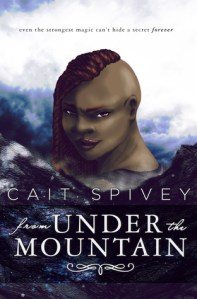
From the Editor’s Desk: From Under the Mountain by Cait Spivey


Welcome to my first book review of the year! There will be lots more in the months to come, but I’m super excited that this one happens to be first. Yes, I may have some particular vested interest in it, seeing as its one I had the privilege of working on and its written by a talented author I’m lucky enough to call friend, but more than that, I just plain adored this one. Toward the end of last year, I found a string of amazing fantasy novels, including Uprooted by Naomi Novik and The Untold Tale by J.M. Frey, and Spivey’s offering fit right in.

So let’s get to all the reasons you should run out and read this book immediately, shall we?

From Under the Mountain

by Cait Spivey

From Under the Mountain by Cait Spivey

As the second child of the Aridan imperial family, nineteen-year-old Guerline knows exactly what is expected of her: be unobtrusive, be compliant, and do not fall in love with her low-born companion, Eva. She has succeeded at only two of those.

But before her feelings for Eva can become a point of contention for the royal house, Guerline’s calm and narrow life is ripped away from her—in the course of a single night—and she is abruptly cast in the role of empress.

Faced with a council that aggressively fears the four witch clans charged with protecting Arido and believes they are, in fact, waging war against the humans, Guerline struggles to maintain order. As her control over the land crumbles, she learns that the war is rooted in a conflict much older than she realized—one centuries in the making, which is now crawling from under the mountain and into the light. With the fate of Arido hanging in the balance, Guerline must decide who to trust when even her closest councilors seem to have an agenda.

Darkly cinematic, From Under the Mountain pairs the sweeping landscape of epic fantasy with the personal journey of finding one’s voice in the world, posing the question: how do you define evil, when everything society tells you is a lie?

There is so much to love about this novel that I almost don’t know where to start. But first, let me say that although Amazon and other retailers seem to be primarily classing this as f/f romance, it is not. There is romance, yes, and it does feature a beautifully rendered f/f love story, but this book is, in fact, a brilliant example of dark fantasy done well.

Spivey establishes her prowess in the genre right from the first page, where we’re introduced to protagonist Guerline standing over the decaying, yet alive, bodies of her parents. This horrifying, slightly gruesome scene is merely a harbinger for what’s to come though, as Spivey proceeds to kill off the entire Imperial family — with the exception of Guerline, of course — by the end of the first chapter.

Suddenly thrust into a role she never expected to fill, the young empress has to navigate not only the intricacies of unraveling her own identity from what others expect her to be but the nuances of running a country poised on the brink of war. Humanity is turning against the witch-lords who have guarded the empire’s borders for centuries, and Guerline finds herself dealing with radical opinions on both sides. But the rift between human and witch, magic and politics is only the beginning of Guerline’s problems, as a creature that has been sealed away from the world for a millennium is finally about to get its revenge.

Spivey’s writing sings off the page with a cinematic flair that evoked the feel of a Studio Ghibli film, but the rotating, more traditional approach to the POV and fact that no one is as safe as they seem brought up visions of George R.R. Martin’s Game of Thrones series. And I have to say that the blending of those two is nothing less than stunning.

But the thing that has always resonated most for me in Spivey’s work is her ability to create a fully realized cast of diverse characters and a world so richly textured it makes you want to live there indefinitely. Arido’s plight may encompass the standard sprawling map of high fantasy, but every detail is painstakingly accounted for, and the repercussions of what seem like small acts are felt throughout in an impressive example of the butterfly effect.

All in all, this is a gorgeous debut by an author who has clearly only begun her to literary stardom, and I cannot recommend it enough. If you’re a fan of high fantasy rife with political intrigue and the classic good vs evil scenario, if you enjoy dark fantasy with a fantastically creepy edge, or if you simply wish to escape into a world that treats everyone — regardless of gender or race or sexual orientation — with respect, then this is the book for you.  Seriously, go read it. It’s amazing.

Book Links: Amazon | Barnes & Noble | Goodreads


Featured From the Archives: Video Games — The Future of Book Publishing?

The post I was gearing up for this week, featuring a look at the way the author/editor relationship works, isn’t quite ready for the world (though you can catch a glimpse of the same insights in this article by author Drew Hayes). Which means, I had to do the dreaded archive diving again. Sorry!

Fortunately, I have the perfect post to pull back into the light and send through the reading circuit again. See, lately, I’ve noticed a resurgence of people talking about this very thing. Interestingly enough, it seemed to fade away last year, so I’m not sure what’s prompted it to resurface, but once again, I’m seeing people claim that video games represent the future of publishing. Rather than go over the topic at length again, I’ll just post my rebuttal to that assertion from November of 2014, because it’s still as relevant now as it was then.

So, I give you:

Video Games: The Future of Book Publishing?

by Kisa Whipkey

Originally Posted on 11/21/14

There are whispers in the halls of publishing about how the future of books will slowly evolve into the business model seen in the video game industry. But no one seems to be able to define exactly how that will happen, or which facets will be adopted. And frankly, I just don’t see it. In fact, I’d even go so far as to posit that the people spreading these whispers have little to no understanding of how the video game world actually works. I realize that’s a potentially polarizing assertion to make, but here’s why I think this: see, I actually come from the video game industry. I have a degree (that I rarely talk about) in video game art and design, and I’ve been to the Game Developer’s Conference multiple times. So I know how the video game industry works. And publishing is already structured similarly; there’s nothing left to glean from the video game industry that hasn’t already been incorporated into publishing, or vice versa.

But, just for the sake of argument (and because no one else out there seems willing to break this prediction down and explain it), let’s do a little compare/contrast analysis.

From where I stand, there are only four possible areas where the business models of the video game industry and publishing coincide:

  • Distribution
  • Interactivity
  • Production
  • Content

So let’s explore each one and see if we can’t figure out exactly what these vague whispers and predictions are talking about.

Distribution

Since I’ve heard these claims from people who are largely on the indie side of the spectrum in publishing, this is my top contender for what they’re looking at. And largely why I suspect people haven’t done their research. There seems to be a misconception floating around about the distribution channels involved in producing a video game. The assumption is that games go direct from the developer to the audience. That’s not exactly true. Even for casual games (otherwise known as the time-killing awesomeness on your phone).

Games, just like books, have multiple parties involved in the making and publishing of a title. It starts with a developer, yes, but that developer then has to secure the interest of a publisher (sound familiar?), and then said publisher needs to find a distributor to actually disperse the thing into the world. So, to simplify, it looks like this:

Game Developer –> Publisher –> Distributor –> Audience

And, in comparison, this is what traditional publishing looks like:

Author –> Publisher –> Distributor –> Reader

There are varying steps that factor into each that I’m not documenting (such as agents in publishing or outside investors in video games), but the basic formula is, at its heart, very similar. Even if you look at the indie side of things in both industries, the model is the same, minus one step in the middle:

Game Developer/Author –> Distributor –> Reader/Audience

Video games also struggle with the same divide between traditional publishing and indie, where the AAA titles (as they’re called) are the ones that are mass distributed to brick-and-mortar stores and garner media attention, acclaim, and the all-important exposure needed to succeed. While, on the other hand, the indie titles are left to duke it out for visibility in the digital jungle of the various app stores. Again, it all sounds very familiar, doesn’t it? So where is the innovation and industry-changing business model we’re supposed to be looking to for guidance? Not here, unless I’m missing something. So let’s move on.

Interactivity

This would be another possibility for what the self-proclaimed Seers of Publishing are predicting, and in some ways, I can see why they’d say it. But I still don’t think it will ultimately come to pass, and here’s why:

Video games are a very different form of entertainment from books. Both rely on the idea of escapism, of transporting the consumer to another world where they can step outside their own reality and immerse themselves in someone else’s. But the way they accomplish it is fundamentally different. Games are an active form of entertainment, requiring the user to literally interact with the game world. Books are passive, relying on the reader’s ability to visualize and imagine the words on the page as a real scenario. (Note that I’m basing this observation on a scale of interactivity, and not on the level of imagination/brain involvement required.)

So, in theory, if books were to go this direction, we’d need to increase the level of interactivity to simulate the gaming experience, right? Well, let me point you to these lovely things then, which already happen to exist:

  • Choose your own adventure books: Immensely popular with young readers in the 80s, these books required their audiences to put themselves in the character’s place, choosing how they would handle the scenario and seeing the immediate consequences of that action. Notice I said they were popular in the 80s, though. Meaning they fell out of favor almost as quickly as they rose. They still exist, but they’re rare and outnumbered, by far, by the more traditional forms of reading material.
  • Enhanced books/eBooks: Yes, this is a thing. There are experimental authors and publishers out there who are trying to find ways to bridge the gap between traditional print and multimedia. Some examples include Booktracks (which pairs a soundtrack with your novel, using auditory cues and music to create a richer immersion for the reader), puzzles deciphered while reading, and enhanced books that are almost more like apps, featuring animations and sound effects. Cool ideas, yes, but again, not very popular with readers.
  • Supplemental Materials: These are almost more marketing related than anything, but I’ve seen authors create real-life scavenger hunts and multimedia apps that go along with their story and world, engaging their fans in new and immersive ways. Essentially, they quite literally marry the video game industry with publishing, but not in a way that truly enhances the reading experience. It’s in addition to that basic action, rather than replacing/modifying it.

Which brings us to my point, the reason why I don’t see books becoming more like video games — books were never meant to be truly interactive. If anything, they compete with film for their audience’s attention, because film is another passive form of entertainment. Both of these mediums have always been about observing. Yes, they can affect us, making us feel emotions and form bonds with fictitious beings in ways that might have us wondering about our sanity, but their point is to detail observations, impart information, and deliver messages that transcend our day-to-day lives and make us empathize with, or understand, the world around us. Gaming is entirely different, more akin to physical activity in the way it engages the brain. You won’t often find gamers who spend hours mulling over the morality of murdering that NPC (non-player character) they saw appear on the screen for half a second. Because the act of gaming is about reflex, instinct, and less about deep philosophical thoughts and musings.

But that’s a conversation for a later day. Today’s point is that readers don’t necessarily want to interact with books. They simply want to read them. And until that changes, I don’t see interactivity becoming the hot trend publishing will steal from the gaming industry.

Production

Ah yes, production. This is where I most often see a lack of understanding about how games are made. There’s this underlying idea out there that games are easy to create, that the time invested in them is minimal in comparison to the profit. And just like my first point — distribution — that’s not entirely true.

The AAA titles — the big ones everyone hears about, the Halos and Dragon Ages and Skyrims of the world — take, on average, 3-5 years to produce. And that’s with teams of several hundred people. You have game designers, artists/animators, programmers, actors, PR/marketing/administrative staff, and sound engineers all involved, and it’s as time intensive as creating a feature film. The reason these are considered AAA titles is because they have budgets that rival cinema blockbusters. It’s no small feat to release a game of this scale, and with the advances in technology, gamers are becoming more and more expectant of this level of quality. Anything that falls below this often earns derision and ridicule.

The casual games (think the ones on your phone that most people consider mindless wastes of time) are less intense, but still generally require at least a small team of people to invest months or even years of their life into their creation. There are a few really astounding individuals that have found success doing it all on their own, but those are the exception, not the rule.

Now, how much of what I just said sounded familiar to all you writers out there? I’m guessing all of it. Because again, it’s not dissimilar to the way the book industry already operates. You have the Big 5 publishers (with the equivalent of blockbuster budgets) publishing a select few, super prominent titles, and guess what? On average, it takes 2-3 years from the time they sign you to the time your book is in stores. And then we have the indies, where the timeline is much shorter, but you still have a team of experts (editors, cover designers, formatters, etc.) helping you put out a product that is largely under-respected by the world.

So what’s to be learned from the gaming industry here? They’re fighting the same equality battle that publishing is, and frankly, they’re not doing any better than we are on that front.

Content

This is the last possible area that could potentially be what the predictions are talking about. But they have it backward. See, the divide between gaming and books isn’t being bridged because books are becoming more like games, it’s because games are becoming more like books. There’s a movement within the gaming industry to include stronger storytelling in games. Let’s face it, up until maybe five years ago, games were not hailed for their storytelling prowess. And that’s because 90% of games were written by game designers, people who focus more on what makes a game fun than anything else. They created the game mechanics (the rules) and built from there.

And then along came companies like Bioware and Bethesda and Square Enix, and suddenly storytelling started to become more important, leading to the employment of actual game writers. So now we have video games that actually include epic narratives with quality writing, bringing the worlds of literature and gaming one step closer together. But that’s not publishing noticing the strengths in the gaming industry and adjusting accordingly, that’s the gaming industry glomming onto the strength publishing already had — story.

Which brings us to the conclusion of our analysis. As you can see, for someone standing with a foot in both industries, this prediction of publishing turning into the gaming industry makes little sense. I simply don’t see the shiny new path these people are touting. But that doesn’t mean it doesn’t exist. If someone out there has a better understanding of exactly what this vague statement for publishing’s future means, I would love to be enlightened. Please share  your thoughts on this interesting topic in the comments. Do you see publishing moving toward video games, and if so, in what way? I’m sure I’m not the only one out there dying to know.

Editors . . . are people?

After last week’s post detailing some of the disappointments editors and agents face, I received several intriguing comments. And of course, it got me thinking (as these things often do) about the underlying concept swirling through all of them.

There are tons of blog posts and articles and exposés and even books about life from both sides of the publishing fence, but much like I pointed out last week, there’s still this sense of divide, this lack of empathy, this disconnect in perception — regarding publishing professionals especially. Now maybe that’s simply because there are more authors than editors in the world, or maybe it’s just that they’re more vocal about the less glamorous sides of publishing than the rest of us. But more likely, it’s the shroud publishing has kept so tightly wrapped around itself that has perpetuated this myth, this idea that editors and agents are mythical, deadly beings who deign to walk among the masses only so they can destroy fragile author egos and feast on their pain.

Don’t believe me? Stop for a moment and try this: clear your mind and, without any sort of precursor, think the word “editor.”

What image pops to mind? Did you see a person, or did you simply see the title, the word itself, floating in your imagination like some incorporeal stamp. Or, worse, did you see some sort of deranged monster hanging out in the back of the editing cave looking like this:

giphy

Regardless of what you saw, I can almost guarantee that you didn’t truly picture a person. No one does. More often than not, the word “editor” is synonymous with a concept, a perception, and everyone’s idea is slightly different, sort of like this:

book-editor-ebcb397f3d23b39df4f06bf10e3044

Notice that final photo — that’s what it really looks like, kids. Because, contrary to what we’ve all been told, editors (and agents) are human. We’re not cyborgs or demons. We’re people stuffed full of emotions, and dreams, and expectations, and flaws. We’re not infallible; we make mistakes. We’re not pre-programmed with all the infinite wisdom of generations of literary masters, we don’t have built-in grammar bibles or the latest in spell-check software hardwired into our brains, and we’re not static. We learn, we grow, we hope, we dream.

And yes, the process of editing does often look like this for us too:

Editing Meme

And yet, the myth endures. Interesting, isn’t it? How easily we throw aside the idea of human compassion when it’s only words on a screen staring at you. How easily we cast aside the thought of the person behind the comments and see only our wounded egos. How easily we direct our rage and hurt at the person/people who are actually our allies.

I’m not saying that the editing process isn’t painful — it often is. I’m not even trying to make this a PSA-type plea for empathy. I’m merely musing on this strange sort of limbo publishing professionals are relegated to — a land where the reality of deadlines, and mountains of paperwork, and the necessities of life are brushed under the rug of perception until they don’t exist. Until everyone assumes that editors live in this sort of perpetual state of editing, that we only creep out of the ether to work, subsisting on nothing but the words before us.

So, I guess the point I’m trying to make is this — yes, editors and agents are people.

And really, we’re just trying to save you from the pain of this:

images

Maybe it’s time to we let the misconceptions fade and remember that we’re all human — whether we’re an author, an agent, an editor, or any of the other countless jobs that go into producing the books we love so much. Maybe it’s time to let the shroud of mystery fall and send the ghosts and ghouls, demons and monsters back into the shadows where they belong. Maybe it’s time to put the humanity back into our interactions and stop letting labels, titles, words stand between us.

Publishing: The Industry of Disappointment

Yesterday, I had to do one of my least favorite parts of being a professional editor — disappoint people. And it started me thinking. We hear all the time about how much the publishing industry sucks for writers, how its fraught with rejection and heartache and nightmare creatures waiting to rip out your soul and feast on it like rabid vultures. But rarely do you hear about it from the other side of the fence. If you do, it’s usually one of three things: advice, a distraught plea for sympathy from publishing professionals pushed to their limits (like me), or a pretentious dish of judgment from jaded pros who no longer remember why, in all that’s holy, they thought this was a good career choice (not me). But what about those people in the middle? Those times when it’s not an extreme day at the office, but just an average, run-of-the-mill blip in a long string of nondescript blips.

Well, guess what? There’s disappointment, rejection, heartache, and nightmare creatures waiting to rip out your soul on our side of publishing too. It’s just not what people think of or consider very often when they picture the glamorous world of publishing. Trust me, I did it too.

When I first dipped my toes into the world of editing, it was done under a shower of fortunate happenstance (you can read all about that here, if you wish). The only thing I knew about being an editor was that it involved reading, and lots of it, and OH MY GOD BOOKS.

read-all-the-books-meme

Looking back on that moment, just three short years ago, I can so clearly see just how naive I was. And I see that same optimism, that same wide-eyed awe and joy and all things positivity shining in the eyes and voices of the next generation of fledgling editors. They hold their badge of editorship high, crying out to the monolith of publishing that they’ll be different, that they’ll never fall to the blades of cynicism and bitterness, that they’ll uphold the virtues of all manuscripts and none shall ever be left behind. And then reality strikes.

Publishing is a business.

Yes, I know you know that, but read it again and really pause to let it sink in. Publishing is a business. It’s not a grand order of literary superheros, it’s not full of shiny editor-fairies who landed the holy grail of impossible jobs, it’s not some promised land akin to literary Eden. It’s a business. A cold, impartial, focused-on-the-bottom-line, money-driven business. Basically, it’s the antithesis of everything art and creativity hold dear.

And it will very quickly turn those fledgling feathers into razor-edged bits of armor. Why? Because if it doesn’t, if you so valiantly try to keep your idealism and your positivity and your dedication to championing every book, it will eat you alive.

Authors tend to view editors, agents, and other publishing professionals as the enemy. We’re the fire-breathing, demon-eyed gatekeepers standing between them and their dreams of New York Times Bestsellerdom. It’s easy to villainize us, to underappreciate, bully, and slay us until they get their way. That’s right, authors, you may view us as cruel, brutal creatures who live on the tears of rejected writers everywhere, but you can be just as bad.

Don’t believe me? Think about this for a moment:

Think about what it’s like to receive a manuscript, to fall in love with those pages, to give your heart on a silver platter to that author’s brilliance, imagining the beautiful and wonderful relationship the two of you will have in your quest for success . . . only to have it be ripped out of your hands and given to someone else. (Yes, editors and agents get rejected too. A lot more than you’d think.)

Think about how it feels to stand on the precipice of a production schedule that holds not one, or two, or even six (if you’re a truly prolific writer) full projects, but twenty-two. TWENTY-TWO manuscripts, all scheduled within a single twelve-month time period, and all expecting to be in that first slot.

Think about what it’s like to dread opening your inbox, or Facebook, or Twitter, not because there might be more heartbreaking rejection notices in there, but because it’s akin to jumping head-first into the seagulls from Finding Nemo, with all 250 new messages screaming some variation of “MINE, MINE, MINE.”

Think about the hours and hours of work you pour into helping an author polish and perfect their baby. All the emails, the late nights, the carpel tunnel, the mind-numbing exhaustion . . . just to be left out of the acknowledgements and receive no appreciation or credit whatsoever for that part of your soul you gave to someone else’s work.

Still think only the writers get the short end of the stick? The point I’m trying to make is not that publishing is one massive pity party, but that its an industry built on disappointment, no matter which side of it you’re in. It’s an industry that survives on the brilliance of creative people — those sensitive, passionate, empathetic people-pleasers.

No editor or agent likes sending a rejection notice; no author likes to have their dreams crushed. No production manager likes telling people they’re not the first one in line; no writer likes to feel like their book is just another notch in the title-mill wheel. And that’s just it, there are an awful lot of “no one likes” when it comes to publishing. Because — say it with me now — publishing is a business. That’s just as true for authors as it is for freelance editors and designers, as it is for agents and acquisitions editors, as it is for publishing houses and distribution centers and booksellers.

So how are we — tender, creative souls that we are — meant to survive in such a bloodthirsty, money-hungry industry?  Honestly, I don’t know. I’m still figuring that out myself. I believe the key lies in understanding that age-old crucial point — it’s not personal, it’s business. But I also believe that business should be tempered with humanity. So my approach is this: hold on to those ideals you started with, whether it was a dream of gracing your local bookstore’s shelves or of helping greatness into the hands of readers. Keep that part of you that first craved a place in this industry, and remember how to find it again when the darkness tries to pry all the joy from your fingers. Be compassionate and empathetic, but fight for yourself too. Define your boundaries and be prepared to defend them. And above all, remember that there are no battle lines to be drawn; we are, all of us, no matter which side of the publishing spectrum we fall on, in this together. So be kind to one another, and let the vindictive anger, the soul-crushing guilt, the heartbreak, and the disappointment fall under our mutual love for the written word.