Featured From the Archives: The 10 Best Things About Being an Editor

The past couple weeks have been rough. Let’s just put that out there right now. The stress, the anger, the pain, and ultimately the tears have left me feeling battered, bruised, and downright defeated. And as I stand at the bottom of the avalanche, staring down a gauntlet of deadlines so insane it makes me want to throw in the towel and walk away, I can’t help but feel like I’m losing some of the reasons that made me want to become an editor in the first place.

I could have pulled one of my bleaker, exposé type articles detailing many of the things I’ve experienced yet again in the last fourteen days, but I don’t want to dwell on that. I’m already broken; I don’t need the reminder of how I got here. So instead, I’m gonna pull one of the happier posts, not because I feel like it necessarily deserved to make the rounds a second time, but because I need the reminder. I need to remember the good part of this editing life before the bad pushes me out of it completely.

And what better way to do that than to reexamine the best parts? So, for the second time, I give you:

The 10 Best Things About Being an Editor

by Kisa Whipkey

Originally Posted on 6/12/15

There have been a lot of articles floating around the interwebs lately detailing the uglier side of editing, the harsh reality and bitter truth that publishing generally prefers to keep hidden. And I’d guess a lot of you are wondering why anyone would sign up for a job that clearly comes with a large side of misery. Or, if you’re a fledgling editor, you’re probably thinking it won’t happen to you, that those of us “griping” are just jaded old farts yelling “GET OFF MY LAWN!” at anyone who comes near. But trust me, you’re wrong. It will happen to you. I said I’d never fall prey to it either, and now look. I struggle daily to hold on to the passion and enthusiasm I started out with, to avoid turning into that hateful, jaded editor I said I’d never become. Because, you see, being an editor is a lot like being a statue in a sandstorm. Each stressful project wears down a little more of that initial optimism and joy, replacing it with marble-lined walls nothing can get through.

But it’s not all bad. And this isn’t going to be one of those bare-all-the-skeletons-in-the-closet type of articles (in case you didn’t glean that from the title above). No, to counter-act the very valid, albeit depressing, truth behind the editing life, I’m going to show you the good, the reasons we battle our way through the ugly, day after day after day. The reasons, when asked, we’ll still tell you we love it and it’s the best job on Earth.

I give you, the ten best things about being an editor, in no particular order and with just a touch of snark. 😉

1. Nerdery Welcome

If you’re an editor, you’re an avid reader. You have to be. It’s literally job requirement #1. Okay, proficiency in grammar is probably job requirement #1, but you know what I mean. You are a self-professed book nerd and you wear that label proudly.

But growing up, you were likely teased for it. A lot. While others spent their afternoons playing video games, sports, or lusting after the opposite sex, you were Belle from Beauty and the Beast, walking around with your nose stuck in a book. Admit it, this was you:

20120817-084704

Well, one of the best things about being an editor is that your unabashed love of all things books is returned and fed by others who also unabashedly love books. All those things that riddled your childhood with taunts are no longer a weak point. The fact that you’re a book nerd is par for the course, and in fact, nerdery in all forms is highly encouraged. They say that nothing beats finding your people, your tribe. Well, book nerds, the land of editing bears its nerd flag proudly, and if you have the skills, you’re more than welcome to add your sigil to our banner.

2. Buying Books Becomes a Business Expense

This is legit. Seriously. Part of an editor’s job (especially an acquisitions editor) is knowing the ins and outs of the book-buying market. And how do you accomplish this? By buying books. No joke. Therefore, those extensive receipts from Barnes & Noble, Amazon, and whatever other book haven you haunt, become what is known as “market research” and according to my tax professional, that is a deduction. **Note: I’m not a tax professional and make no claims to be. Make sure you talk to someone who is before taking my word for it.

As if we needed another reason to buy books, right?

excited-baby

3. Hoarding Books No Longer = Mental Disorder

Ah, yes. This is probably one of my favorites. I am a book hoarder. There, I admitted it. My apartment is crammed to the gills with books, to the point that one of the first comments any visitor says when they walk inside is, “Man, that’s a lot of books!” The second is always “Cool weapons,” but that’s a story for another time.

The point is, I like books. No, scratch that, I LOVE them. I love their smell, their feel, their beautifully linear sqaureness (Don’t ask. It’s been noted before that I have a touch of OCD). And someday, I will own that library from Beauty and the Beast. I will!

Anyway, this habit to collect books in droves has long been considered strange, obsessive, and cause for concern for any who have to help me move. But guess what? No one bats an eye now that I’m an editor. All that judgment I used to have to fend off gets checked at the door. It’s considered normal and, apparently, is completely understandable now that I live my life surrounded by words and literature and the soothing smell of printed paper. Now my only problem is my lack of shelf space. (Thank God for Kindle!)

Books

4. You Become a Mystical Rainbow Unicorn with Super Powers

No, not really. But it will feel that way sometimes. I believe I wrote before about how I considered “Editor” to be an unattainable, near-mythical job title when I was younger. Well, apparently, I’m not alone in that. People seriously look at us like we’re some shimmery Fae creature that can’t possibly exist in real life. And I’m not talking about writers, whose reaction is usually more akin to the fangirl/fanboy response of a super-fan at a rock concert angling to get backstage. No, I’m talking about everyday people who have no affiliation to the publishing industry whatsoever. There’s an impressed awe that tends to come across someone’s face when I mention what I do for a living (no, not the Day Job of Doom part). And honestly, who doesn’t want to feel like a rock star, even the literary kind?

magic-unicorn-meme-generator-i-am-splendiferous-watch-me-sparkle-ae7515

5. Books! Books! Books!

read-all-the-books-meme

I think that’s self-explanatory, don’t you? Moving on . . .

6. It’s Intellectually Challenging

Now we’re starting to get into the more serious reasons editors become (and stay) editors. So I’ll try to hold the sarcasm in check.

This one in particular is probably one of the main things I find appealing. Editing is like Crossfit for your brain. It’s often mentally taxing and can leave you feeling like you’re seconds away from having your eyeballs abandon ship, but that’s also part of why it’s fun. Not the mutinous eyeballs part. The mental gymnastics.

The best editing projects are like a massive puzzle, requiring you to shift and move and tweak and tune things until, like a camera lens, the focus snaps into place and the picture becomes perfectly clear. I love that feeling, and for me, it is a visceral feeling. I know the rules and regulations, but honestly, I edit primarily by instinct. I’m lucky to have been born with an innate sense of storytelling (and yes, I have had people tell me its a superpower) and I can actually feel in my bones when a narrative clicks into place. That sensation alone makes all the hard work, all the sweat and blood and tears (because editors expend those just as much as the authors do in this process) worth it.

puma

7. Proud Teacher Moments

If the last point wasn’t enough to convince you that being an editor is awesome, this one should. Yes, I just said that feeling a story find its groove makes it all worth it. And it does, but this is the icing on the cake. Completing a project definitely feels good, I’m not going to lie. But there’s one thing that feels even better:

Watching your author step into the much-deserved spotlight, their polished, perfect new book-baby clutched in their hands.

I call it the Proud Teacher Moment, because that’s the only way I could think to describe it. I imagine it’s very similar to the swell of pride and emotion teachers feel when they watch their students graduate. It’s sort of a bittersweet sensation — one part love, one part pride, one part sadness. Most people don’t realize how invested editors become in the projects they work on. Yes, the author wrote the thing, but we helped train it, helped shape it into the perfect piece of literary brilliance flourishing out in the world. And that creates a special bond. We may be relegated to the shadowy corners of the hell writers call the Editing Cave, but we watch from those shadows, cheering our authors on with proud tears glittering in our eyes.

Make Good Choices

8. Discovering Hidden Gems of Awesome

Okay, now that we had our little moment of seriousness, back to the fun. This one is a perk that most people automatically know — we get to read (and find) awesome books before they’re published. Boom. Go ahead and be jealous. You know that’s totally awesome.

Bejealous

9. Creating Magic

Writing is a magical process. I mean, come on, authors paint fully-realized worlds, characters, and plots that elicit emotions in readers with words. Letters on a page. That’s pretty magical, if you ask me.

Editing may not seem all that magical — it’s more like polishing a car than say, painting one — but it has its own kind of magic. Especially in the developmental phase. Editors are like spirit guides, helping authors find their way when they get lost in a forest of words. The best ones can actually step into an author’s voice, mimicking their syntax, their style, with the efficiency of a Pooka. Which, come to think of it, may be the perfect analogy for editors in general, given the oft-touted love/hate relationship writers have with us.
DoctorWho

Anyway, what I’m trying to say is that writers create magic, but editors help contain it. And for that, we need our own set of spells.

10. For the Love of All Things Books

When it really comes down to it, there’s only one true reason someone decides to pursue editing: a genuine, deep-rooted for all things books. The reasons listed above are great, but if I lost all of them tomorrow, I know I’d still have a love for books. Because nothing beats the ability to escape into a million other lives and worlds. It’s even been scientifically proven that reading enhances our ability to empathize. It’s a fundamental human gift, storytelling, and it’s one I will always cherish.

And that, my friends, is why I adore being an editor. Why I strive to look past the gritty, harsh truth of an editing life. I love storytelling. Plain and simple. And I love editing because it lets me pursue that love of storytelling. I enjoy the process, as painful as it may be sometimes, because I love the challenge, and I love helping others achieve their literary dreams. And best of all, I love that I get to spend my days surrounded with all things books.

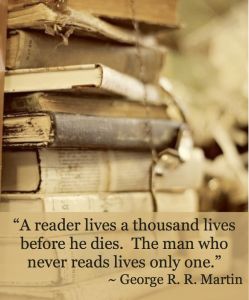
I can’t sum up this last point any better than with this quote:
7afa052705168d8936aadee57b7a5f3a

Happy reading!

Hear Ye, Hear Ye! $20 Full Manuscript Critique Offer

I know, I’m posting a day early. But if you were on social media earlier, you already know that I’ve stepped off the deep end into a pool of utter (and awesome) madness. Hence the need to post a day earlier than normal this week.

See, one of my best friends — the brilliant and fabulous Cait Spivey — is trying something ambitious for the release of her debut full-length novel, From Under the Mountain. She’s putting together a high fantasy fashion show for her launch party. It’s a unique, fantastic way to bring readers into the world of her novel right from the get-go, and I’m always one to applaud innovation. (As does REUTS Publications, who — to the surprise of no one, I’m sure — is behind the book’s publication.)

The thing is, she can’t do it alone. She needs help to make this ambitious dream a reality. And, with the aid of IndieGoGo, she’s created a way for you to be involved, offering a variety of bonuses and extra perks in exchange for a small-to-generous donation to the cause. (Which, in case you’re curious, funds only the event’s production and not the book’s.) From custom art to autographed copies and exclusive bonus content, there’s a lot to choose from.

But I have one more to add to the pile:

Anyone who donates $20 – $50 to the campaign between 9/3/15 and 10/1/15 will receive a FULL MANUSCRIPT CRITIQUE from me.

Check my Freelance Editing Page, that’s worth $200-$500 dollars all on its own, without the added value of the perks Cait is offering too. That’s a crazy good deal, right? You know you want it. 😉

Here’s how it works:

Between now and the end of the campaign on 10/1, Cait and I will keep track of the eligible donations. I’ll add them to a special two-week schedule on a first come, first serve basis. So the sooner you donate, the higher up on the list you’ll be.

Then, starting 10/2, I’ll contact everyone and work will begin. Due to the other constraints on my schedule, I will be working on them one at a time, so the closer to the top of the list you are, the faster the turnaround time will be.

(Side note: if you won something from me previously and have not received it yet, don’t worry. I have not forgotten you and will be working on those first. You’ll even receive a bonus for your patience and the inconvenience.)

All right, that’s pretty much all you need to know about the terms and conditions of my offer. As always, if you have questions, feel free to contact me directly or leave a comment below. I’ll be back next week with more book reviews, editing/writing advice, or whatever other randomness grabs my attention. But for now, what are you waiting for? GO DONATE!

About From Under the Mountain

ivy cropped

The novel follows Guerline, a young woman who ascends to the throne of the empire after her entire family dies in one fell swoop. Now Empress, Guerline must address the suspicion growing in her court toward the four witch clans that protect the empire’s borders. Among the seditionists is Guerline’s best friend and lover, Evadine.

Guerline’s political balancing act is upset when the palace is attacked by powerful magic, bringing all Evadine’s fears to bear—but magic saves them too. In the wake of the attack, with an even greater threat looming, Guerline must decide who to trust, and summon all her strength to meet the challenge.

From Under the Mountain is a high fantasy for the modern world, drawing on the foundations laid by great female fantasy writers of the past twenty years to tell the story of one young woman. Guerline’s journey to establish her place, protect what she loves, and do right by her people will resonate with readers across the board.

The Infamous Wall of Post-it Deadlines

The Editing Desk

You remember this photo, right? It was first featured in The Editing Life Laid Bare: A Brutal Look at the Statistics, and since then, has become affectionately (not to be confused with facetiously) known as my Wall of Post-it Deadlines. (I have a weird penchant for dubbing random things in my life. I’m sure you’ve noticed.) It details, in overwhelming, in-your-face, screaming brilliance the insanity that is my life. It’s changed a bit since I took this photo — post-its have come down, others have been put up, and a stack of paper vomited all over what little desk space I actually have — but the idea behind it is the same: it helps me keep tabs on exactly which projects are due when, and where they are in the process.

Now, I know some of you love seeing the nitty-gritty details of what the editing life actually looks like (as evidenced by the popularity of the aforementioned statistics-oriented post and your resounding encouragement via Twitter earlier this week), so I’m going to show you a slightly different version than I did last time. Namely, I’m going to show you exactly what I face on a daily basis. Not a breakdown of the finances vs time invested, but my own personal horror show of deadlines.

Go ahead, scoff at my sarcastic banter. You won’t be laughing by the end of this. In fact, you’ll either nominate me for Superhero status or insist that I must somehow be insane, because no normal person would ever voluntarily take on what you’re about to see. Are you ready?

You sure?

Okay, here goes!

My Life in Deadlines: aka One Woman’s Battle with Stress

As most of you know, I work a day job. It’s not a bad job, and it’s actually given me quite a few useful skills I’ve applied to my “secret” life in publishing, but it does take up a good part of my day. On top of that, I spearhead not one, but TWO departments for REUTS Publications and run my own freelance art/design/editing company on the side. Oh, plus I write, have a husband I like to actually spend some time with, and partake in hobbies that don’t involve any of the previously mentioned occupations. So, an average week on my calendar looks something like this:

Total weekly hours: 168

Hours spent at the Day Job of Doom: 40

Hours spent sleeping: 56

Hours spent on non-work life shenanigans: 20-44

Hours spent editing/reading/whatevering for REUTS & Freelance: 28-52 (and sometimes more if I’m under the gun on a deadline and have to sacrifice sleep.)

Number of days off: 1 every second blue moon on the third Tuesday of every fourth leap year. (Okay, it’s not quite that bad, but it feels like it sometimes.)

Scared yet? Just wait! It gets worse.

Now that we’ve established I’m in the running for Workaholic of the Year, let’s look at what all those lovely little post-its actually mean, shall we? All the things that pull at me during those 28-52 hours of REUTS/Freelance time. (I know that’s the part you’re all really curious about anyway; I just had to set the stage first. 😉 )

Acquisitions:

  • Total Number of Unread Queries: 217
  • Total Number of Unread Partial Requests: 20
  • Total Number of Unread Full Manuscripts: 82

Yeah, that’s a lot of reading. 82 full books! Imagine what that would look like if they were physical copies instead of digital . . .

Terrifying, wasn’t it? But on top of trying to find time to read that many potential gems, I also have to deal with these:

Editorial: (Can be either REUTS or Freelance)

  • Total Number of Projects in Process: 45
    • Number Awaiting Structural Edits:  41
    • Number Currently in Line Edits: 2
    • Number Currently in Proofreading: 2

That might not seem so scary. I mean, those numbers are smaller than the number I have waiting for me in the TBR pile, right? Except editing takes significantly more time than simply reading does. So let’s look at how those numbers really stack up, on a monthly basis.

Editorial Deadlines by Month:

Total Number of Projects I’m Behind On: 2 (What? I’m a human, not a robot. It happens.)

August 2015:

Structural Edits Due: 4
Line Edit Projects to be Completed: 2
Proofreading Projects: 1

September 2015:

Structural Edits Due: 2
Line Edit Projects to be Completed: 2
Proofreading Projects: 2

October 2015:

Structural Edits Due: 2
Line Edit Projects to be Completed: 1
Proofreading Projects: 0

November 2015:

Structural Edits Due: 2
Line Edit Projects to be Completed: 2
Proofreading Projects: 0

December 2015:

Structural Edits Due: 2
Line Edit Projects to be Completed: 3
Proofreading Projects: 0

January 2016:

Structural Edits Due: 2
Line Edit Projects to be Completed: 1
Proofreading Projects: 1

February 2016:

Structural Edits Due: 1
Line Edit Projects to be Completed: 1
Proofreading Projects: 0

March 2016:

Structural Edits Due: 1
Line Edit Projects to be Completed: 1
Proofreading Projects: 1

April 2016:

Structural Edits Due: 1
Line Edit Projects to be Completed: 3
Proofreading Projects: 1

May 2016:

Structural Edits Due: 1
Line Edit Projects to be Completed: 1
Proofreading Projects: 0

June 2016:

Structural Edits Due: 1
Line Edit Projects to be Completed: 1
Proofreading Projects: 0

July 2016:

Structural Edits Due: 1
Line Edit Projects to be Completed: 1
Proofreading Projects: 0

My schedule is actually booked clear into 2017, but I think you get the idea. There’s never a moment in my foreseeable future when I don’t have at least two projects approaching a deadline. And those empty spots I listed are likely to fill up well before I actually get to the month involved.

Also, let’s not forget that I sometimes like to pretend to be a professional artist (because I really should use that expensive art-school degree for SOMETHING, right?) Currently, I have this many commissioned art projects on the schedule, all due by the end of the summer. As in next week.

Art:

  • Logo Design Projects: 1
  • Illustrations: 4

Not to mention having to find time to answer emails, deal with administrative work, and all the other hats I wear throughout an average day at REUTS. It’s exhausting to even look at that list, isn’t it? Which is why this is often my anthem:

So, there you have it, in all its gruesome detail: the explanation behind the infamous Wall of Post-it Deadlines and an inside look at what I’m working on. How do I juggle it all? Even I’m not completely sure. One thing at a time, I suppose. The takeaway here, aside from the fact that I’m a madwoman, is this: next time you think about sending an agent or editor a “friendly” nudge about the status of your whatever, take a moment to think about this. I’m not the only one out there with a frightening wall of deadlines. Do you really want to be the one that pushes the balance of stress too far? “When Editors Attack” isn’t something you really want to experience firsthand. Trust me.

Now, if you’ll excuse me, I have to get back to work before that 2 in the “projects I’m behind on” category becomes an 8. See you next week!

A Zebra in a Herd of Mustangs

Photo of zebra with horses

This past weekend, as many of you likely know, I attended the Willamette Writers Conference. It wasn’t my first time attending (I went last year under the guise of just being an attendee), but it was my first time attending as faculty. That, in and of itself, added a layer of terror and anxiety. But there was one thing in particular I found myself struggling with, not because of anyone at the conference (seriously, everyone I met and had the opportunity to interact with were friendly and awesome, and I highly recommend going if you have the chance), but because of a set of deeply entrenched scars that are the product of my battle with elitism in the arts.

This particular demon surfaced in the form of a tweet that some of you probably saw:

And obviously, it inspired the title of this post. But it’s not as negative as you might think. Instead, I’m going to show my fellow zebras exactly why it’s okay to be slightly left of center, why conformity is over-rated, and why there is value in every experience you bring to the table, whether it be literary or not.

The world of publishing is a strange, slightly archaic one, full of tradition and whispered secrets and closed doors. The Old Guard would have you believe that in order to be successful as an editor or agent or author, you have to follow the traditional path — earn a degree in creative writing or literature or publishing, put in your dues serving other literary people coffee (or publishing short story after short story) while living in a closet in New York, and eventually, maybe, you might actually get your foot in the door.

I don’t have a literary degree.

In fact, my path to a career in publishing is probably the most circuitous, winding thing ever. (You can read all about how I became an editor at that link there.) And I’ve noticed that I’m not the only one. Like the invasive species the Old Guard would paint us as, non-literary backgrounds are slowly infesting the halls of publishing and forcing an industry that’s fiercely protected its traditions for hundreds of years to do the very thing it fears most — change.

And I, for one, think that’s fantastic. However, those of us without literary degrees face something the rest of you don’t: a perceived judgment and condescension. Snobbery, if you will. (Note that I said “perceived.” Most of the time, the person with the literary degree isn’t actually judging or condescending; it’s our own insecurity demon and sense of inadequacy getting in the way.) What makes us worthy of competing with those who have the “proper” training? What could we possibly know about the business of writing and selling books without a certificate of accreditation from a prestigious university?

Turns out, quite a lot. In fact, I would hazard that some of us without literary degrees might even understand the business better than some who have them.

Now, before anyone gets all offended, I want to set the record straight. Following the traditional path to a career in publishing is perfectly fine. I have nothing against English degrees and actually loved everything about college (I often daydream about going back). And I’m certainly not saying that everyone who has a literary degree is a pretentious snob. What I’m commenting on is the internalized perception of snobbery many of us “non-literary” folks wrestle with. It may not be as insidious as some forms of prejudice, but it definitely hovers on the border.

Let’s veer away from that dark topic, though, and get to the point of today’s post: having a literary degree is not a requirement for success in publishing. In fact, if you look closely at your background, you just might find that every skill set you’ve learned, from formal education to working that crappy day job, has added something to your bag of tricks.

For example, here’s how my life stacks up:

  • Being home-schooled through grade school/high school/college gave me an ability to learn from my surroundings, to be resourceful in finding answers, and an understanding of deadlines and self-motivation.
  •  

  • Battling depression and anxiety has taught me empathy, self-awareness, and inner strength in the face of negativity and seemingly insurmountable odds.
  •  

  • A background in film (animation) has given me a different vocabulary with which to talk about story, POV, narrative tense, and other mechanics of literature normally obscured behind jargon.
  •  

  • Similarly, my experience in video games has given me a way to understand and impart things like non-linear storytelling, cause-and-effect in narration, and crafting the all-important stakes that drive a plot.
  •  

  • The Martial Arts instilled the concepts of humility, integrity, respect, dedication, perseverance, and the joy of giving back to a community.
  •  

  • Running a martial arts demo team taught me how to create a curriculum, how to manage a team, how to listen to others and address concerns without undermining the integrity of the whole, and how to teach.
  •  

  • Going up against the Old Guard in the martial arts world taught me to believe in myself, in my own innate talent and skills, even when I was repeatedly shut out and faced with a lack of validation or acknowledgment.
  •  

  • Working in sales has taught me how to network and how to understand the business side of production costs, profit margins, distribution, sales proposals/purchase orders and even marketing.

Yes, it’s an eclectic arsenal, but wrap it all together and it’s what makes me, well, me. One of my best friends called me a powerhouse the other day (which is seriously one of the best compliments ever!) and it started me thinking about myself differently, trying to see myself not through the lens of my own insecurity and fear of coming up short in the presence of my peers, but through her eyes. And you know what I realized? I may be a zebra among mustangs with my odd mixture of experiences and non-literary background, but I’m actually kind of proud of that. And when it comes down to it, I can keep pace with my non-striped cohorts.

So, to everyone who’s ever felt like they weren’t good enough to be where they are, that they were too different to fight for their dreams, that they’d never be accepted by the Old Guard, I say this: Wear your stripes proudly, my fellow zebras. Embrace what makes you different. Own what sets you apart. It’s not a weakness, and its just as beautiful. Believe in your stripes, slay that insecurity demon and feeling of inadequacy, and you just might find that the mustangs around you aren’t running away, but are instead running with you.

What’s That You Say? (One Editor’s Definition of “Voice”)

Well, here it is — the infamous “voice” post you’ve all been waiting for. I’ll admit, I’m more than a little concerned about it living up to expectations, but I guess we’ll wait and see. (Also, for those who missed my warning on Twitter earlier in the week, get ready for quite a lot of snark.)

Before we dive into the meat of it though, I’d like to provide a little context. Recently, I’ve noticed a distinct lack of understanding regarding this concept. Not just in the rightly confused writers, but in my fellow editors, in beta readers, and even in critique partners (not mine, I should note. Mine are awesome). And since my mission is often to help provide those looking for answers with a new, probably somewhat unconventional avenue for finding perspective on all things literary, I decided it was time to tackle the hydra known as “voice.”

Normally, I like to focus on the fundamental mechanics of storytelling, the foundation beneath the words. And if you’ve spent any time here, you’ll know that I usually advocate for seeing beyond the letters printed on the page. Not today. Today, we’re going to pay attention to the actual words. This one, in particular:

“Voice”

How many of you shuddered as you read that just now? My guess would be several. Because “voice” is one of those literary terms that quickly becomes the bane of a writer’s existence. It floats around the outskirts of Pretentious-ville, trying too hard to fit in with the cool kids and avoid being “defined.” Which is why you end up with a plethora of obfuscated explanations and half-assed deflections that leave you feeling just as lost as when you started. Am I right? Not even the industry pros can always define it. (Which, by the way, is a great test for choosing who you work with.) So then, if it’s so hard to explain, what the heck is it?

The short answer is that there are at least two layers to voice: author and character. (And, if you really get the wrong industry pro, editor. But that’s bad. You should never hear us in your  work.) Still with me? Good. Now, let’s define those a little more.

  • Author Voice = the particular way an author weaves together a narrative. It’s one part style, one part storytelling sense, and one part personal experience.
  • Character Voice = the specific filter an author puts over the story to create a unique persona, otherwise known as character. (Why, thank you, Captain Obvious.)
  • Editor Voice = what happens when you get either a Grammarian editor, who then strips both of the above from your work, or what I call a Personal Preference Editor, who morphs your voice to fit their own perceptions and style. Hence why I said this category was bad.

Now, if you’re at all like me, your brain is probably slamming on the brakes with the same effort it does when faced with math. Which is to say, an all-out, mind-numbing denial topped with a resounding “huh?” Don’t worry, though. I’m gonna fix that.

This is the point where most conversations on “voice” wander away from the topic, letting it drop quickly and with as much recognition as one would give that weird fourth cousin everyone avoids at the wedding because they can’t possibly be from your family. Why? Because this is where someone either proves they understand the concept or steps royally in the massive steaming pile of road apples.

(Please, God, let me avoid the road apples.)

All right, so, the formal definition of “voice” is this: “a combination of common usage of syntax, diction, punctuation, character development, dialogue, etc.” Right, so that encompasses pretty much everything. Helpful. (See? I told you the industry pros couldn’t always define it.)

My definition of voice is a little different, probably because I, myself, am a little different. Anyway, I define it like this:

Author Voice = the camera we view the story through.

Character Voice = the lens used to alter the way we perceive it.

I’m about to mix some crazy metaphors, so bear with me. Basically, I view an author like a director. Every single decision they make is made with a conscious intent to convey something, from the way they build the scenes, to the angles they show the action from, to the perceptions of the characters and their individual motivations. Regardless of how the story is presented in terms of point-of-view, narrative tense, etc, the author’s consciousness pervades the entire thing.

Character voice, on the other hand, is used to create a specific interpretation, like placing a fish-eye lens on a camera or a filter that paints everything with a red tint. Character voice is a costume placed on top of the author’s natural one, creating something completely separate and yet still intrinsically part of the author. Think actors in a play. Same underlying person, different “personas.”

Both types of voice rely on things like syntax, cadence, diction, personality, emotion, and motivation, but they use them in distinctly different ways. The best analogy is music. (I told you I was going to be jumping around in my metaphors.) Think about the vast difference between a rock song, a folk/acoustic song, and a country song. Same basic instruments — guitars, drums, vocals, maybe some strings — but entirely different effects. Which leads me to the point that spawned this whole article:

“Voice” can (and should) be literally heard while reading.

This is the key to a brilliant editor, beta reader, or CP, and it’s the thing I’ve noticed many missing lately. Editors MUST be able to distinguish not only the author’s voice, but the character’s as well. Which is a skill that goes way beyond simply understanding the rules of grammar. Good editors have ears as finely tuned as a musician’s; it’s how we identify areas that need to be fixed. We literally “hear” it.

(I’m not talking about structural development here, just to be clear. Structural/Developmental editing is an entirely different beast, and is much more visually oriented. In my opinion, “voice” falls within the realm of line/copy editing, because that’s where most of the problems lie, line by line.)

What does “voice” sound like to an editor? Well, ideally, it sounds like someone sitting there and telling us the story. We hear their accents, the cadence and rhythm to their voice, the unique way they spin a sentence, the word choices they make, all the things you would notice if you were talking to someone face to face. Which makes it super obvious when you come across the written equivalent of someone stumbling over their words, or a character suddenly using a word that’s so outside their normal vocabulary its painful. It’s jarring. In its most minor form, it’s like hearing an off note in an otherwise rockin’ song. At its worst, it makes your character suddenly sound like a completely different person.

I even have the perfect example for you: (Oh, don’t scoff. We all know you’ve secretly sung along to this in your car at least once.)


Okay, did you hear it? Cookies to whoever guesses where I’m going with this first. 😉

If you didn’t catch it, play it again; only this time, don’t watch the video, just listen. Notice how that final line suddenly sounds like a completely different person? It isn’t; it’s still Idina Menzel, but her voice shifts completely, to the point that I had to look up whether the speaking-voice actress and singing-voice actress were the same. (It’s common in animation for them to be different people.) Anyway, that’s what it sounds like to an editor when there’s a problem with “voice” in a manuscript.

But identifying it is the easy part. Even normal readers can do that. It’s what comes next that requires real skill.

See, once the problem has been identified, the editor has to make suggestions for how to fix it. And that brings us back to my initial comment on the importance of them understanding voice. An effective editor will provide the exact suggestion to fit a) the author’s underlying voice, and b) the character’s. It should fit seamlessly into the overall style of the manuscript, stay true to the speech patterns established for the characters, and feel like a natural extension of the author’s thought, be it the placement of punctuation, the overall clarification and flow of the sentence, or finding the correct word choice to substitute and/or encompass what the author was trying to say. It should never — let me repeat that, NEVER — sound like the editor’s voice or personal preference.

For example, my own writing tends to avoid using “that,” as I often find it to be extraneous. But in a recent project, I found myself putting those back in after someone else had stripped them out. Why? Because the character involved was kind of a formal person, prone to highly intelligent word choices, refined sentence structures, and an overall tone that simply required a more formal approach. In essence, I stepped into that author’s (and character’s) voice and mimicked their syntax, diction, and rhythm like a parrot. This is what good editors do.

The take-away from this, authors, is not that I’m the world’s greatest editor and you should only ever hire me. There are plenty of brilliant editors in the world (and I may or may not count myself among them). No, the point was to give you a way to assess your potential assessor. Any decent editor, agent, or critique partner should be able to answer this one simple question: “How do you define voice?” If they can’t or they offer one of the vague, half-assed, standard responses and then quickly change the subject, run. They just stepped in the road apples.

At the end of the day, it’s your work, your voice, that needs to shine through. And without someone who truly understands exactly what that means, there’s a very real chance that won’t happen. So proceed with caution, writers. Find someone who can break down, like I just did, the definition of voice. It may not be the way I said it, but it should be obvious that they get it. And hopefully, after reading this, some of you now have a better understanding as well. 🙂