The Writing Process Blog Hop: Take Two

Before you start, yes, I know I’ve already written a post about this. But Jon over at Jumping From Cliffs (you should totally check him out! His posts are full of dry wit and helpful advice) tagged me again, this time as a writer. What do I mean, “this time”? Well, if you recall, the last post was morphed slightly to impart my views on the process as an editor. Not necessarily my views as a writer. But, contrary to how it may seem, I am actually still a writer. Editing may have taken over my life, and I may often feel like I’m trying to bail out my sinking schedule with a spoon, but that doesn’t mean I’ve given up on my writing. In fact, quite the contrary.

So Jon has graciously given me a second chance to participate in the blog hop, not as freelance editor extraordinaire, or even Editorial Director for REUTS Publications, but as just little old me, the author.

How does it work? It’s really quite simple: I answer the following four questions and then send you off to read about some truly amazing folks. And trust me, the four I’ve chosen each have something unique to offer that you won’t want to miss.

But first, the questions:
 
1) What are you working on?
 
I already spoke about Unmoving in that previous post. So, rather than repeat myself, I’ll talk about the series it’s part of as a whole. (If you want to find out more about Unmoving specifically, simply click here.)

Unmoving is the first in a long urban fantasy series (I think I’m up to about 15 plot bunnies) that I’ve dubbed The Synchronicity Series. For those unfamiliar with the term, “synchronicity” is a psychological theory developed by Carl Jung. In it’s simplest definition, it means you find meaning and connection between two seemingly unrelated events. This concept is the foundation of the series, making its presence in the series name an obvious, yet essential, choice.

Each book technically stands alone. Unlike other series, there’s no common character, or place, or even theme linking them all together. How is that a series? Hold on, you’ll see. Instead of the usual conventions that link a book to its sequels, I use the principle of synchronicity. Each book contains at least one Easter egg, what I’ve been calling a jump-off point, a place where the various plots in the series momentarily intersect. It could be a brief encounter on the street, a phone conversation someone overhears, or even something seen along the road, but somewhere in each book, you’ll meet the main character of the next one. The characters all lead completely separate lives, so to each, the jump-off point is an irrelevant, unrelated event in the grander plot of their story (one you’ll get to see from both sides), but to the reader, it has meaning. If you’re willing to look for it.
 
2) How does your work differ from others in the genre?
 
Aside from what I just outlined? Hmm, that’s a hard one.

I suppose I would say that my work tends to be very multilayered and complex. It’s never just one genre. I tend to pull from several — fantasy, horror, thriller, mystery, etc. — to make one strange and twisted blend. Then I’ll infuse that with another layer of psychological torture and a dash of cinematography. I’ve always said that I don’t write like a writer. I write like a film director. So I think, (well, hope) there’s a definite cinematic feel to my generally somber stories.

But even though my work is classified as dark, there’s always a ray of hope laced through it. And there’s always a message buried somewhere. Nothing pretentious or preachy, just something subtle that I hope readers will pick up on and that will give them pause to think.

Does that qualify as different? You tell me. 😉
 
3) Why do you write what you write?
 
Honestly? Because I don’t know how to write anything else. As a reader, my tastes are as varied as they come. But when it comes to writing, only one thing comes out — dark fantasy. Fantasy has always been my go-to genre of choice, and until recently, it was more of the high/dark fantasy variety. I never expected to branch off into urban or paranormal. So maybe that’s a good sign. Maybe I’m not as rigidly defined as I think. I do suspect that I’ll always stay somewhere within the speculative fiction genres though, as trying to create a contemporary novel literally boggles my mind. I truly don’t understand how its done, how you create tension and conflict without the aid of something supernatural. (The fascinating part is that I totally get it when it comes to editing. It’s only my writer half that’s completely baffled by it.)

Maybe that makes me a little dense as a writer, but I choose to think of it as self-knowledge. I know exactly what I’m meant to write, so why bother trying to force something different?
 
4) How does your writing process work?
 

I actually wrote an overly detailed version of this about a year and a half ago: How Does She Come Up With This Stuff?

But the short answer, for those that don’t want to sludge through that previous post, is music. I have a very strong connection with music (as most writers do) and literally everything I do creatively stems from it. The core story idea directly correlates to the song that inspired it, although I seem to have a distinct gift for taking even the happiest, sweetest songs and making them dark and twisted. (Unmoving being the prime example. It was inspired The Script’s “The Man Who Can’t Be Moved”.)

I’m not a big outline person, though I do tend to write very linearly. So once I have an idea, I only create the bare minimum in terms of a road-map. I’ll block in the scenes on a spreadsheet, with only a few words to summarize the goal. This allows the writing to remain very organic, while still progressing steadily toward the final point of the tale. Technically, I suppose I fall somewhere between a pantser and a plotter, since I like to have a sense of direction, but also like to be surprised by the details that appear as I’m writing.

That concludes my portion of today’s program. Now, I get to introduce you to four of my favorite people:
 
Priya Kanaparti: Author of Dracian Legacy, Priya is a ray of sunshine. Seriously. There’s something about her voice that feels warm and happy, even when she’s writing the most heart-wrenching scenes. Her enthusiasm for life is infectious, and she’s probably one of the sweetest people you’ll ever meet. She’s also extremely determined and focused. Her regimented writing schedule leaves me in awe. I’m sure she’s got a few tips and tricks we could all benefit from, so be sure to check out her writing process in the next few days!
 
Drew Hayes: Drew is one of the funniest people I know. His posts are full of sarcasm and brilliantly wicked analogies that have me laughing out loud on a regular basis. Author of several self-published works, including a serial web novel, and the upcoming The Utterly Uninteresting and Unadventurous Tales of Fred, The Vampire Accountant, Drew has experienced all the various forms of publication. His latest experiment — live-writing a novel during the month of April — is one you definitely won’t want to miss!
 
Cait Spivey: Fellow editor, and newest member of the REUTS Publications family, Cait has plenty of insight to offer. Author of the serial short story I See the Web, as well as several NA novels, she also bridges the fence between writing and editing. Her blog features a lot of helpful articles on writing and publishing, and I highly recommend it. She shares a lot of the same viewpoints I do, so if you enjoy Nightwolf’s Corner, you’ll find a lot to love in Cait’s work too. 😉
 
Summer Wier: Summer is one of the most genuine, supportive people I’ve ever met. She’s also a brilliantly gifted writer. Her debut YA novel is currently making the querying rounds, but she’ll have three short stories in the REUTS Publications anthology of retold fairy tales releasing this fall. Her posts range from book reviews to personal experiences in the writing world, but the one thing contained throughout is her signature wit and humble honesty. So definitely show her the love she gives to the writing community and check her out!
 
And, of course, be sure to stop by Jumping from Cliffs. Jon has been one of my favorite bloggers for a long time now, and his quick wit never disappoints.
 
Andrew Toynbee is another person I’ve had the pleasure of getting to know, as we (along with Jon) started blogging around the same time. He, too, is participating in the blog hop, and his post is nothing short of epic. So if you’re looking for even more writer awesomeness, be sure to check it out!

Next week, I’ll have something insightful and snarky for your reading pleasure. What that will be? I don’t know yet. So if you have a request, now’s a great time to let me know. 😉 Until then, happy reading!

From the Editor’s Desk: A Need So Insatiable by Cecilia Robert

As an editor, (both freelance and under REUTS Publications), I have the wonderful opportunity to see amazing novels during their developmental phase. And I wanted to find a way to share them with all of you as they became available. (I also wanted to find a way to help support the authors that trusted me with their manuscripts.) So think of these posts as my own personal book recommendations, straight from the editor’s desk.

This week’s edition brings you the latest release from self-pub powerhouse Cecilia Robert:
 

A Need So Insatiable

By Cecilia Robert


A Need So Insatiable by Cecilia Robert


“You’ve owned me from the moment I walked into that music room. You’ve wrapped yourself in my heart and mind. I can’t get you out. I don’t want to.” ~ Rafael Van Rees

Sophie Fisher’s life is on fire. If she’s not ducking around corners or slipping out of windows to escape the debt collectors her father’s death has left knocking on her door, she’s dealing with her rebellious, fifteen-year-old sister, Lilli. And, as if that’s not enough, Rafael Van Rees crashes into her life—literally—bringing with him a past the public has no idea of. Can she unravel his mysteries before he unravels her, or will his presence finally force her to face the demons she’s trying to outrun?

Rafael Van Rees prides himself on being in control of his destiny, music and women. As far as he is concerned, his past is a black cloud in the distance–until he meets Sophie, that is, and his world spins out of control in more ways than one. He knows the darkest sins and secrets eventually reveal themselves, but when it comes to Sophie, he’ll stop at nothing to protect her from his past. Even if it kills him.

 
A Need So Insatiable is the first installment in a new Romantic Suspense series. Featuring a split POV between the female and male leads, it’s a fast-paced, high-intensity read that combines all the strengths of romance and mystery.

Sophie is a budding opera singer dealing with a bad hand in life. Orphaned at 24, she’s trying her best to raise her teenage sister and deal with the overwhelming debt her father left her in — debt that comes with a side of vicious loan shark.  She’s a snarky heroine who manages to keep her head up throughout all the turmoil. But the one thing she doesn’t expect is the storm known as Rafael Van Rees.

A prominent maestro and music director, Rafael is a mystery. As far as the public knows, he appeared fully-formed, lacking any shred of a past — an illusion he created on purpose. But that past slaps him in the face when Sophie waltzes back into his life. The only thing he can’t figure out is why she doesn’t remember him. He’s waited for this reunion for 14 years, and he’ll stop at nothing to win her over, even if it means confronting the demons he’s tried so hard to outrun. Moody, passionate, and gorgeous, he’s everything the male lead in a romance should be. I dare any female to read this and not swoon, at least a little bit. 😉

Sophie and Rafael aren’t the only great things about this book, though. There’s also a supporting cast that fills that role to a tee, providing everything from comic relief to the voice of reason for the main characters. And the writing is grounded and realistic. Romances that keep everything flowery and perfect in the love scenes are one of my personal pet peeves. Ms. Roberts didn’t choose that approach, portraying everything (yes, even the sexy parts) in a realistic tone that was both relatable and refreshing. Some people may not like that level of realism, but I did. It made the characters feel more human.

Classified as a New Adult book, A Need So Insatiable does contain some adult (as in mature) content. So if swearing, sex, and moderate violence isn’t your thing, I would recommend against reading this. But if you like your romances with a bit of action, realism, and lots of steam, this book will more than satisfy. And, as a bonus incentive, it’s currently on sale! So take advantage of the release week extravaganza and pick up this little gem for only $0.99! You won’t be disappointed. 😉
 
Sale Banner
 
To learn more about Cecilia and her other YA/NA books, visit her website, or follow her on Facebook/Twitter. And if you simply want to purchase A Need So Insatiable, click here!

How I Became an Editor

I’ve had some requests recently for the story of how I became an editor. Which means I have to pull on my big girl shorts and do that thing I don’t like to — talk about myself. Blerg. (Yes, that’s a word. At least, in the House of Whipkey. ;P ) Those who have lingered around these parts for a while know that I do tend to make my posts personal, relying on self-deprecation and personal experience to impart advice, tips, and (I’d like to think) humor. But rarely do I actually talk about just me, as in my life story. Making what’s about to happen the perfect example of what I said not to do in my post about exposition a few weeks ago.

I’m not one to leave a request hanging though, so **deep breath** here goes:
 

How I Became an Editor

 
When someone sets out to become an editor, there’s a very clear path they usually take — love books, realize they’re kind of a nerd for grammar, excel in English classes, graduate with an English degree, move to New York, become someone’s coffee gofer for a bunch of years, and then poof! Editor status. Yeah, that’s not the path I took. My journey to editor-land looks more like the one taken by an ADD squirrel in the middle of nut season. In fact, I never set out to become an editor at all. Editing was always on my radar, but it was one of those mystical, unattainable jobs — like astronaut, or unicorn breeder. I never actually saw myself becoming one. I just didn’t understand how to get there, what series of life choices ended with that shiny prize.  And so, I set my sights on a different career altogether.

I’m getting a little ahead of myself though. If we go back to the very beginning of the story, you’ll see that I was always destined to find my way into editing. One of my first memories as a kid (like young, before I could read, kid) is taking every single picture book I owned and stacking them on the floor. I’d then sit next to that massive pile taller than I was, and read them one at a time. Except, as I just noted, I couldn’t read yet. So I would look at the pictures and make up my own version of the story. Now, some of you might be thinking that sounds like a writer more than an editor (and a massive red flag for OCD). But the thing is, I didn’t actually create new stories. I took what I knew of the existing one (because my parents were awesome and read to us a lot) and then changed accordingly. Which, in case you haven’t put two and two together yet, is one of the main things an editor does.

Reading remained one of my favorite activities as I grew up, often becoming the highlight of a lazy summer day. (When you live an hour away from civilization and the nearest neighbor kid is like two miles away, there’s not much else to keep you entertained.) I also dabbled in writing and drawing. I actually thought I’d be a writer, until I turned eleven and saw this:


And, like the proverbial spotlight from heaven, complete with angels singing, I found my calling. (Or so I thought.) From that point on, I was dead-set on the fact I wanted to be an animator. I taught myself everything I could about traditional animation, (via various Disney books) and even spent cold winter evenings out on the back porch with a light table my dad built for me, drawing away.

I kept that dream alive for a long time, intending to go to Cal Arts (California Institute of the Arts) for college and then, eventually, work for Disney. But, by the time I got to college-age, I chickened out. And then, shortly thereafter, the traditional 2D animation industry died. So I bounced around a couple of Junior Colleges for a while before finally transferring to a State University. What did I pursue there? English. I tried their art program for about a semester, but fine arts and I are like oil and water. They don’t like me because I’m too “commercial”, and I don’t like them because they’re pretentious and close-minded. But that’s a story for another time.

During my obsession with animation, I kept writing. (In fact, the majority of my current 300 + plot bunnies originally started life as animated movies.) I decided that if I couldn’t pursue art (which had been made abundantly clear by some horrible experiences with art professors), I’d fall back on my second love and become a writer. I loved my classes, and did well for a couple semesters. I started writing more frequently and finally felt like maybe I’d found a career path.

Enter the worst romantic mistake I ever made.

You know that ex that makes you shudder with revulsion and embarrassment when you think about them? Yeah, I happened to find mine right as I was trying to figure out my writing style. His lack of support and pretentious condescension (he’d already graduated with an English degree and thought he was better than, well, the world)  resulted in my giving up. On everything. I quit writing, I quit school, and I ended up working in the mall. Yes, the mall. It was a dark time in my life.

Fast forward about 3 years. I’d dumped his sorry ass, moved back home with my parents, and was floundering around for some direction. I worked on repairing the psychological damage that relationship had caused and picked up all the things I’d let go, but never forgotten about — writing, drawing, martial arts. Happiness returned, but I was still a twenty-four-year-old living with my parents. And that scared me. I refused to be thirty and living at home. So I started reconsidering applying to Cal Arts, breathing life into my original dream again. The animation industry had changed completely, though. 2D animation didn’t really exist anymore. 3D was all the rage. And I wasn’t (and am still not) that good at 3D.

Which brings us to career epiphany #2 — video games need animators too. I was playing Bioware‘s Jade Empire and watching the beautiful load screens rotate between levels, when I realized: “they must need artists for video games. Maybe I could do that.” (Don’t ask where I thought video games came from before that moment. Apparently, they just magically appeared out of thin air.) After a bit of research, I stumbled on Westwood College Online and their Game Art and Design degree program. Hallelujah! Direction. I enrolled, and three years later, walked away with a degree in video games. Still intending to pursue animation, mind you.

Overpriced piece of paper in hand, I started investigating my job options. I even attended the Game Developer’s Conference, where all the game industry professionals gather to trade notes. (Unlike the other gaming cons, you don’t see any costumes, just nerds in business suits.) I found myself gravitating toward the lectures/classes on writing more than the ones on animation though. Which led me to the idea of becoming a game writer. I’d been writing during all this flailing, so game writing seemed like a natural progression, combining two of my loves into one. All right, I thought, I’ve found my niche. I’ll apply to Bioware (which had taken over Disney’s exalted place as the ideal company to work for) and finally start my career.

Once again, fear kicked in and I chickened out. Instead, I opted to move (with my fiance, because during my flailing, I managed to meet the most amazing guy ever) to Portland to spend about a year near my sister. (Yes, I just said that move was supposed to be temporary. Clearly, I got stuck, because that was four years ago now and we’re still here.) Since Portland doesn’t have any game companies that I’m aware of (at least, they didn’t back then) I decided to pursue my own thing, going into freelance art instead. (Are you starting to wonder when we’ll get to the editing? Don’t worry, we’re almost there!)

I joined Deviantart in 2011, and started Nightwolf A.D.E. (which stands for art, design, and editing). Overwhelmed by the level of artistic talent on the site, I ended up frequenting the literature forums, and eventually realized I could try my hand at freelance editing. (I’d done a lot of editing over the years in writing groups, or as favors for friends, so I knew I was at least moderately talented at it.) I scored my first client in the summer of 2012, and, not three months later, stumbled on a call in the job postings about a new press looking for editors. And voilà! I became an editor.

So there you have it — my long and winding journey to becoming a professional editor. Was it something I always wanted to do? Yes, I think so. Though it was never at the forefront of my thoughts the way other careers were. (Remember, I viewed it as elusive and impossible to achieve). Did I set out to do it? No. It found me. But I do firmly believe in the idea of fate, and that everything happens for a reason. My path may not be the straightforward, traditional one, but that doesn’t mean I’m not exactly where I’m supposed to be. If I hadn’t chickened out of going to Cal Arts all those years ago, I wouldn’t have tested the waters of being a writer and published three short stories. If I hadn’t moved home when I was twenty-four, I wouldn’t have met my loving husband, or gotten my degree. If I hadn’t let fear drive me to Portland instead of Edmonton, I wouldn’t have joined Deviantart. And if I’d stayed focused solely on art, I never would have found REUTS and my true love of editing.

So, I suppose, the point I’m trying to make is that you don’t have to follow the beaten path to become an editor. If you love it, (and have what it takes), then you’ll find a way. Or, like me, it will find you. 😉

From the Editor’s Desk: Dracian Legacy by Priya Kanaparti

As an editor, (both freelance and under REUTS Publications), I have the wonderful opportunity to see amazing novels during their developmental phase. And I wanted to find a way to share them with all of you as they became available. (I also wanted to find a way to help support the authors that trusted me with their manuscripts.) So think of these posts as my own personal book recommendations, straight from the editor’s desk.

This week, I’m excited to bring you the latest release from REUTS:
 

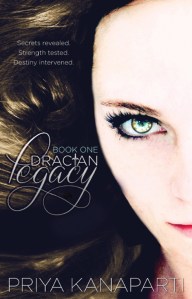
Dracian Legacy

By Priya Kanaparti


Cover Art for "Dracian Legacy" by Priya Kanaparti


At seventeen, Ren Pernell knows the meaning of tragedy.

But then, a year after losing her parents, Axel Knight walks through the door and changes everything. Strange creatures start to appear, her best friend suddenly finds her irresistible, and an undeniable, unexplainable bond with Axel threatens to drive her insane. She knows he’s the key. There’s something he’s not sharing, and she’s determined to find out.

Demanding answers, she finally learns the truth: everything she ever believed is an illusion. Caught in a centuries-old blood feud between races she never knew existed, Ren discovers her true destiny. She’s the chosen one, the Echo, preordained to end the bloodshed.

There’s just one catch–in order to save those she loves and a homeland she’s never seen, she’ll have to die.

With the clock running out, she’ll have to navigate a new world of betrayal, lies and deceit. If she can forgive, finding love even in the darkest places, she just might be able to escape the prophecy. But how much is she willing to sacrifice for a cause she didn’t know she was part of? And what will it take for her to be free?

 
Dracian Legacy is the first in a YA paranormal romance trilogy. Steeped in mystery, action, and steamy love scenes, it follows Ren, a seventeen-year-old girl who’s anything but normal.

A year after losing her parents, she comes face to face with her destiny. She just wasn’t expecting it to be wrapped up in the attractive Axel Knight. But destiny isn’t the only thing riding Axel’s coattails. Strange things are happening: creatures who clearly aren’t human appear; Axel has abilities that can’t be explained and that, apparently, only she sees; and her best friend–Dean–suddenly finds her irresistible after treating her like dirt for the past four years. Confused, Ren struggles to understand, until finally, she stumbles on the truth:

Everything she’s ever believed about herself, her family, and her friends is a lie.

She’s not even human, belonging instead to a race she never knew existed–the Dracians. Now, caught in an age old war between the Dracians and their enemies, she’s forced to make a choice. Accept her destiny as the Echo, the one person who can put a stop to the bloodshed, or lose everyone and everything she cares about. Clearly, it’s not much of a choice. But what will she have to sacrifice to save those she loves?

Kanaparti has created an intriguing new world, meshing it seamlessly with our own. Her characters are complicated, real people, bringing a refreshing quality to the familiar love triangle. Neither male lead is 100% good, or 100% bad, and I actually had a hard time deciding which to root for. (Technically, I was solidly Team Axel after the first read-through, but by the end of Book 2–as yet unreleased–and the revisions to Book 1, I’d switched to Dean.) Ren is a feisty, strong female lead, quick with the snarky comeback and ready to fight for what she loves. Even the supporting cast is well-rounded, hinting at the potential for spin-off books in the future.

But the thing I enjoy most about Kanaparti’s work is her voice. There’s a happiness infused into it, a brightness, even in the heart-wrenching scenes (and trust me, there are quite a few that will have you aching for the characters), that I found to be a complete joy to read. The author’s self-proclaimed motto is “I strongly believe true love conquers all”. That quality definitely rings through, and I highly recommend this book. (And the ones to come. I’ve seen what happens next, and you definitely won’t want to miss it! 😉 )

Dracian Legacy is currently available in digital format (eBook) at all the usual online retailers. The print version (which will contain bonus content–including 2 Deleted Scenes & 3 Alternate POV Scenes) will be available March 11th, 2014. Preorders can be placed through the REUTS Publications website. And if you’d like to connect with Priya, you can find her at these locations: WebsiteTwitterFacebook |

**Content Note: This is classed as a YA, but parents should be aware that the content, in my opinion, is appropriate for 16+ years. There’s nothing too explicit, but it does contain swearing, discussions about sex, and steamy make-out sessions that will leave adults looking for a cold shower.**

Writing Characters With Great Backstories (Without the Backstory)

As an editor, I get to bear witness to all kinds of writing pitfalls. (In fact, I have a post series dedicated to that planned for the near future.) But one of the most prevalent, by far, revolves around divulging exposition — especially of the backstory variety. There are varying degrees of offense, but my personal favorite (and by “favorite”, I really mean eye-roll inducing, hair-pulling, editing nightmare) is when writers feel the need to divulge a character’s entire, complicated life story in the first chapter. Why is that bad? Well, think of it like this: your first chapter is the reader’s introduction to your character. So in real life, it would be like meeting someone for the first time and having them word vomit their life story all over you. What kind of impression does that leave? Yeah, I bet you’d avoid that person like the plague after that.

I can already hear the murmurs of confusion and disagreement.

“But, we have to make sure our characters feel well-rounded and real,” you say, “We don’t want them to feel like cardboard cut-outs or Mary Sues.”

You’re 100% right. But you can do that without resorting to the word vomit introduction. How? Well, that’s what I’m here to show you. 😉
 

Step 1: Creating Backstory

 
Before you can begin to write a well-rounded character, you have to actually make them well-rounded. You need to know that person intimately. They need to be real — as real as your best friend from high school, or your quirky aunt with the 82 cats who lives in a motor home. The best way to do that is by making what’s known as a character profile. (There are tons of templates available online, but this one is particularly thorough.) Document all those tiny little details and experiences that make your character who they are. Don’t just stick to the superficial details, like eye color and body type, but really get to know them.

How’d they get that scar on their right knee?

Who was their first crush, and who broke their heart for the first time?

What’s their strange nightly ritual? And why do they keep that weird nick-knack on their bookshelf?

In a separate document, flesh out your character from top to bottom. Until, like an actor, you can step into their skin and write with their voice. This process is as essential to your novel as plotting is, so don’t skimp. You’ll need to do this for every major character, and, to some extent, the supporting cast as well. You’ll see why here shortly.
 

Step 2: Writing as Character X

 
By now, you should have pages and pages of notes. You’ve created all these exciting experiences and nuances that shape your character’s personality, and you can’t wait to share them all with the world. Right? Wrong. This is where pet peeve #208 (listed above) comes in. Writers assume that since they’ve created all this material, they need to use it. That it’s a disservice to their character not to, and that stuffing every minute detail into their novel is the only way they’ll be able to illustrate just how intricate this person’s life is. But guess what? We’re all intricate, complicated people. And we don’t care that you’ve managed to create another one.

Your character spent 8 months backpacking through Europe three years before the events of chapter 1? Great. Who cares?

Your character has a great grandmother who can bake the world’s best pot roast, but who died ten years before the events of the story? Okay. Sad, but so what?

Your character’s favorite childhood dog only had three legs, but could run like a greyhound? Weird and slightly interesting, but what does it have to do with the story?

My point is, unless one of these anecdotes or facts has a direct affect on the current plot, it doesn’t make it into the book. Why did you just waste hours writing all of that, then? Because, even though it’ll never be stated outright, it will color the way your character reacts to any given situation. Essentially, by creating that profile, you built their “voice”. Every experience we go through changes our fundamental outlook on life and will have a subtle affect on the way we behave, the things we say, and even our perception of a situation. That’s the definition of personality. It’s a reaction filtered through our individual set of traits and life experiences, and is what makes each of us unique.

For example, the character with the three-legged dog is likely to be compassionate toward animals as well as people who are differently-abled. While someone without that particular backstory may be callous and insensitive to the needs of others. The person with the grandma may have a certain affinity for pot roast, reacting to it much differently than someone who’s, say, a vegetarian. And depending on how your character got the scar on their knee, they may have an ingrained fear of something that makes absolutely no sense to anyone else.

It’s the history behind the character that makes them feel real. Even if we never hear the story of every experience, we’ll respond to that feeling of depth, of fullness. It’s not about creating a detailed biography of these fictional people, it’s about making them feel human so readers can connect with them. So go ahead and create those elaborate backstories, but remember, 90% of it will never be used outright in your book. And that’s okay. The authenticity you’ll be able to create for having done this exercise will far outweigh the “wasted” time you put into it. Because, at the end of the day, fiction is nothing without its characters.
 

Step 3: Murder Your Exposition

 
(I make that sound so dramatic, don’t I?)

Exposition has its place, but rarely is it needed as much as writers imagine. Storytelling is about conflict and emotion. And, as they say, “show, don’t tell” whenever possible. Exposition is telling at its worst. It’s that irritating person that walks into the room while you’re trying to watch a movie and forces you to press pause in order to pay attention to them. It breaks whatever action you have happening and says, “look at this irrelevant bit of info” instead. Which is why your final mission for this lesson is to go through your manuscript, find any spot where you stuck a random memory or some other detail from their past, and ask yourself, “Does this really need to be here?” I guarantee, the majority of the time, the answer will be no.

You can convey a lot of backstory simply through subtext and the way the character reacts to the environment and situation around them. Sometimes it is necessary to supply the details, the history, but even then, exposition is rarely the key. Try to find some other way to divulge it whenever possible. Dialogue (although never use dialogue as a convenient vehicle for giving the reader information as it will instantly feel false and unnatural), inner monologues, passing comments, etc. Flashbacks are even preferable to straight info-dump exposition. But if you do have to resort to a flashback, make sure that your character is in an appropriate situation for one. Don’t halt the middle of a battle to have them daydream about how they received a commendation for whatever umpteen years ago. If you do that, congratulations, your character is now dead. Because, while he was standing there daydreaming, the guy he was fighting lobbed his head off.

Once you’ve identified your exposition, strip it out wherever you can. Read the chapter, paragraph, sentence, without it. Does removing it in any way change the clarity of the message? If the answer is yes, then weave it back in, but only as much as necessary. If the answer’s no, bravo! You successfully killed a bit of exposition. And if you just aren’t sure, well, that’s why editors exist. Be ready, though, because they’ll be the first to go after your exposition with a butcher knife.

So, in summary, (since I seem to have rambled more than normal in this post) great characters require equally great backstories. But great writers know when and where to divulge that information, relying heavily on the subtleties of voice and subtext to convey the majority of it. Do they have journals full of notes and character profiles and unpublished material? You bet! How much of that creeps into their actual books? Maybe 10%. But you feel its existence. The work feels authentic, the characters real. Follow in the footsteps of those writers and show us your character without resorting to a word vomit introduction. Readers (and editors) will greatly appreciate it. 😉