Featured From the Archives: Inspiration is a Fickle Wench

Ah yes, my post about inspiration, or rather, the lack thereof. As I stared blankly at the titles in my drafts folder this week, waiting for something (anything!) to spark an idea, I realized that this post would be oddly fitting. It’s also fairly old, so there’s a good chance it will be new to a lot of you. Given my complete lack of inspiration this week (I’m serious, I think my muse died, or decided to flit off to her beach with the cabana boy again), it’s safe to say this is better than anything I could have managed to drag, kicking and screaming, from the depths of my brain. It’s at least somewhat humorous, and I bet a few of you out there will be able to relate. Enjoy!
 

Inspiration is a Fickle Wench

by Kisa Whipkey

Originally Posted on 8/10/12

 
Have you ever had those days where you suffer from a complete lack of inspiration? Where you feel like a creative well that’s run dry? Yeah, me too. In fact, it happens more than I’d like to admit. For someone plagued by the never-ending breeding of plot bunnies, I have a remarkably hard time finding the motivation to actually write. Oddly, the most sure-fire way I have to motivate myself is to declare to the world that I’m not writing. (Sorry, writing group buddies. Sometimes I have to cancel just so the muses in my head will freak out, screaming, “No! You can’t write absolutely nothing this week!” and finally show me the path to the next scene they were greedily withholding.)

But inspiration doesn’t just apply to writing. We need it for all things creative. It plays just as much of a role in creating a masterpiece of art, or choreographing a moving sequence for demo team. And some days, it’ll simply refuse to come when you call it.

I find the idea of inspiration a fascinating thing. Where does it come from? Is it an invisible lightning bolt that shocks our imagination to life the way a defibrillator brings our hearts back from death? Is it a gift from some higher power, sending waves of creative energy coursing through us like sunlight? Is it the whispered voice of a muse dressed like the women of Greek mythology? Or is it just some random combination of neurons firing that creates a delusional escape from reality? Honestly, I don’t know. I’m not sure anyone does. But I do find it intriguing that when a writer talks about hearing “voices,” they’re considered brilliantly touched by inspiration. When anyone else says it, they’re considered mentally ill.  What separates inspiration from insanity? The final product? Who’s to say that people with schizophrenia or brain tumors warping their neurological pathways aren’t the most in tune with that magical force we call inspiration. Or that those of us who claim to rely on it for our careers aren’t actually suffering a slight mental meltdown. Interesting stuff, isn’t it?

All I know about inspiration is that it rarely shows up when I want it to. Case in point, I’m now suffering through week 2 of the current inspirational drought. This wasn’t even the blog post I had scheduled for today, but I was too uninspired to finish the original one. Which made this the perfect week to muse about the elusive nature of the muse, so to speak.

I’ve mentioned a few times that I find inspiration through music, going into rather lengthy, and probably creepy, detail about it here. I’m not sure why that’s my avenue of choice, but it’s always been that way. Maybe I’m mooching off the creative brilliance imbued by the composer/songwriter. Maybe I’m gifted with a finely tuned sense of musicality, and I can find stories through the nuances and layers of musical instruments the way others can through dreams or spoken words. Maybe I’m just nuts. But regardless of the reason, that reliable source of  melodic inspiration only seems to cover the initial conceptual phase. It gives me the base-line, the foundation on which I have to build, and more plot bunnies than I could ever write, even if I was lucky enough to be a writer that could finish a novel in a few months. When it comes to the actual creation part, the nitty-gritty work part, I’m left to suffer the whims of inspiration like everyone else.

Every writing website, advice article, author/artist blog out there will tell you that creator’s block is a myth. That it’s just an excuse for being lazy, for procrastinating, for giving in to your fear of failure, or for a plethora of other reasons. They’ll all tell you that you just have to power through those days when you’re lacking inspiration. That you have to discipline yourself to create every day. That you can’t wait for the muse to come to you, for the weather to align perfectly, for the fourteen cups of caffeinated beverage to kick in, or for whatever that magic combo is that ignites the fires of inspiration for you. And they’re probably right.

I, however, can’t force it. When I’m not feeling inspired, I end up with this:

“Blah, Blah, more Blah, Blaaaaaaaaaaaaaaaaaaaaahhhhhhhhhhh! Stuff and things. Blarg. Grrrrrrrrrrrrrrrrrrrr. Oh, and more Blah.”

How would you like to read an entire novel of that? I know I wouldn’t. So I ignore all those lovely professional people out there smarter than me, because their perfectly valid advice doesn’t help me. And I wait, sometimes days, sometimes weeks, sometimes even months for the return of inspiration. Does that make me a lazy, procrastinating, fear-frozen artist/writer/choreographer? Maybe. It definitely makes me slow. But one thing I’ve learned over the years chasing down my dream of making a living at something creative, is that you have to be true to yourself. You can read as many books, blogs, advice columns as you want; take a million classes to hone your skills; talk to everyone you admire who have been lucky enough to make a living doing what they love, but in the end, it’s all about figuring out your own creative style, the strategies that work for you, and the confidence to believe that just because your process may be a little different, doesn’t make it wrong.

And mostly, that inspiration is a fickle wench you can control about as much as you can control the weather.

Featured From the Archives: The Curse of Being a Slow Writer

Apologies for having to go archive-diving again this week. Let’s just say, it’s not been a great one for me and leave it at that. I wanted to find a post that could do what I couldn’t — bring some humor to my otherwise bleak mood — and this one seemed like the perfect fit. Snarky, but still inspiring, it’s a good reminder for anyone struggling to find time to write. Even if it doesn’t apply to you, I hope it will at least bring a smile to your face. After all, laughter is the best medicine, or so they say. 😉
 

The Curse of Being a Slow Writer

by Kisa Whipkey

(Originally Posted on 5/31/13)


I don’t think it’s news to anybody that I am the equivalent of a sloth when it comes to writing fiction. At least, it shouldn’t be. I’ve said it quite a few times. But usually, I try to put a positive spin on that fact, embracing my molasses-covered words and declaring it proudly, like it’s some kind of statement of quality. But the truth is, it sucks. It is the single most frustrating thing in my writing career. So today, I’m going to indulge in a moment of venting negativity. Today, I’m not going to try to convince you that it’s okay to be slow; that it’s all right to procrastinate with research, or editing, or any of the other excuses I’ve told myself are justifications for slackerhood. Because it isn’t. If you want to make it in this industry, you have to be prolific. That’s just a fact.

We had a saying at Dragon Heart Tang Soo Do: “If you can’t be a good example, then you’ll have to be a horrible warning.” So let me be your horrible warning. Being a slow writer isn’t a blessing, it’s a curse. Here are the top 5 reasons you don’t want to be me.
 

#1: Limited Productivity Potential

 
At my current rate, I’ll be lucky to finish a novel a decade. And since I also conveniently dragged my feet in deciding to take my writing career seriously, that means I’m joining the party late. So that puts my productivity level at direct odds with the amount of life I have left. If (fingers crossed) nothing horrific happens, I could potentially be looking at a long and happy life. But how much of that will I realistically spend writing? I’m going to say that probably by my 70’s, I’ll be running out of oomph, and likely, Carpal Tunnel will get me before then. So, given my late admittance that I really wanted to be a writer after all, that optimistically gives me a productivity potential of 4 books. (4?! That’s pathetic. This is why I dislike math; it never pans out in my favor!)

Now, say you were smarter than me and realized early on that you were destined to write for a living. I’m not so ancient that you’d have that much of a head start. Most people figure out their life’s passion during their twenties, and a lucky few know by their late teens. So at best, you’re a book and a half ahead of me. That’s still not a rosy picture of successful writerdom. I suppose there is a chance that you don’t see yourself being prolific. That you only have one or two titles in you and then plan to call it good. But I think the majority of us choose to be writers because we’re bursting with ideas waiting to find their way to the page. Am I wrong?

Which leads us to reason #2 why you don’t want to be me.
 

#2: Royally Pissed Off Plot Bunnies

 
The thing about plot bunnies is they breed like, well, bunnies. I have yet to go longer than a month without finding another cute and fluffy little detour hopping innocently across my path. (Innocently? Yeah, right. Those little buggers know my muse can’t resist them. They’re about as innocent as creepy children in a horror film.) So when I compare my maximum potential output (the measly 4 books) to the avalanche of rabbit fur weighing me down, you can guess what happens.

Personally, I don’t want face the legions of plot bunnies running around in my head when they realize that only 4 will ever get their moment in the spotlight. They’ll probably start a riot. They might even turn carnivorous. I don’t know. But I do know that they’ll be royally pissed off, and that can’t be good for my muse. Or anyone, really.

So unless you’re one of those rare writers content to write only a couple books, I’m guessing you’ll be facing the same predicament. And in case the thought of angry, carniverous plot bunnies hasn’t scared you away from my path of slackerness, let’s move on to reason #3.
 

#3: Getting Lost in the Discoverability Jungle

 
It’s a well-known fact that the fastest way to gain momentum in a writing career is to continually publish new content. Whether you’re self-publishing (especially if you’re self-publishing) or traditionally published, name recognition is everything. In an ever-growing jungle of titles, being prolific enough to constantly have your work in front of readers is the only way to survive. No problem, right? I just established that, like me, you have a plethora of ideas to choose from. “Prolific” will be easy!

Hear that screeching of the brakes? Yeah, you forgot about one key element — reason #1. When you’re as slow as I am, your chances of consistently staying on your readers’ minds goes out the window. I’ll survive in the Amazon jungle about as long as a fruit fly with that level of productivity. There’s no amount of marketing in the world that can save me from sinking into the mire of oblivion.

Pretty convincing case for not being me, no? But, just for kicks, let’s say the issues of discoverability aren’t really that bad. That I’m being over dramatic in my snarkiness. (I did warn you I would be venting negativity.)

Welcome to reason #4.
 

#4: Being Stuck in a Permanent Day Job

 
Every writer dreams of waking up every day and spending the entire time writing. But the reality is that most of us still have to work day jobs. The fridge doesn’t fill itself, unfortunately, and the bill collectors don’t look kindly on IOU’s. So chances are, unless you’re secretly a billionaire, married to a billionaire, or homeless, you need some source of income. Where do you get it? The dreaded day job.

Now, some of you may be lucky enough to actually have a career you enjoy. But the rest of us punch the time clock like we’re signing in for a prison sentence. The only thing that gets us through the day is that shiny dream of someday getting to say “F you!” to the boss and walking away with certain fingers held high.

But what happens to that shiny dream when you write like a snail? It shrivels up and disappears. Yep, that’s right, your shiny dream is now a rotting, wrinkled hunk that looks like a dried apricot. Why? Because you’re too slow to be considered prolific. And since you’re not prolific, no one knows who you are. And because no one knows who you are, your books don’t sell. And when your books don’t sell, you get to offer that chicken-scratched IOU to the bank and pray they let you keep your house.

Such a pretty picture isn’t it? I think I’m rather gifted at casting the most depressing slant ever on the situation. But in case you missed the lesson in that dreary portrayal, let me reiterate it. If you don’t want to be stuck permanently in that day job you hate, don’t be me!
 

#5: The Burden of Emotional Turmoil

 
By now, I hope you’re seeing the downfall of succumbing to the slow-writing curse. If not, (man, you’re a hard cookie to convince!) here’s one final reason.

I’ve already covered the practical, tangible reasons it sucks to be a slow writer. But there’s also an emotional aspect. When you move with the agility of a tortoise, you tend to find yourself battling things like frustration, irritation, depression, anger, all the lovely turmoil that goes with swimming in the negative side of life. That self-doubt all writers experience? Yeah, quadruple it about a gazillion times. That lure of perfectionism? You’ll be chasing after it like a siren’s song. The regret over letting your dream slowly starve to death and die? You’ll carry it around until you start to look like Atlas, carrying the world on his back.

My point is, eventually, you’ll find yourself so immersed in the quicksand of negative emotions that you’ll end up writing a blog post just like this. 😉

So, there you have it. The top 5 reasons why you shouldn’t be me; why you shouldn’t succumb to the curse and let your writing career languish on the back burner. If you already find yourself hovering dangerously close to joining my sinking ship, don’t despair. There’s still hope. All you have to do is kick your lazy booty into gear. Figure out where you have the time to write and commit to it, even if it means sacrificing sleep, weekends, and watching Celebrity Game Night. (Seriously, though, that last one’s not a sacrifice. Whoever decided that sitting around watching celebrities play board games was quality television needs to be fired. Immediately.) You can do it. I have faith in you. In fact, how about we make a pact? Let’s take all the negativity and turn it on it’s head. Let’s laugh in the face of frustration and prove to everybody, including ourselves, that we do have what it takes to be writers, and we can be prolific. Let’s break the curse together. Deal?

Featured From the Archives: The Different Types of Critiques

This has always been one of my more popular posts, and I’m sure a lot of you still remember it (or are still stumbling on it — internet crumbs are awesome, aren’t they?). But there’s a reason I’m dredging it up from the archives this week — I have a similar post planned for next week that will expand on the ideas contained in this one, with a slight twist. So what better way to prep for that post, than to revisit the foundation for it?

Since this also happens to be one of my longer articles, I won’t waste too much time with an intro. I think the information contained below pretty much speaks for itself, no?

The Different Types of Critiques

By Kisa Whipkey

(Originally Posted on 6/14/13)

(Yes, I realize that’s frighteningly close to today’s date, and no, that was not done on purpose. 😉 )

Every writer knows there are varying levels of quality in the critiques they’ll receive. Some will be extremely helpful, offering ideas for fixing particularly troublesome areas, or finding plot holes/inconsistencies you missed during your 142 times reading the manuscript. Others will be glowing, fluff-filled ego strokes that feel amazing, but offer virtually no help. Still others will be harsh, brutal, and make you want to curl up in a hole, never to write again. And the worst part is, you can never predict which type you’re going to get. Sometimes the horrible, hate-filled ones come from the people closest to you, and the fluff-filled ego strokes come from the professionals you’d expected to tear it to pieces. So how are you supposed to deal?

The most common advice you’ll receive is to simply “grow a thicker skin.” But that’s right up there with “show, don’t tell” and “kill your darlings” in terms of prosaic, vague responses that ultimately provide no help at all. Instead, I suggest learning the various categories of critique, that way you’ll know instantly what you’re dealing with and whether or not to pay it much mind.

(Disclaimer, these are not official categories. They are completely fabricated by me, and therefore, contain the appropriate amount of tongue in cheek — lots.)

The Fanboy/Fangirl

These are the ego-flatterers. The “OMG!!!! I LOVED IT! SQUEEEEE!” type critiques we all secretly want to receive by the millions. But as much as they puff our chests with pride, they actually aren’t very helpful. Once you come down off your pedestal of hot air and strip away the loudly screamed outpouring of emotion, you realize that you’ve learned absolutely nothing of value. Except how awesome you are, and you already knew that, didn’t you?

A helpful critique, even a glowing one, should tell you why — why they loved it, what they identified with, what the strong points were. But the overwhelming, star-struck gushing of love from a Fanboy/Fangirl doesn’t usually contain a shred of this. You have their reaction to your work (and probably a new stalker), but you don’t have anything you can take away and replicate in your new project. So at the end of the day, soak up the adoration, but know that these kinds of critiques are fairly worthless.

The Thinly Veiled Swap Request

Similar to a Fanboy/Fangirl critique, these will include a generally positive diatribe of how brilliant you are and how you’re the best author they’ve ever read ever, and oh, by the way, would you read and critique their story now too, please? Yep, the Thinly Veiled Swap Request is really just a bait and switch. A cleverly positioned “I scratched your back, now you scratch mine, because you owe me.” You’ll usually see these kinds of critiques on public writing sites like Wattpad, Figment, and Authonomy, where the popularity system relies on the number of favorable reviews (or hearts) a story gets. These requests are vaguely insulting and usually best ignored. Upon close inspection, many will reveal that the person asking for a return critique hasn’t truly read your work at all. So be careful with these ones. Don’t fall for the fluff.

Your Mom (a.k.a. Friends and Family)

No, that’s not meant to be a badly worded “Your Mom” joke.  (I can’t believe you would think that of me! 😉 )

One of the scariest groups of people to share your work with are those closest to you. I’m sure it stems from the fact that they are close to you, and we tend to trust them over strangers. But that’s a double-edged sword. How many people really believe their mom won’t wax poetic over everything they’ve created, even if it’s the worst thing on the planet? She loved your stick-figure blobs and macaroni/toilet-paper-roll art, didn’t she? Yeah, exactly. Now, tell me again why you’re worried she’ll hate something you’re hoping people will pay for?

This category is its own special blend of helpful and unhelpful. Chances are good that even though you’re more terrified of showing your friends and family your work than having your wisdom teeth removed, these reviews will generally come back positive. Even if they hate it, these are the people that love you, so they’ll pull their punches. Which is also what makes this batch of reviews hard to trust. Instinctively, we do, because we value their input, but that can lead to a skewed perspective if we’re not careful.

The best approach is to bask in the positivity, but then cull the review for anything valuable. Surprisingly, this is where you’ll get your first truly helpful tidbits, as these readers are comfortable enough with you to point out potential plot-holes or problems with your story. Just make sure you keep your ears open and take the criticism graciously. You do have to live with them, after all.

The Critique Partner

Every writer should have at least one of these. Seriously! Every. Writer.

Critique Partners are an amazing blend of friendship and writing ability. Typically writers themselves, these are the people you can be your absolute strangest with. The people who won’t just smile and nod when you start talking about your characters like they’re real people, but actually join in! They understand all your writerly eccentricities because they have them too. But the best part about a critique partner is that they’ll give you brutally honest, valuable feedback. Of all the critique categories, listen closest to this one. Critique Partners are a step away from the professionals, and their suggestions are usually right. They can be the difference between handing an editor the equivalent of dog-poo and a beautiful, ready-to-publish masterpiece.

The Aspiring Writer Knock-down, Drag-out

All right, on to one of the less happy styles of critique. The Aspiring Writer Knock-down, Drag-out is a particularly nasty one. Stemming from insecurity and a fear that success is a limited resource, this critique will unfairly rip your work to shreds in an effort to beat you to the finish line. Most writers don’t fall into this category. Most of us are genuinely friendly and want to help our fellow authors succeed. But there are those out there with superiority complexes that thrive by tearing others down.

The worst part about these is that they come from people who sound knowledgeable. These insidious, evil creatures are armed with an intimate familiarity of the writing process, and they’ll attack your work at its core. The key to surviving one of these critiques is to see past the intentionally hurtful language and look for something positive you can use to grow. Don’t listen to the individual words, but look at the overall viewpoint. If they’re going after your character development with a butcher knife, consider that might actually be a weak spot in your story and use that clue to improve. The best way to defeat a bully is not to give them any power, so turn their negativity into something good that helps you, or ignore them completely. (Easier said than done, I know.) Politely thank them for their feedback and then go home and stab the voo-doo doll you made of them in the eye.

The Editing Writer

This is another insidious type of critique that masquerades as helpful. These reviewers assume that because they’ve written some drafts of novels, or some short stories that were well-received in school, they’re qualified to offer feedback as an editor. But that’s a slippery slope to go down. Not every writer is a good editor. And not every English degree equates to mastery of storytelling. Writing and Editing really are two completely different skill sets. Some writers, like me, genuinely do possess both. (You’ll be able to tell by the solid feedback that can be easily verified against known writing rules.)  But it’s not as common as you would think.

Usually, these critiques will try to rewrite your work. They’ll be couched in personal preferences and will try to get your writing style to conform to theirs, citing made-up rules and questionable storytelling approaches. A good editor will preserve an author’s voice, offering suggestions that strengthen it rather than try to replace it with their own. Take these critiques with a grain of salt. Likely there will be some beneficial morsels regarding areas that need work, but find your own path. Don’t necessarily take theirs.

The Grammar Nazi

Who doesn’t love a good Grammar Nazi? These people go through your work and pick it apart punctuation by punctuation. Their review will consist entirely of technical suggestions and pretentious gloating over every mistake you made. It will feel like you’ve suddenly been sent back to your least favorite English class, with dangling participles, evil adverbs and misplaced commas haunting your every move. But as horrible as it can feel to be schooled by a Grammar Nazi, these critiques are actually helpful. They did just flag all the really technical stuff that needs fixing, after all. So, as painful as it is, listen to these people. Someone has to be the Grammar Nazi, and thankfully, now it doesn’t have to be you.

The Beta Reader 

Next to the Critique Partner, the Beta Reader is probably the most hailed tool writers turn to. However, they are not the same as a professional editor. Don’t be fooled by their lengthy reports and the marked-up manuscript they hand you. These critiques fall under a wide range of possibilities on the helpfulness scale. A conglomeration of every category I’ve listed above, their feedback can range from exceedingly helpful, to downright missing the mark. So your best strategy is not to rely on any single one.

The beauty of Beta Readers is that they’re most valuable in groups, like a pack of wolves or a pride of lions. (Yes, those are meant to be slightly ironic choices. Though Beta Readers are best in large numbers, they’re also more likely to corroborate the things you didn’t want to hear when in a group, tearing your book apart limb by limb.) Take the feedback provided by one and compare it with that from others in the group, looking for the recurring things that consistently pop up. Those are the problems you might want to consider addressing. The rest? Well, that could be anything from personal preference to Grammar Nazi, Fanboy/Fangirl to the Editing Writer, or even, God forbid, the Aspiring Writer Knock-down, Drag-out. In other words, take it with a grain of salt.

The Structural Editor

Now we start to get to the really meaty types of reviews. The ones you’ll receive from the professionals if you’re lucky. And from the freelance professionals if you’ve got money. 😉

Structural editing focuses on the actual elements of storytelling, the underlying framework of your story. Critiques of this type will talk about things like character/world development, pacing, dramatic tension and suspense, to name a few. They won’t go into detail on the mechanics of writing, but will go into heavy detail about what’s working and what isn’t, and most importantly, why. This is one of the most valuable critiques you’ll receive during the pre-publication phase. Often, your book won’t go to press until the issues found by a Structural Editor are taken care of. So they’re definitely good people to pay attention to.

The Copy/Line Editor

Right up there with the Structural Editor is the Copy/Line Editor. Where the Structural Editor’s domain is everything storytelling, the Copy/Line Editor lords over all things technical. Similar to the Grammar Nazi, but with a bit less pretension, the Copy/Line Editor will go over your manuscript with a fine-toothed comb (and this handy little thing called a Style Guide — an editing bible, so to speak), providing valuable suggestions on everything from word choice to sentence phrasing to punctuation usage. These people are masters of the English language and will help you refine your work into it’s most clarified form. Also similar to the Structural Editor, they tend to stand between you and your final goal of publication, so it’s wise to listen to their advice.

The Reader Review

This is the holy grail of critiques. Ideally, the Reader Review is a coveted blend of Fanboy/Fangirl, Your Mom, and the Structural Editor. The best ones will go into detail about what they loved and why, convincing other readers of your awesomeness without you having to lift a finger and providing insight into what you should include in your next book. But, though these are the reviews that matter most, they can vary widely in quality. Readers are just that, readers. They won’t have the expertise that some of the other critique categories do, nor will they try to sugarcoat their thoughts. You can get everything from a Fanboy/Fangirl reaction, to the complete opposite — the Hateboy/Hategirl (Yes, I totally made that up, but it could be a thing, right?) — to everything in between.

A lot of writers recommend not even reading these reviews, as the negative ones will undermine every shred of self-confidence you have. But if you don’t know why your book is bombing, how will you know what not to do in the next one? I think you should periodically check up on what people have to say, just don’t obsess over it. (Again, easier said than done, right?) Negative reviews happen, and the internet allows people to be far less civil than necessary, but regardless of whether it’s good or bad, the Reader Review trumps everything else. So it’s smart to pay attention to it.

The important lesson here is that feedback of any kind is good. Even the worst review can be helpful, once you learn how to see past the negativity. (There’s that darned thick-skin requirement again.) No matter what, thank the person for giving their time to your work, and for bothering to review it. Receiving a bad review hurts, but I can imagine nothing worse than receiving absolutely no feedback at all. I’d rather hear that someone felt passionately enough about my work to voice their thoughts, even the nasty, hurtful ones, than fade away into obscurity to a symphony of crickets. Wouldn’t you?
Featured From the Archives: What’s in a Name?

My muse failed me this week. Like straight-up turned tail and ran, laughing maniacally as she went. So I apologize for once more having to cull something interesting from the archives. I promise, there will be new material next week. Even if I have to drag my muse, kicking and screaming, from her beach sanctuary and duct tape her skinny butt to the chair. It will happen.  In the meantime, here’s a snarky look at every writer’s favorite task — naming things. Enjoy!

What’s in a Name?

By Kisa Whipkey

(Originally Posted on 6/29/12)


Maybe I’m part Fey, or maybe I’m Rumpelstiltskin’s great-granddaughter, but I believe names are extremely important. Probably because I’ve been graced with a somewhat unusual name myself. Wait, did I say graced? I meant cursed. Doomed to endure countless mutilations, including: “Keisha,” “Kissah,” “Kye-sha”, and my favorite, just plain old “Lisa,” because obviously that “K” has to be a typo. There was even an unfortunate incident where, after explaining the spelling of my name as “Lisa, with a K,” the person responded with, “okay, Ms. Withakay, will there be anything else?” Seriously! No joke. So now, I actually do give my name as “Lisa” at fast food places, or anywhere they’ll be calling it out randomly, because it’s just easier. As long as I remember I’m answering to that. And who knows, Lisa Withakay might just make an excellent pen-name someday. Everyone needs a good alias, right?

For the record, my name is pronounced “Key-saw.” Difficult, isn’t it? But I respond to pretty much any variation thereof, as evidenced above. I think I already mentioned that it’s Russian for kitten, didn’t I? Well, it is, as confirmed by several people I’ve met who actually speak Russian. And no, I’m not Russian, nor is anyone in my family tree that I’m aware of. German, English, a little Scottish, yes. Russian? Sadly, no.

So how did I end up with this charming, pain-in-my-ass name?  Let’s just say this is what happens when soon-to-be parents stumble on those lovely little baby-name books in the bookstore. And trust me, after seeing the other options my parents had circled, I ended up with the best one. As much as it has irritated me over the years.

Anyway, back to the topic at hand — names.

Finding a title for a work can be the hardest part, whether it be a novel, a masterpiece of art, or a choreographed routine. It’s one of the first impressions your audience will get, so it has to accomplish a lot of things: summarize the plot, theme, and overall tone; provide something catchy that will make your work stand out among the masses; create a lasting impression that’s easily remembered; and build a sense of mystery and intrigue about your work’s content. All in just a few short words. No wonder many people find the process of naming a daunting task.

For me, this is a critical part of the creative process, and often, I have a title before I have anything else. Naming something is my favorite part. It’s the moment when whatever I’m working on becomes a thing of substance, its existence clicking into place like the final piece of a puzzle. It’s no longer just a vague concept floating around in my head — it’s a declaration of identity. And I rarely change a title once I’ve found it, whether it’s on a story, an image, or a character.

Others aren’t so lucky, struggling under the burden of working titles or simply leaving something as “Untitled.” And still others completely miss the mark, dubbing their spectacular work with a lame, uninspired title that dooms it to obscurity forever. They say you shouldn’t judge a book (or artwork, or choreography, etc) by its cover, but the truth is, everyone does. And the title is as crucial to your work’s success as the rest of the packaging. How often have you picked a book off the shelf solely for its title and cover art? Or browsed Itunes and found new artists because their album covers looked cool? Or rented a movie because it had an interesting name? And how often have you done the opposite? Scoffing at something because of a lame title, stupid cover, or lackluster blurb? I think you see my point.

So, what’s in a name? Everything!

Which is why you should spend as long as it takes to create the perfect title for your piece, whatever it may be. I’m afraid there aren’t any sure-fire techniques I can share for how best to choose a title, though. I’m sure there are others out there who would gladly try to tell you the correctness of their own process, but I believe creativity is too personal for that, and every artist, dancer, martial artist, writer, musician, has to find their own way of doing things. What I can offer you is a succinct version of how I go about it.

I remember reading somewhere, (and I apologize that I don’t have a direct quote for you), during my research of Disney’s story process, that they try to sum up each film’s plot in a single sentence. Being the complete fangirl I was back then, I thought that was a brilliant idea and adopted it for myself. It’s actually a lot harder than it seems to boil a complicated premise down to a simple sentence, but eventually, you get good at it. How does this pertain to titles? Well, once you can summarize your work with a single phrase (and this generally works best for writing, although it can apply to the concepts of art and choreography too), you can take it one step further and chop it down to only a few words. Something that single-handedly conveys the heart of your piece to your audience. Sometimes, that will be the name of your main character; sometimes, it will be an integral theme central to your work; and sometimes, it will be a metaphor summarizing the subtler messages you’re trying to convey. There are no hard and fast rules. The important thing is that it be inseparable with the larger work.

As an example, I’ll dissect the names of my three published short stories and show you the thought process behind them.

The Bardach was named for the race Amyli (Nameless) comes from. They’re a central key to that world because they have the link to its gods. All the conflict revolves around them fighting against the Mages who want to destroy that link and corrupt the gods for their own purposes. Since they are essentially the heart of the story, it seemed fitting to name it after them. Plus it’s a short, interesting title that might make someone click on the link, buy the magazine, or read the excerpt.

(2014 UPDATE: The rewrite of this story now goes by the name Kindred, as it’s a more character-driven, dual POV version that centers around the main character, rather than the culture. When its released, you’ll see. It’s been completely stripped down and rebuilt into what feels almost like an entirely different story, hence the need for a new name. The thought process I went through to choose the name, however, is the same as outlined above. 😉 )

Spinning has a more complicated meaning. It refers to the sect of people Taylor becomes part of, but it also refers to the ability to morph time that they all have, so named because it literally spins the world around them. It also refers to the emotional turmoil Taylor feels throughout, as his world is completely turned upside down, inside out, and sideways. He’s left with a confusing mess of half-answered questions, and is emotionally off-kilter for the entire story — spinning, as it were. It’s also a subtle tip-of-the-hat to the inspiring song by Jack’s Mannequin of the same name. Most of these connotations a reader wouldn’t grasp until after they’re read the piece (and some they might never know), but it adds layers to the title for them to discover along the way. Plus, it’s short, to the point, and hopefully mysterious enough to draw someone in.

Confessions has a dual meaning. It actually does refer to the characters confessing hidden truths, so it’s perhaps one of the more literal titles I’ve used. The thing that makes it interesting is its mysteriousness.  Its vague meaning hopefully makes a reader want to know what’s being confessed and would get them to buy the story to find out. But it’s multi-layered enough that they’ll get the full meaning only at the end. I can’t disclose much about this one without giving away spoilers, so I’ll just say that the obvious confession (Constia’s) isn’t the only one the reader comes across. Plus “Confessions” seemed like the perfect title for a story about losing faith.

Now, my process may not be your process, and that’s perfectly okay. The goal here was to get you to reconsider your approach to titles. The lesson in the above examples is that what appear to be simple one or two word statements, are actually layered with meaning and perfectly embody the message of the piece. Which is the ultimate goal of a title, isn’t it? (If you answered “no” to that, then I think you seriously need to reappraise your opinions of titles, and why did you bother to read this whole huge novel of a post? Just saying.) However you go about finding your names, the important thing to remember is that they are just that — important. Don’t spend months or years of your life on a project and then give it a half-assed name. You poured part of yourself into that thing! Give it enough respect to name it accordingly. You’ll be surprised how effective a marketing tool a simple title can be. It may just be the difference between massive success and complete failure. And I don’t know about you, but when so much hangs on a single decision, I think it deserves a few extra moments of my time to get right.

Featured From the Archives: Plot Bunnies; Friend or Foe?

Now that we’re officially into the second year of Nightwolf’s Corner shenanigans, I think it’s time to dredge up another post from the archives. And since last week’s stats rundown showed this fluffy little guy was languishing in the Basket of the Unwanted, I thought, why not dust it off and let it hop its way back up the popularity charts. (Yikes, could I have stuffed any more rabbit puns into that sentence? Clearly, my snark-fund is running low this week.)

Anyway, I hope you enjoy this sarcasm-fueled look at a plague writers know all too well,  complete with my somewhat lame strategy for how to deal with them.
 

Plot Bunnies; Friend or Foe?

By Kisa Whipkey

(Originally Posted on 5/18/12)


Firstly, what the heck is a plot bunny? According to Urban Dictionary, it’s “an idea for a story (usually referring to Fanfiction [writing your own version of someone else’s story]) that gnaws at the brain until written.”

I stumbled upon this amusing little moniker while reading through the blog of one of my favorite authors, Maggie Stiefvater (check her out, she’s very entertaining). I’d never heard the term before, not being prone to write stories featuring other people’s characters/worlds. I mean, really, why would I want to mooch off someone else’s ideas when I’m drowning in hundreds of my own? Literally, hundreds. But anyway, I found the term endearing and adopted it. So you’ll hear me refer to plot bunnies quite a bit. Which prompted this post. Before I started throwing that term around and no one would know what I was talking about, I figured I’d better explain it.

Despite their adorable name, I actually define plot bunnies as procrastination and fear-of-failure personified. Every writer suffers from them. Usually, when you least want them around. And if you aren’t graced with their obnoxious presence, well, then, good for you. You’re one of the lucky few, and probably a bit inspirationally challenged. The rest of us carry around overflowing cages, bursting to the brim with plot bunnies that breed like, well, bunnies. Every so often, a few will make a run for it, escaping from their confinement to wreak havoc in whatever project we’re currently bordering on boredom with, and completely distracting us from anything productive until we wrangle them back into a newly-constructed, extra cage, and the process starts all over again. (Whew! That was a long one. Is there some kind of award for that?)

So, are they friend, or foe? I’ve found that it really depends on the day. Some days, (like those rare moments between projects when you can step away from your computer and realize the world actually still exists), they can be your best friend, bringing you bright, shiny paths of freshly minted inspiration and leading you ever closer to the coveted title of “prolific.” Other days, (like when you’re in the middle of an important, complex, pulling-teeth kind of scene that you’d rather jump in front of a bus than write), you really just want to take them out back and shoot them in the head.

This week, they’re heading toward being on my kill list. They’ve gotten decidedly more rampant since I finally figured out where my aimless work-in-progress (aptly and ironically titled Unmoving) was going. In the past two months alone, I’ve had 8 of the little buggers spring up . . . oh, nope, better make that 9. (Stupid radio, playing random-song-I’ve-never-heard-before and spawning yet another plot bunny.) Some are more demanding than others, requiring my complete attention and blocking out any hope of moving Unmoving forward. Others are just a tiny glimmer of an idea, a baby bunny shyly showing its whiskers for the first time. But all of them are extremely annoying.

Don’t get me wrong, I’m grateful to be drowning in overflowing inspiration. But when you suffer from a distinct lack of ability to finish anything, prolific ideas only get you so far. Maybe I have writer’s ADD, growing bored with projects well before they’re done and becoming easily distracted by the shiny new fur and whispered promises of plot bunnies. Or maybe I just have a hard time sticking with something that, for me, has been finished for months, and continuing to write it feels like sludging my way through a movie I’ve seen 8 million times. (There are many days I fervently wish my brain had a USB port and a download button. That would make life so much easier! Wouldn’t it?) Or maybe I’m just lazy, and completing a story on paper, to the level my perfectionist side demands, requires far more work than I really want to expend. Whatever my problem, plot bunnies equal bad news.

How do I deal with them? Since they’re a figment of my imagination, I can’t really take them out back and kill them. Well, I could, but that might make me a candidate for the title of Schizophrenic Bunny Murderer. Besides, I’ll need those shiny new ideas when I finally finish my current project, (or when I can’t stand it anymore and move on, adding yet another unfinished story to my Drawer of Fragments). You never know, one of those cute little fur-balls driving me insane might just land me on the NY Times Bestseller List. Eventually. Someday. If I can ever finish something again.

No, my strategy for dealing with plot bunnies isn’t violent at all. I actually humor them. I give them their moment in the spotlight and let them rule the creative half of my brain, until eventually, they run themselves into exhaustion and shut up. Sometimes, it only requires giving the new idea a title, solidifying it into existence by the sheer power of naming it. Other times, I have to write the whole plot in my head, complete with character bios, description and dialogue. And recently, one super annoying bunny decided I had to pinpoint the exact, and very real, setting before it’d leave me in peace.

Eventually though, they do all quiet down. I can then add them to my ever-growing to-do list of ideas (seriously, at last count I had 164 potential stories, including the 9 that just popped up) and return to the task at hand — the grueling process of moving Unmoving closer to completion.

So my advice to writers debating whether or not to turn their plot bunnies into new fur coats is this; try giving them the reins for just a short period of time. Do whatever it is that will satisfy that insatiable urge to follow them down the rabbit hole. Whether it be my method, or (as I’ve seen suggested by other authors) writing a short story/synopsis of the premise, or something else of your own creation, I promise, they do eventually shut up and let you work.

And let’s face it, until you learn what your particular method for dealing with them is, you’re probably going to find yourself as unmoving as my current project.

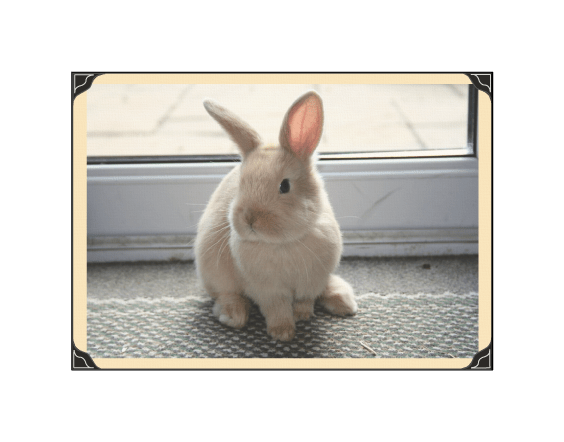
"Bunny--Better Quality" by Vic-the-Raccon

Bunny–Better Quality” by Vic-The-Raccoon

Copyright 2012