What’s That You Say? (One Editor’s Definition of “Voice”)

Well, here it is — the infamous “voice” post you’ve all been waiting for. I’ll admit, I’m more than a little concerned about it living up to expectations, but I guess we’ll wait and see. (Also, for those who missed my warning on Twitter earlier in the week, get ready for quite a lot of snark.)

Before we dive into the meat of it though, I’d like to provide a little context. Recently, I’ve noticed a distinct lack of understanding regarding this concept. Not just in the rightly confused writers, but in my fellow editors, in beta readers, and even in critique partners (not mine, I should note. Mine are awesome). And since my mission is often to help provide those looking for answers with a new, probably somewhat unconventional avenue for finding perspective on all things literary, I decided it was time to tackle the hydra known as “voice.”

Normally, I like to focus on the fundamental mechanics of storytelling, the foundation beneath the words. And if you’ve spent any time here, you’ll know that I usually advocate for seeing beyond the letters printed on the page. Not today. Today, we’re going to pay attention to the actual words. This one, in particular:

“Voice”

How many of you shuddered as you read that just now? My guess would be several. Because “voice” is one of those literary terms that quickly becomes the bane of a writer’s existence. It floats around the outskirts of Pretentious-ville, trying too hard to fit in with the cool kids and avoid being “defined.” Which is why you end up with a plethora of obfuscated explanations and half-assed deflections that leave you feeling just as lost as when you started. Am I right? Not even the industry pros can always define it. (Which, by the way, is a great test for choosing who you work with.) So then, if it’s so hard to explain, what the heck is it?

The short answer is that there are at least two layers to voice: author and character. (And, if you really get the wrong industry pro, editor. But that’s bad. You should never hear us in your  work.) Still with me? Good. Now, let’s define those a little more.

  • Author Voice = the particular way an author weaves together a narrative. It’s one part style, one part storytelling sense, and one part personal experience.
  • Character Voice = the specific filter an author puts over the story to create a unique persona, otherwise known as character. (Why, thank you, Captain Obvious.)
  • Editor Voice = what happens when you get either a Grammarian editor, who then strips both of the above from your work, or what I call a Personal Preference Editor, who morphs your voice to fit their own perceptions and style. Hence why I said this category was bad.

Now, if you’re at all like me, your brain is probably slamming on the brakes with the same effort it does when faced with math. Which is to say, an all-out, mind-numbing denial topped with a resounding “huh?” Don’t worry, though. I’m gonna fix that.

This is the point where most conversations on “voice” wander away from the topic, letting it drop quickly and with as much recognition as one would give that weird fourth cousin everyone avoids at the wedding because they can’t possibly be from your family. Why? Because this is where someone either proves they understand the concept or steps royally in the massive steaming pile of road apples.

(Please, God, let me avoid the road apples.)

All right, so, the formal definition of “voice” is this: “a combination of common usage of syntax, diction, punctuation, character development, dialogue, etc.” Right, so that encompasses pretty much everything. Helpful. (See? I told you the industry pros couldn’t always define it.)

My definition of voice is a little different, probably because I, myself, am a little different. Anyway, I define it like this:

Author Voice = the camera we view the story through.

Character Voice = the lens used to alter the way we perceive it.

I’m about to mix some crazy metaphors, so bear with me. Basically, I view an author like a director. Every single decision they make is made with a conscious intent to convey something, from the way they build the scenes, to the angles they show the action from, to the perceptions of the characters and their individual motivations. Regardless of how the story is presented in terms of point-of-view, narrative tense, etc, the author’s consciousness pervades the entire thing.

Character voice, on the other hand, is used to create a specific interpretation, like placing a fish-eye lens on a camera or a filter that paints everything with a red tint. Character voice is a costume placed on top of the author’s natural one, creating something completely separate and yet still intrinsically part of the author. Think actors in a play. Same underlying person, different “personas.”

Both types of voice rely on things like syntax, cadence, diction, personality, emotion, and motivation, but they use them in distinctly different ways. The best analogy is music. (I told you I was going to be jumping around in my metaphors.) Think about the vast difference between a rock song, a folk/acoustic song, and a country song. Same basic instruments — guitars, drums, vocals, maybe some strings — but entirely different effects. Which leads me to the point that spawned this whole article:

“Voice” can (and should) be literally heard while reading.

This is the key to a brilliant editor, beta reader, or CP, and it’s the thing I’ve noticed many missing lately. Editors MUST be able to distinguish not only the author’s voice, but the character’s as well. Which is a skill that goes way beyond simply understanding the rules of grammar. Good editors have ears as finely tuned as a musician’s; it’s how we identify areas that need to be fixed. We literally “hear” it.

(I’m not talking about structural development here, just to be clear. Structural/Developmental editing is an entirely different beast, and is much more visually oriented. In my opinion, “voice” falls within the realm of line/copy editing, because that’s where most of the problems lie, line by line.)

What does “voice” sound like to an editor? Well, ideally, it sounds like someone sitting there and telling us the story. We hear their accents, the cadence and rhythm to their voice, the unique way they spin a sentence, the word choices they make, all the things you would notice if you were talking to someone face to face. Which makes it super obvious when you come across the written equivalent of someone stumbling over their words, or a character suddenly using a word that’s so outside their normal vocabulary its painful. It’s jarring. In its most minor form, it’s like hearing an off note in an otherwise rockin’ song. At its worst, it makes your character suddenly sound like a completely different person.

I even have the perfect example for you: (Oh, don’t scoff. We all know you’ve secretly sung along to this in your car at least once.)


Okay, did you hear it? Cookies to whoever guesses where I’m going with this first. 😉

If you didn’t catch it, play it again; only this time, don’t watch the video, just listen. Notice how that final line suddenly sounds like a completely different person? It isn’t; it’s still Idina Menzel, but her voice shifts completely, to the point that I had to look up whether the speaking-voice actress and singing-voice actress were the same. (It’s common in animation for them to be different people.) Anyway, that’s what it sounds like to an editor when there’s a problem with “voice” in a manuscript.

But identifying it is the easy part. Even normal readers can do that. It’s what comes next that requires real skill.

See, once the problem has been identified, the editor has to make suggestions for how to fix it. And that brings us back to my initial comment on the importance of them understanding voice. An effective editor will provide the exact suggestion to fit a) the author’s underlying voice, and b) the character’s. It should fit seamlessly into the overall style of the manuscript, stay true to the speech patterns established for the characters, and feel like a natural extension of the author’s thought, be it the placement of punctuation, the overall clarification and flow of the sentence, or finding the correct word choice to substitute and/or encompass what the author was trying to say. It should never — let me repeat that, NEVER — sound like the editor’s voice or personal preference.

For example, my own writing tends to avoid using “that,” as I often find it to be extraneous. But in a recent project, I found myself putting those back in after someone else had stripped them out. Why? Because the character involved was kind of a formal person, prone to highly intelligent word choices, refined sentence structures, and an overall tone that simply required a more formal approach. In essence, I stepped into that author’s (and character’s) voice and mimicked their syntax, diction, and rhythm like a parrot. This is what good editors do.

The take-away from this, authors, is not that I’m the world’s greatest editor and you should only ever hire me. There are plenty of brilliant editors in the world (and I may or may not count myself among them). No, the point was to give you a way to assess your potential assessor. Any decent editor, agent, or critique partner should be able to answer this one simple question: “How do you define voice?” If they can’t or they offer one of the vague, half-assed, standard responses and then quickly change the subject, run. They just stepped in the road apples.

At the end of the day, it’s your work, your voice, that needs to shine through. And without someone who truly understands exactly what that means, there’s a very real chance that won’t happen. So proceed with caution, writers. Find someone who can break down, like I just did, the definition of voice. It may not be the way I said it, but it should be obvious that they get it. And hopefully, after reading this, some of you now have a better understanding as well. 🙂

Featured From the Archives: Believability; It’s Not an Option

Yeah, I know — it’s still not the post on “voice.” Don’t worry, I haven’t forgotten about that one. But I did forget that I’d started a duology of posts with The Devil’s in the Details a couple weeks ago. They weren’t written as a duology originally, but they’re definitely related. And in fact, they make a great precursor to the aforementioned (and forthcoming) post on “voice.”

So bear with me a little a longer; I promise you’ll have the much-anticipated post next week. 😉

Believability; It’s Not an Option

By Kisa Whipkey

Originally Posted on 1/25/13

This week, I started work on The Revision Project, as I’m dubbing it. For those of you just joining us, The Revision Project refers to the massive overhaul I’m giving my previously published short stories before re-releasing them. I won’t go into the details of why I’m doing this again, so if you’re curious, check out the post where I explain my reasoning at length. (2015 Addendum: that’s a project I still haven’t completed. In case any of you were wondering.)

Anyway, reading these manuscript dinosaurs in preparation to give them their much-needed face-lifts, I’ve realized just how much I’ve learned about myself as a writer and about storytelling in general over the past year. Largely thanks to this blog (and editing; definitely editing). Nothing makes you understand a process faster than having to break it down and explain it to someone else. I learned that during my martial arts training, but apparently, it’s equally true for writing. Which is why seeing those old works through the filter of fresh perspective brought to light a common theme that plagues them — a distinct lack of authenticity.

This is particularly true for The Bardach, which was my earliest endeavor and admittedly the weakest of the three. But there are moments in all of them that feel superficial to me now. Like we’re just grazing the surface, floating over the action, we’re peering down at it through a snow-globe. And it got me thinking: why is that? When I wrote them, I didn’t feel this lack of investment, even after the rose-colored glasses of creation had worn off and the overly critical ones of the editor returned. So what’s changed?

I said in my article about storytelling for demo teams that story is about conveying an emotional message. That’s a dramatic difference from the way I used to view it. I used to focus primarily on plot. The characters were an integral part, of course, but the narrative focused more around the action than anything else. I wrote like a film director rather than an author, worrying about how to convey the cinematic dance of camera angles instead of creating fully realized, three-dimensional characters. (2015 Insert: Oddly enough, that talent right there — viewing story the way a film director does — is what lies at the heart of my supposed “Editing Superpower.”) That’s not to say that I wasn’t able to weave a story that had impact. I think Confessions managed that. But emotional depth wasn’t necessarily my strong suit. Then along came Unmoving, a story so completely focused on the inner turmoil of the lead character that it forced me out of my comfort zone. It made me grow as a writer. It made me redefine my idea of storytelling.

I feel this is a common journey for newer writers and, especially, younger writers. When we first start out, we try so hard to mimic the examples of storytelling we’ve been exposed to — film, TV, video games, books — that we end up missing the point. We manage to learn the basics of narrative — how to craft an action-packed plot, write witty/natural-sounding dialogue, paint settings with just the right amount of detail — but we never learn the one thing that really resonates with readers. Believability.

There are two types of believability in storytelling. The first, making sure all the details and logistics of your story make sense, is a pet peeve of mine and has already been ranted about in a previous post. So we’ll jump right to the second type: emotional believability. This is what turns a good story into a great one.

Take a moment and think about all the books that have ever moved you. Now think about why. I’m probably not far off in guessing that the answer had to do with feeling invested in the characters, in their struggles, their emotions? That’s what I mean by emotional believability. It’s an authenticity that speaks to the core of human nature, to themes that transcend genres and are universally understood. It’s the ability to translate personal experience onto the page, and it only seems to come with maturity.

There’s a reason they always say “write what you know.” Personally, I never subscribed to that. I’m a fantasy writer, so how am I supposed to write what I know when what I know is too dull and ordinary for the worlds I like to hang out in? It’s not like I can go to the zoo and observe the behavioral patterns of a unicorn, now can I? So I always threw that phrase out like wasted salt. Until now. Now, I get it. It’s not about writing what you know in the literal sense, (although it can be, depending on what you’re writing); it’s about using your experiences to infuse believability into your story, to fully immerse your readers into that character’s existence, to move them.

Now, I’m not saying that younger writers can’t craft a great story. I’ve read well-done work written by all ages. What I’m saying is that there is a definite difference between the way someone writes when they’re new to writing, or life, or both, and the way they write after they’ve been around the block a few times. But rather than argue theory, or semantics, or what-have-you, how about I just give you an example from my own writing. Examples always trump convoluted discussions in my opinion.

As some of you may know, I’ve had the privilege of being stalked by a panic disorder for most of my life, but it wasn’t until about two years ago that I actually suffered what can be officially declared a “panic attack.” As in a complete freak-out, hyper-ventilating fear-fest of doom. (I know, I make it sound so dramatic, huh? 😉 ) But panic attacks have appeared in my writing far longer, making them the perfect candidate to help illustrate my point.

Here is an example from The Bardach: (Note, this was written before I had suffered one myself.)

Amyli shook her head to try and clear it from the fog that suffocated her thoughts and followed her study partner down secret corridors she had never known existed within the Temple’s simple construction. Even encased in the thick stone of the walls, she could hear the screams of the dying. And suddenly the walls themselves seemed to be closing in, the air thick and stifling. She stumbled and clutched at Calinfar’s hand.

“Wait, I can’t!” she gasped, trying to breathe, one hand against her chest. Calinfar stopped immediately.

“What’s wrong? Amyli?” He grabbed her shoulders once more, releasing the injured one quickly when she winced. Welling tears glistened in her vision as she gazed into his concerned face and suddenly everything that was happening washed over her with the force of a burst dam.

Aside from the various other quality issues in that excerpt, did you notice how superficial it was? You get the idea that she’s having a panic attack through my attempt to describe it with overused, clichéd phrasing and imagery. But you don’t feel it, do you? It’s over too fast to really elicit more than a shoulder-shrugging “meh” from the reader. You’re not invested in Amyli’s emotional state, even if you had read the context leading up to it. You could take it or leave it at this point. Nothing about that moment will stay with you past the ten seconds it took you to read it.

Now, here’s an example from Unmoving: (Yes, that’s right, a rare tidbit from my work-in-progress.)

The resounding clap as the wood violently met its frame shuddered through me, and I knew what was about to happen. In an effort to avoid the oncoming storm of remembrance, I stared at the flurry of peeling white paint her exit had sent drifting to the floor. But that only made it worse.

Instantly, the images I had tried so hard to forget crushed me like an avalanche. I saw snow swirling in the darkness, heard the squeal of tires trying to find traction, the snap and whipping sound of the seat-belt, smelled the sickening mix of burning rubber and dirty slush. Her screams pierced the memory like a relentless soundtrack, echoes of terror I could never outrun.

I braced myself and waited for it to pass, for the tightness in my chest to diminish and the invisible stranglehold on my throat to ease. Every time I felt the wave of adrenaline crash over me, I wondered if this is what it felt like to drown.

See the difference? That was written after I had experienced the horror of a panic attack for myself. You can feel it now, can’t you? (I hope so anyway.) The words have a sense of urgency, the descriptions are more realistic, the emotions believable. Even without the context prior to this, you can sympathize with him. That’s the difference a little life experience can make.

So the point of this long-winded ramblethon is this: believability isn’t an option. If you want to write something that resonates with readers, you have to learn how to create that deeper level of immersion. How you go about learning that depends on you: you can wait for life experience to cast the slant of a more mature perspective on things; you can mooch off other people’s life experience, using research and interviews to beef up your knowledge; or you can fake it ’til you make it, as they say, and just keep writing, letting practice hone your ability for you. However you go about it though, strive for authenticity. You’ll know when you find it, and your readers will love you for it. Guaranteed.

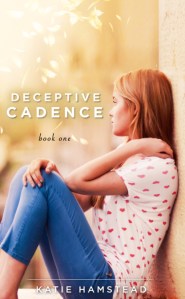
From the Editor’s Desk: Deceptive Cadence by Katie Hamstead

I know, I know. Many of you are eagerly awaiting the post involving “voice” that I’ve been hinting at across social media. But I already had this one planned when the inspiration struck for that, so it will be next week (as long as I can formulate my thoughts on the topic into coherent and helpful advice by then).

However, this week, I’m excited to be a part of the blog tour for Katie Hamstead’s newest release: Deceptive Cadence. (Look! Pretty blog tour banner!)

Deceptive Cadence Blog Tour


But because I was also part of the team that worked on it, I have to do the obligatory disclaimer. So, for those of you who already know what that means by the post’s title, feel free to skip it! For everyone else, here’s the rundown:

As an editor, (both freelance and under REUTS Publications), I have the wonderful opportunity to see amazing novels during their developmental phase. And I wanted to find a way to share them with all of you as they became available. (I also wanted to find a way to help support the authors that trusted me with their manuscripts.) So think of these posts as my own personal book recommendations, straight from the editor’s desk.

All right, now that that’s out of the way, on to the book review!

Deceptive Cadence

By Katie Hamstead

Deceptive Cadence by Katie Hamstead

Cadence Anderson has the perfect definition of happily ever after . . .

Until she doesn’t. A freak earthquake shatters her life as surely as her home, taking away everything she holds dear. She wakes in a hospital to find that her beloved husband and infant daughter have been killed, crushed by the earthquake’s wrath. Disoriented, injured, and alone, Cadence refuses to accept the loss. So when a man claiming to be her guardian angel appears and offers her a chance to go back in time to save her family, she doesn’t need to give it a second thought. She accepts.

Thrust back eleven years, she now faces the ordeal of high school all over again. But this time, she’s armed with all the knowledge of her adult life and the determination to do everything better, from preventing the loss of her best friend to avoiding her original, drama-inducing boyfriends. She’s focused solely on Austin, her future husband, and is content to bide her time until she meets him again.

But then James Gordon crosses her path. Cadence wants to remain single, but James has his sights set. He is determined to win her over, and he’s very hard to resist. As Cadence starts to develop unwanted feelings for him, she realizes he threatens to disrupt everything, changing the future and distracting her from her original goal. Now, Cadence must choose: deny the unpredictable and exciting path James offers her, or stay true to the life she had and is trying desperately to resurrect. Second chances are more complicated than they seem.

Deceptive Cadence combines the soaring emotion of a heartfelt romance with the innovative storytelling of magical realism, crafting a uniquely moving, intricate tale about love and loss that asks: what would you do if given the chance to right all your wrongs?

Every now and then, a book comes across your desk and you just know you’re going to love it from the second you read the blurb. Admittedly, Deceptive Cadence was not that book for me. The premise was intriguing, sure, but it didn’t necessarily grab me immediately based on the concept. But boy oh boy was I wrong about that. This book is, in a word, brilliant.

Hamstead’s latest seems deceptively (yes, pun intended) straight-forward. As the blurb indicates, it’s about a woman who abruptly loses the very definition of “happily ever after” and is then offered a second chance. Now, I know some of you are probably having the reaction I did — okay, how is that different from every other redemption romance? The answer is in the execution.

What seems on the outside like a simple narrative is actually a multi-layered experience akin to biting into a Gobstopper. Just when you think you have it figured out, another flavor appears. Hamstead’s writing sings off the page as she weaves a poignant, resonating tale that is simultaneously heart-warming and heartbreaking.

Cadence’s journey forces her to relive a time that most people would rather die than face again — high school. Filled with all the usual teen angst and drama seen in contemporary young-adult fiction, readers may wonder why the book is being targeted at a NA audience. Again, the answer is in the execution. See, what sets this apart from every other teenage love story is the fact that readers witness it much the way they would reminisce over their own memories, meaning it’s filtered through adult Cadence’s perspective. This future hindsight (for lack of a better way to describe it), allows Cadence to approach her choices and relationships with the maturity and understanding of her future self, thereby revealing the point of the story: a thought-provoking idea that will have you asking what you would change if you had the chance to go back and fix your mistakes.

Layer that philosophical foundation with a magical realism approach to storytelling and fantasy, the twists and turns of a mystery, and the emotional resonance of a beautiful, conflicted romance, and you start to see why Deceptive Cadence is aptly named. Hamstead brilliantly captures the intricacies of navigating relationships with a realism that is nothing less than impressive.

I may not have been a fan from the second I read the premise, but I devoured this (and the as yet unreleased but coming very very soon second half) with an all-consuming need to find out how it ended. By the time I reached that ending, I knew that Deceptive Cadence would forever be one of my all-time favorite stories. It haunted me for days afterward, and has turned me into a lifelong, devoted fan of Hamstead’s work.

So don’t let this one fool you. It’s amazing, and I highly HIGHLY recommend it. It does end with the dreaded “To Be Continued,” but fortunately, I believe the second half will be available very soon. And trust me, it’s well worth the short wait. 😉

Book Links: Goodreads | Amazon | Barnes & Noble

Featured From the Archives: The Devil’s in the Details

This is a post I originally published three years (what? How has it already been three years?) ago, but that is entirely still relevant. In fact, if anything, this opinion has only been further cemented by my time as an editor. Which makes it prime material for dredging up from the archives, along with its sister post; I’ll post that one next week.

Before any of you out there freak out, this isn’t about you (and least, I hope it isn’t). This is more of a general viewpoint I’ve witnessed over the years, rather than a specific rant triggered by something I saw recently. 😉

It also happens to coincide with a cool new project by REUTS founder Ashley Ruggirello, titled A Writer’s Google Search. Be sure to go check it out! Because hopefully, after reading this, you’ll have lots of interesting, strange, and maybe even horrifying Google searches to contribute to the fun.

The Devil’s in the Details

By Kisa Whipkey

Originally Posted on 6/22/12

This is a pet peeve of mine, so get ready for a hailstorm of snide.

The devil’s in the details. I’m sure I’m not the only one to have heard this charming colloquialism. And I’m sure there’s a formal explanation of its meaning somewhere. But my interpretation is this: it’s the tiny details that will be the hardest, driving you absolutely insane in the pursuit of perfecting them all and ultimately landing you in the looney bin, where you’ll write them continuously on the pristine white walls until you run out of space.

In other words, it means RESEARCH, people!

This is important in all genres of writing, but especially in urban fantasy, whose very existence relies on believably entwining the impossible with the world we know so well. The difference between a decent fantasy story and a great fantasy story is the detail — those little things that ground it in reality. And I’m seeing more and more writers who seem to be forgetting that fact.

Personally, I spend far too much time invested in chasing down those small, intricate details. Often longer than I actually spend writing. (Okay, so maybe I also kind of use it as an excuse to procrastinate, but that’s not the point!) For example, one of my newest plot bunnies (definition blogged about here), required that I road-trip down to California just so I could pinpoint the exact number of the emergency call box featured in the story’s location. All right, all right, to be fair, I road-trip to Cali quite frequently, but this time I paid special attention to those lovely blue, creepily positioned call boxes. And before I resorted to putting another 1000 miles on my poor overused car’s odometer and sinking another $300 into the gas tank, I researched the heck out of them. Which means I can now proudly say that I know far more than I ever wanted to about how those emergency beacons of hope actually work. A fact which may or may not come in handy while writing the story and hopefully will never be needed in life.

That dedication to detail isn’t exclusive to that one plot bunny either. My main work-in-progress has had me learning more random factoids about Portland, OR than I’ve managed to collect in five years of adjacent residency. Why do I bother? Because those little details make it feel real, while so many other aspects are clearly not. Also, so natives of the locale can’t bust me for not having done my research. Because, let’s face it, readers a nit-picky bunch, and nothing makes us feel more smug and superior than being able to point out when an author got something wrong.

It’s not only to avoid the humiliation of being caught taking a few liberties on reality though. Attention to detail will elicit squeals of delight from a reader’s inner-fangirl/fanboy when they discover the exact location their favorite book took place. I’m sure anyone in Forks, WA can attest to this. They overhauled the entire town to capitalize on that tendency. So it’s just as much about providing a solid and memorable experience for your readers as it is preserving your integrity as an author.

As a reader, my suspension of disbelief can only be pushed so far. If I read a story where the lead character is so impossibly invincible that they’ve taken multiple stab wounds to the chest, been shot 42 times and are not only still alive, but kicking ass, I’m out;  you’ve lost me. If you include a piece of outdated technology and use it in a way everyone who’s ever owned said device knows is physically impossible and ridiculous — sayonara! If your characters are as real as a cardboard cut-out, bring on the eye-rolls. If your female characters are the literary equivalent of a pin-up spread, don’t even bother writing the next sentence. And if your setting is so obviously a real place, but it feels like that moment in video games where you can walk through walls, fall into trees, and randomly float into space, you’re done. You need to go back to the drawing board and spend more time in the world building phase. Trust me.

That’s not to say that I’m an overly critical reader. I’m actually not. I’ll read just about anything, in any genre. I thoroughly enjoyed the Twilight Saga, devoured The Hunger Games, and read a plethora of cheesy romances. (Cue the horrified gasps from the literature community.) So you can’t say that I’m being an elitist snob. I just expect that there be an aspect of believability included. And I don’t think that’s an unusual request.

Not everything in a story has to be 100% accurate. My point is simply that you need to spend the time it takes to make it feel like a fully realized, substantiated place. The geography of your fantasy land should feel as real as the world around us, not as squishy as a mud puddle. Magic is great, but it should have rules. Just like real-life physics dictate the laws of gravity, motion, and pretty much everything, magic should have some kind of understandable parameter too. How you define those laws is entirely up to you. Just make sure they’re consistent. Got aliens? No problem, but please ensure they feel like something that could exist anatomically. And don’t even get me started on space travel. Let’s just say it should seem like a plausible thing, not a “cool-factor” moment and leave it at that.

Just to be clear, though, I’m not suggesting that you cram your story full of so much detail that it becomes an overwrought, boring soup destined to collect dust in your desk’s bottom drawer. Too many details can be equally as damaging as too few, regardless of accuracy level. I’ve read quite a few published books that bored me to the point of giving up (which rarely happens, by the way. I’m super stubborn like that). And I’ve run into others that were so realistic in describing the disgusting aspects of bodily fluids and unnecessarily vulgar situations that they were just downright crass. And while I did finish them (see statement above about being stubborn), it was done while wearing a disgusted lip-curl and loss of appetite. Violence is fine, as are vulgarity and/or profanity when the situation dictates, but when your writing starts including things for shock value only, it’s time to reassess if you need all those details.

Temperance and moderation. Those are the key words for today’s rant. There should be a balance between the plot and the details that support it and define your setting.  How do you find that balance? Research. It really is as simple as that. Sprinkle just enough accurate details into your tale and you’ll keep even the pickiest of readers happy. On the believability front anyway. Stylistically, you’ll always have to deal with criticism, because, as my husband likes to say, “haters gonna hate.”

What To Do WHILE Querying

A few months ago (okay, six months ago), I posted a surprisingly popular piece about what not to do when querying, detailing all the things authors should avoid, as well as some of the things they shouldn’t (I posted a reprise of it last week too, in case you were wondering). But that only covered the initial part of the process, the actual act of querying. Today, I want to talk about things you, as an author, can do while you wait oh-so-patiently (yes, that was sarcasm, people) for those elusive responses. And in keeping with the tone of the previous post, there will probably be at least a tiny bit of snark, so be ready.

What To Do WHILE Querying

(aka How to Avoid the Finger-Drumming Lure of Bad Decisions)

Let’s face it, waiting sucks. It has always sucked. And it will continue to suck, because it’s waiting. And waiting — say it with me now — SUCKS. Humans aren’t wired to be patient, and the age of the internet, with its instant gratification and its lightning fast access to information and entertainment, has done absolutely zip when it comes to instilling the virtue of patience.

Well, publishing isn’t the internet. At all. Publishing is a relic, a dinosaur founded on the very essence of patience. Yes, there have been advances that minimize the time it takes for an author to see their name in print, and yes, there will continue to be avenues and improvements that further move us toward that as yet unattainable moment when a decision is instantaneous. But today is not that day. Today, a querying author faces weeks, months, and possibly even years before they’ll finally hold their book-baby in their hands. Today, you wait.

I’m sure you can see how this scenario often leads to behaviors and decisions that can be problematic, many of which I listed in the previous post. No one likes waiting. No one likes that nail-chewing anxiety of having their fate in someone else’s hands. But how do you get around it?

The easiest way to avoid becoming the poster child for what not to do is to find some other way to distract yourself. Agonizing over the wait, refreshing your inbox every twenty seconds, is only going to drive you crazy. So here are some things to try instead.

1. Learn the Ins & Outs of the Industry

This is especially important for the newbies out there, which is why it’s going to be the biggest section. Debut authors are like fledgling birds, testing their wings for the first time. And that’s a special, unique place to be. But it’s also dangerous. Just like baby birds have no idea what waits for them as soon as they leave that cozy nest, debut authors often have little to no understanding of the industry beyond the steps required to query. It’s okay if this sounds like you. We were all there once. I promise.

One of the deadliest poisons to the author/publisher relationship is unrealistic expectations. Let me paint the picture for you: as a kid, you decided you wanted to become a writer. You loved reading and the act of putting words on paper, and stories just seemed to flow magically from your fingertips. You envisioned topping the New York Times Bestseller list, landing that triple figure book deal with a Big 5 publisher, instantaneous fame, book-signing tours, movie deals, and quitting your crappy day job with money to spare. Right? Don’t lie, we’ve all done it.

Enter reality.

The sad fact is that only the top 1% of the top 1% ever reach any of those things. The rest of us slum it out in the query trenches, find a nice home at a small to moderate-sized press or even forge our own paths and do the self-publishing thing. You will see more rejections than accolades. Sales will be slow because no one knows who you are yet. Marketing budgets, if offered at all, will be tiny and heavily reliant on the author’s own willingness to do the majority of the work. There are no book tours, probably no movie deals, and you’ll be stuck at that crappy day job for probably several more novels. If you’re lucky.

But as discouraging as all that is, you can combat it. Do your research. Learn the way the publishing industry actually  works. Set aside those shiny expectations that will label you a diva author and figure out how to attain success within the system that already exists. Read blogs by industry professionals, attend writing conferences, research publishers and agents and contracts and marketing and every other tidbit you can get your hands on. A firm understanding of the way the industry operates will prepare you for what’s to come when you land that offer of a contract and will help you avoid becoming prey to the cats waiting below your nest.

2. Befriend Agents & Editors

Social media is fantastic for this sort of thing. Find and follow agents and editors and even publishers to see first-hand what they’re looking for and get to know the people behind the “gate,” as it were. Because we are just people. People who love books just as much as you do.

When you’re on the outside, publishing seems like a big, scary world. But it’s actually not. Industry pros talk to each other as well as to authors, so if you can befriend a couple, guess what? Your chances of success just went up. You’re no longer just a name on the 800th query in the pile; you’re a person. They know you. They may even like you. And when that happens, you can guess what comes next: they dig your query out of that massive pile of submissions.

So don’t fall for the us vs. them mentality. Agents and editors are your friends. Just be careful you don’t abuse the privilege. You can read last week’s post for the cautionary note on that. 😉

3. Read Widely, Both Inside and Outside Your Target Genre

By now, you should be sensing a theme. Research, research, research. All of these are great ways to bide your time during the painstaking months of waiting. If you’re a writer, you really should be doing this anyway. But we all know how few those reading hours become when you’re wrapped in the thrall of writing. Which is why it’s perfect to spend some time catching up on the latest releases while your query works its way through the pipeline.

Why is this necessary? Well, for starters, it will give you a chance to see what the current trends in your genre are, or rather, were. Remember, the books releasing now are a few years old, because unlike the internet, publishing operates at a pace not unlike a sloth on Valium, which is to say, it’s slow. So by the time they’re on the shelf, those trends are pretty much dead. Which means that if your book fits in that trend, you can already guess it’s going to be a hard sell.

But the other reason is that you grow as a writer by reading the work of your peers. You’ll learn new styles, new approaches to storytelling, and possibly even new ways to combine genres. It will also come in extremely handy when an agent or editor asks you for comp titles (comparative books that appeal to the readership you’re targeting) for your work.

4. Start Something New

This is the last piece of advice I have, not because it’s less important, but because it should be the most obvious. Writers write. It what you do. Yes, you poured your heart and soul into that manuscript you just sent out into the world, but there’s nothing more you can do for it. It’s time to turn your attention to the next one. Because it may be years before your first-born novel sees the light at the end of the publishing tunnel, if it does at all. Many writers don’t succeed with their first, or second, or even third novel. Sometimes it’s the sixth or seventh that lands them their first book deal. And that’s perfectly normal. Those first attempts aren’t wasted effort. You learned and developed and grew, and now, now you have a back-list.

Back-lists and archives of “new” content are an author’s secret weapon. Because guess what? Readers are impatient too. Just like you don’t like waiting for agents and editors to respond, readers don’t like waiting for a new installment from their new favorite author. Which is why the best thing you can do while querying is to continue working. Continue honing your craft, be it on novels, short stories, or novellas. Continue generating new content, be it blog posts, contest entries, or platform-building endeavors. Just continue working. Because at the very least, it’ll keep you from drumming your fingers on the desk and falling prey to all the bad choices I mentioned last week. And you never know, one of those other projects could be the very thing that gets you noticed.

All right, those are my top suggestions for ways to make the waiting less agonizing, but they’re certainly not the only ways. I’d like to hear some of yours. So, authors and other editors, what do you do or recommend to keep the query-trench madness at bay? Sound off in the comments below! 🙂