An Inside Look at Publishing

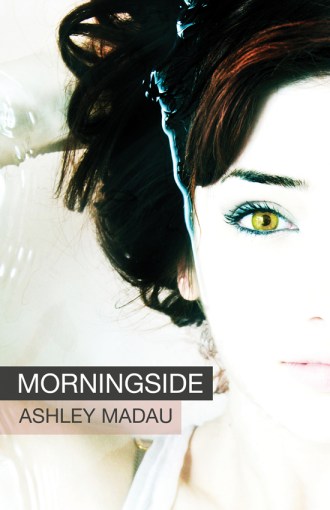
Morningside by Ashley Madau

Interview with Author Ashley Madau

Continuing with our topic for the past few weeks, author Ashley Madau has graciously agreed to share her journey from self-published indie author to traditionally published and on the brink of success. Ashley’s debut title, Morningside, is set to be released this November by Charles River Press. A Paranormal/Horror/Fantasy, Morningside features a fresh twist on the original vampire legends. Gone are the sparkly, vegetarian vampires popularized by the likes of Stephenie Meyer’s Twilight Saga, and in their place is a return to the roots of vampire mythology.  With a uniquely positioned heroine who straddles the line between mortal and immortal, vampire and human, Morningside is poised to breathe life back into a mythology that is starting to get a little stale.

Much like the story’s protagonist, Morningside’s journey through publication has been rather unique, spending time as a self-published title before being picked up by a traditional publisher. Which gives us a rare chance to learn more about both sides of the process from someone who’s actually been there.  But rather than listen to me paraphrase, I’ll let Ashley tell you more about it herself.

~

First, Thank you very much for joining us today and congratulations on the upcoming release of your debut novel, Morningside. Tell us a little about it; what kind of experience should readers expect?

Thank you for having me!

Expect blood, and a lot of it.

My main goal in writing from the protagonist’s first-person perspective started and ended with trying everything in my power to allow the reader to “fill in her shoes” as you learn more and interact with secondary characters. Since the Morningside protagonist is a woman, I imagine it’ll be more popular with the female reading population; of course there are strong male characters, and I hope it appeals to the guy who’s interested in a good adventure as well.  And first and foremost it is just that: an adventure. I often stress how the romantic “dilemma” (as I like to call it) should fall into the background, as the main story– the one about adventure and a struggle with self-discovery– takes center stage. All-in-all readers should expect a good, suspenseful tale with the vampires of old.

~


“Vampires were myths, childhood stories, as were werewolves, mermaids and dragons. I believed none of it.” –Morningside, 2012

~

Coming from a Romanian background, how important was it to you to move away from the glamorized variations of the vampire seen in current popular literature and return to the roots of the mythology? What would you say to people who might instantly shy away from your work as yet another Twilight copy-cat?

I often cringe at the thought of mentioning Morningside is about vampires because of the Twilight phenomenon. Of course I have taken creative liberties in writing about a vampire’s lifestyle (being fictional creatures, it’s safe to assume authors should use their imagination), but there were also key elements of the mythology I made sure to follow close– one of those key elements being their blood lust. It never seemed realistic (and I use that term loosely) for vampires to deny themselves their one craving, the very thing that keeps them alive: human blood. I touch on this idea in one of the later chapters of Morningside, and think vampire fans should appreciate the comparisons I make. I like the thrill of the hunt, and I think future Morningside readers will, too.

I also talk a lot about the idea of the sun, and how it affects vampires. There’s no sparkling involved, of course, but if you look back at Bram Stoker’s Dracula, he’s able to walk in the sunlight without bursting into flames. There are always repercussions, and Morningside vampires have those as well, but no sparkles.

Definitely no sparkles.

~


“Death no longer frightened me, though I wasn’t sure it ever did. If anything, there was always a part of me which looked forward to the morning I wouldn’t rise with the sun; trapped forever in my dreams of nothing.” –Morningside, 2012

~

Morningside was originally self-published in 2010, correct? Please tell us about your experiences with self-publishing– what led you to that decision?

You are correct. Self-publishing was a great experience, and taught me a lot about the publishing industry. I went into it thinking that as a designer I could make my story as appealing as the big name novels, you know, the ones on the New York Best Seller list. I didn’t take much else into consideration, other than wanting to see my words in print, and entertain people with the story. I used Amazon’s service, Createspace to publish, since I knew it’d be available at least on Amazon, and then hopefully syndicated to all the other online venues.

The tricky thing about any self-publishing POD service is how you end up being paid. Many times you have to reach a certain benchmark to get a paycheck, with the lowest amount allowed being $25. Keep in mind, when a book sells for $12, you don’t make 100% of the $12 in any situation. So it takes quite a few sales to make that mark, and if you don’t, the printer keeps all your profit. You’re really in a catch-22 situation at that point. It can be discouraging at times, but it’s an experience I will never regret, and has given me a new appreciation of a publisher’s role in producing a novel.

As an advertising professional, you had a slight advantage over most indie authors. How difficult was it to market a self-published title? Do you have any advice for other self-published/indie authors on the best way to gain exposure?

From working in advertising I’m able to realize how many different elements and disciplines go into successfully marketing a product, and then quickly realize after that that one person can’t do it alone. I had the advantage of a design background, which allowed me to brand myself fairly well, but I’m absolutely clueless when it comes to press releases, media buying, etc… So while everything I did looked “pretty,” pretty wasn’t enough.

Going the self-publish route, you have to put in a lot of work, and a lot of time (and at the moment, time I didn’t have). Expect to have to search for and recruit each and every one of your readers/followers/fans, and know just because you have their attention, doesn’t mean you have the sale. People, especially nowadays, are more likely to save their dollar than spend it on an unknown work. That said, it doesn’t mean you can’t be successful; we’ve seen our fair share of self-published novels making it big, but those people didn’t gain that success by sitting back.

One additional point, as an avid reader, I do tend to judge books by their covers (I know, we’re not supposed to), but I don’t think I’m alone in this thought. My suggestion if you’re self-publishing and wondering what or what not to invest in, do hire a design professional to make you a publishing-house quality book cover. Pulling images into Paint, or incorrectly using Photoshop to do it yourself is a disadvantage to your story. A poor book cover instantly makes people think: self-published, and they may soon overlook everything you’ve worked so hard on.

I noticed that you don’t have excerpts from Morningside on your Deviantart profile. How do you feel about sharing literary work for free on sites like Wattpad, Deviantart, Fictionpress, etc? Do you think that’s a wise move for self-published authors; an excellent way to grow your reader-base, or is it a detriment to potential sales?

I think writing communities online are a fantastic way to grow as an author, learn about the industry, and progress towards publication. In fact, in 2009 I had Morningside on the popular website Authonomy, and my story found its way to the front page, #3 in the “Weekly Book Chart.” Then, later on in 2010 when the young adult version of Authonomy– otherwise known as Inkpop debuted, Morningside reached #2 on their “Editor Desk” ranking, and the first few chapters were read by Harper-Collins Publishers Limited. Both stints on those website proved a huge asset in honing in on my story, fixing inconsistencies, and growing a fan-base. I would encourage any new or old authors to join one of these many communities; I promise your writing will improve exponentially.

When you posted your work to Authonomy and Inkpop, was it the entire manuscript, or just a few chapters/excerpts? There’s a lot of debate about how much is too much to post online. But when building a reader/fan base is so important, if you had a piece you could “sacrifice,” would you post the entire thing for free in the hopes of generating more exposure and possible sales for your other titles? 

On both websites I put my whole manuscript for the public to read. I felt it would be a good platform to advertise my story, especially for those agents/publishers who actively search for authors. The incentive with both those sites, too, was for more and more people to read, then push your story up to the editor’s desk to be reviewed by Harper-Collins. After publishing, I don’t think it’s fair to my publisher to post more than a couple chapters online for potential readers to have access to. There is such a thing as too much, and especially if you’re selling your novel, giving too much may deter people from spending the money.

Most potential writers fear that once they’ve self-published their work, they won’t be able to be published traditionally, but you’ve done exactly that. Tell me, how did you manage to snag a traditional publishing deal after already self-publishing Morningside? Were you able to leverage its success in the indie scene to gain the attention of a publisher, or did you continue to submit your manuscript via the traditional channels even after publishing Morningside yourself?

Great question! It’s scary to take the step towards self-publishing, when all you’ve ever been told is once you do, your chances at traditional publication go out the window. Not just scary, it’s terrifying! I went the self-published route after receiving a couple offers from small publishing houses, and being unhappy with their process and contracts. I did start with the traditional route, querying anyone who would listen, and after that long year, I hired an editor with every intention of making it big on my own. That’s great ambition to have, and even if you have a contract with a publishing house you should maintain that drive, but as I said, it’s damn hard work. I didn’t go into self-publishing expecting to be picked up by a traditional publisher, though I did continue the querying process until I found my home at Charles River Press. They said they were drawn to my characters, and the interesting twist I incorporated through the vampire mythology.

How has it differed working with a traditional publisher? What made you decide to go that route instead of staying self-published?

I made the switch after realizing I was at a point in my life where I couldn’t devote the time and effort necessary to make a self-published novel work. I had just transferred universities, and in my third year of studies I knew where my priorities had to be. It was a bittersweet moment when I pulled my book off the proverbial “shelves” and signed the contract with Charles River Press. Looking back, it became the best decision I ever made. My experience with a traditional publisher has been an adventure in and of itself. I’m able to give input where I have the experience to, and at other points sit back and watch as those areas where I’m less experienced are taken care of. And I realized it takes a small village to bring a story to publication, something I don’t think I had the knowledge or energy to pull off on my own; I’m determined, but sometimes you have to admit defeat and work with a team of professionals looking out for the greater good of your story.

After having experienced both methods of publication, what advice or recommendations do you have for aspiring authors confused about which path to take?

Self-publishing is a great option for aspiring authors to have… keep it in your back pocket. It’s true that publishers tend to shy away from novels that have been previously self-published, which is why I’d recommend start with querying, querying and more querying, to both publishing houses and agents. If, after some time, you’re not finding any traditional luck, you have the fall back of self-publishing without the doubt of asking yourself, “what if?”

The self-published version of Morningside is obviously no longer available, so when can we expect to see it released, and from where?

Right now the release date is November of this year, and you’ll be able to find it at all the popular online outlets, Barnes and Noble and Amazon are the two big ones. And of course it’ll be available for purchase off my publisher’s website, www.charlesriverpress.com. Morningside will be available for wholesale order, so it has the potential to be shelved at a bookstore near you– be sure to stop in your local store and request a copy!

There will also be pre-release digital copy giveaways on the official Morningside Facebook page for fans, as well as post-release hard-copy giveaways.

~


“When he whispered my name, that’s when I knew– this was how death felt.” –Morningside, 2012

~

After the whirlwind of releasing Morningside has subsided, what’s next? Can you tell us anything about your next project(s)?

I’ve been working on the sequel to Morningside for quite some time now, but took a break to pursue my design career a little bit more (especially since Morningside was still in the pre-production phase with my publishing company). The story continues with many of the same characters, but a new foe– one who is actually referenced in Morningside, but isn’t displayed as being a threat.
Along with that story, I’ve also been dabbling with the post-apocalyptic world in a different novel; definitely a change from my comfort-zone of vampires!

~

If you would like to find out more about Morningside, please visit the official website or the Morningside Facebook Page. I, for one, can’t wait to read it!

The Traditional vs. Self-Publish Debate (Part Three)

Whew! We made it. Welcome to part three, the conclusion of our investigation into the publishing industry. I don’t know about you, but I still don’t really feel like I have an answer. My long-winded ramblings of the past two weeks may have solidified what some of you already knew about the avenues of publishing, but for others, like myself, they’ve left us standing at the fork in the road, vacillating between one branch or the other. And I really have no advice to offer as to which path is best. All I can say is that you’re not alone. I’m just as confused and scared of making the wrong choice as you are.

The thing I think we have to remember is that writing, above all, is a business. Yes, it’s an art, a form of expression, a cathartic release of creative energy, whatever, but it’s also a career. And a career is something you make money at. If you are serious about becoming a successful writer, about finally being able to quit that dead-end day job you hate and make a living doing what you love, then you have to think of it as a business. Whatever move you make should be with an eye for advancing your career and maximizing profits. Working for art’s sake is idealistic; the whole starving artist thing is highly over-rated. I’d much prefer to keep a roof over my head and food on the table. Wouldn’t you?

As with everything business related, either method of publication is a gamble. Neither can guarantee success, or even a steady paycheck. And no one can tell you which method is right or wrong (as much as we might wish someone could). Because there is no right or wrong. At the end of the day, you can read as many testimonials of success as you can find, research every minute detail of the publishing industry, follow every golden piece of advice you stumble on, but you’ll still have to make the difficult publishing decision on your own. Even if you mimic someone else’s journey, your experience will probably be drastically different. There are simply too many factors involved to be able to predict, with utmost certainty, what will turn your book into an instant fortune generator. Trust your instincts, take a chance, and hopefully it will work out in your favor. If not, well, at least you can say you tried, right?

For myself, I’m taking the risk. My plan is actually to pursue both methods. Why? Well, I mentioned in my post on Author Branding that I have a dilemma involving crossing genres and a dislike of pen names. I also have a few previously published short stories that I’d like to make available under my married name for consistency’s sake. And since I can’t do anything else with them, (re-publication of short stories seems to be darn near impossible unless you’re famous), I’ve decided to offer them as stand-alone eBooks, and possibly even POD versions. (I recently stumbled on, and then quickly lost an article about using Createspace to make physical books out of short stories that has me intrigued.)

My longer works will be split between the two methods. Since my Urban Fantasy series is the smaller of my writing identities currently, that’s the one I’m going to try self-publishing. Urban Fantasy/Paranormal Romance seems to be very popular in the eBook world, so they might even do well. (Fingers crossed!) Plus, I’m not really sure the first book will make it to full book status– it might end up as more of a novella/novelette, and those are impossible to publish traditionally if they’re your debut title. Since the entire series is intricately tied together, each installment linked to the previous books, I can’t publish them out of order. I also don’t believe in writing fluff just to boost your word count, so self-publishing is my best bet. The rest of my work, which is more Traditionally Fantasy/Dark Fantasy, I’m going to try sending the traditional route, because I just can’t quite let go of that dream of seeing my books on the shelves of bookstores. This strategy would present me to the traditionally published world under the genre I am most likely to work in, and will support reader/publisher expectations for future titles being in that genre, while allowing me to publish the anomaly that is The Synchronicity Series on the side.

Now I know I’m being wildly optimistic here, assuming that I will be able to find at least some success with self-publishing, and that I will be one of the lucky few to hook an agent and then a publisher, and even that I will somehow magically get my butt in gear and suddenly become prolific. It likely won’t pan out the way I’m hoping, but it will definitely make for some interesting experiences. Which, of course, I’ll share with you fine folks, so you can avoid making all the mistakes I’m sure I will. 😉

But now it’s your turn– which method will you be pursuing? What’s your master plan for finding success? Below is that handy list of pros and cons for both traditional and self-publishing I promised at the start of all this, (in case you haven’t made a decision yet), followed by a list of links that I highly suggest you check out. The lovely people who wrote all those articles and blogs are much more knowledgeable about the publishing industry than I am and I gladly defer to their expertise. Who knows, maybe you’ll learn a secret from them that I missed. If so, please come back and share it with me!

The Pros & Cons:

Traditional Publishing Pros:

  • Prestige/Bragging Rights
  • Team of experts to help you shape your book
  • Better exposure/Inclusion on the publisher’s catalog to booksellers
  • Advance Payment
  • Agent to help you negotiate contracts

Traditional Publishing Cons:

  • Smaller Royalty Rates: 8-10%
  • Delay to publication (2-3 years on average)
  • Loss of control
  • Agent Commission: 15%
  • Higher pressure to earn out your advance
  • Low marketing budget for debut authors
  • Expectation to stay within your genre

Self-Publishing Pros:

  • Complete Control
  • Higher Royalty Rates: 20-70%
  • No delay to publication
  • No contracts
  • Freedom to write across genres

Self- Publishing Cons:

  • Success tied to prolific-ness
  • Greater financial investment
  • Marketing falls entirely on the author
  • Stigma of self-published = lesser quality
  • Smaller audience: eBooks are only 25% of all readers
  • Brick & Mortar Bookstores reluctant to stock self-published titles

Helpful Links:

Specific Articles:

Generally Informative Blogs:

The Traditional vs. Self-Publish Debate (Part Two)

Last week we looked at the different aspects of publishing traditionally. Now it’s self-publishing’s turn to get put under the microscope.

As I mentioned previously, self-publishing has always existed, but it wasn’t until the advent of the eBook that it really started to become a lucrative option for writers. Prior to the eReader revolution, self-publishing meant two things:

a) You weren’t good enough to be published traditionally.

b) Your savings account would dwindle significantly, and your garage would soon be filled with unsold books collecting dust for eternity.

Neither of those things really apply now that sites like Amazon, Smashwords, and others have made self-publishing a much more viable option. True, there will still be some financial burden on the author, but it’s nowhere near what it was. And yes, you’ll still run into the stigma of self-published equaling lesser quality, but that’s mostly an attitude held by other writers and members of the publishing industry. Readers don’t care about the publishing house logo on your book’s spine. They only care whether it’s an enjoyable read. With a professional presentation, it is possible to turn a self-published title into a #1 bestseller. E.L. James’s Fifty Shades Trilogy was self-published prior to its current version, and look at the success it’s now earned. It might not be the shining example of literary greatness, but no one can argue with those sales numbers. So it can happen. If you’re willing to work.

Work is the key word here, because if you choose this route, you will have to work. Hard. Unlike publishing traditionally, you won’t have a team of experts backing your venture into published-land. So you’ll have to be your own editor, marketing department, publicist, salesman and master distributor– all while still being a writer. Sounds daunting, doesn’t it? You can outsource some of it, like editing and cover design, to freelance contractors specializing in those fields, but the task of finding readers will ultimately fall on you.

There a million different ways to go about gaining the exposure necessary. Author branding, blog tours, social media campaigns, community involvement with other writers/readers, contests/giveaways, the list is seemingly endless for the marketing savvy indie author. But all of it basically comes down to one thing– networking. Networking is important for both modes of publication, but it’s inextricably tied to a self-published author’s livelihood. Word-of-mouth recommendations can mean the difference between success and failure in the self-published world. Thousands of titles are published on Amazon every day, not to mention the thousands that join the market from other sources. So it’s not enough to simply put your work out there with a kiss and a wave and hope it will get found. Aside from your friends and family, no one will ever know you even published a book if you don’t bring it to their attention.

Welcome to the crux of self-publishing– without exposure to potential readers you won’t get any sales, and without any sales, well, you better not quit that day job.

But no worries; you’ve got this. You’ve created your master plan, you’ve got a secret MBA in marketing, you’re a networking genius. You’ll have no problem reaching the droves of fans who don’t realize they’ve been waiting for your book. Right? Not exactly. Even if the stars align and you become an instant eBook success, an indie demigod, guess what? You’ve only managed to reach 25% of the reader market. That’s right, according to several sites, eBooks, while growing significantly in popularity, still only equal about 25% of all book sales. There’s still 75% of the market that doesn’t know you exist, that prefers holding a real book to reading one on a screen, and who will likely never purchase your baby. Frustrating, no?

There are POD (Print-on-demand) sites like Lulu.com or Createspace.com that allow self-published authors the ability to print their titles in physical form without requiring the quantities that would mean boxes stored in your garage. But I’ve heard mixed things about their quality. And oddly, while readers have few qualms taking chances on self-published eBooks, they seem a little more hesitant to shell out their precious paychecks for a self-published paperback. Oh, and good luck getting anywhere but the indie bookstore down the street that loves to support local authors to stock your book. Because, well, see point “a” above. Self-published books are still judged under the stigma that they must be poorer quality than traditionally published works. The public knows, even if they don’t consciously realize it, that traditional publishing consists of a quality control system that prevents drivel from making an appearance on their bookshelves (yes, the definition of drivel is subjective, but you get my point). Most instantly think that a self-published work must have been rejected by the publishing houses, otherwise, it wouldn’t be self-published. Therefore, it must suck. Logical, yes? But also false.

More and more authors, both new and established, are turning to self-publishing despite the smaller audience numbers. Why? For the royalties.

This, my friends, is one of the main reasons that self-publishing is so attractive. If you remember from last week, the royalty rate for traditionally published books is piddly. By comparison, self-publishing rates look like a gold mine. They differ depending on the site you’re using, but in general, they seem to average anywhere from 20-70%. That’s a lot heftier portion per sale than the measly 8-10% you’d get from traditional publishing. Then there’s the difference in time to publication. Remember that 2-3 year delay between finishing your book and having it available for sale that plagues traditionally published authors? It’s nonexistent with self-publishing. You only have to invest maybe a couple months from the time you finish your final draft to making your work available for readers everywhere to enjoy. Which translates to as much as a 3 year head start on generating sales instead of waiting, penniless, watching that sad little advance disappear to the three bills it’ll cover while you wait for your traditional publisher to finish running your book through production. And there are no contracts. You are entirely the master of your own destiny. Sounds like a pretty sweet deal, doesn’t it? More money, more control, it’s a writer’s dream life come true!

Of course, it all depends entirely on the ability to drum up sales. Which we’ve already established is significantly more difficult this way. Aside from the strategies listed above for gaining exposure, a lot of successful indie authors get around this hurdle with one simple feat– being prolific. Often, self-published authors will churn out as many as 3-4 titles a year as opposed to the 1-2 you’d see from a traditionally published author. This isn’t a hard and fast rule, but when you look at some of the self-published authors that are wildly popular, (Amanda Hocking comes to mind here), you’ll see that they’ve already amassed more titles than most of the high profile names in traditional publishing have over a lifetime. For a slower writer like myself, the fact that success seems to go hand in hand with being prolific is a major downside to self-publishing, and one that may factor heavily into my final decision.

These are just a few of the pros and cons. Every writer’s experience/success will vary depending on the multitude of factors involved. No one can tell you which publication method is correct for your work; you’ll have to figure that out for yourself. If you have an entrepreneurial spirit, an aversion to giving up control, and a prolific imagination, self-publishing could well be for you. If everything I’ve listed here, (aside from the money part– everyone loves money, except maybe that baby in the Capital One ads), has left you feeling ill and frozen with trepidation, then you’re probably better off trying for traditional methods. Self-publishing definitely isn’t for the faint of heart. Are you willing to put in the effort? I’m not sure I am.

Next Week on Nightwolf’s Corner: The Traditional vs. Self-Publish Debate, Part Three: Summary & Helpful Links

The Traditional vs. Self-Publish Debate (Part One)

Ah, yes. This is a subject that any potential writer must eventually face. As someone who has longed dreamed of publishing a novel, (not just a few short stories), and someone prone to finding ways to procrastinate that I can pass off as a justifiable use of my writing time, (*cough* researching publishing *cough*), I chose to start the process early, wasting countless hours perusing site after site over the past month. It became apparent within the first page of Google results that finding a clear cut answer was like swimming through a sea of information praying to find solid land before the sharks find you. And since that information is scattered all over the internet like Easter eggs of brightly colored advice from dubious sources and contradictory facts, I decided to try and spare a few others from enduring the hours and hours of research by summarizing what I’ve found and conveniently posting it here. Get ready for a parade of what-if’s and maybe’s, because even after a month of research, a plethora of blog posts arguing for or against each mode of distribution, and countless nights spinning my wheels trying to reach a decision, the sad truth is, I still don’t have the answer. Maybe that’s because there isn’t one. There really is no right or wrong strategy when it comes to publishing, and every writer has to make the decision for themselves.

Over the next few weeks, I’m going to lay out the facts on each mode of publication in the hopes of helping you make an informed decision regarding your own work. And hopefully, decide on my own strategy in the process. Nothing makes you assimilate knowledge faster than having to explain it to someone else. At the end of this series, I’ll provide you with links to all the blogs, articles and websites I’ve found most helpful and a handy bullet list of the pros and cons for each method. So feel free to wait for Part Three if you’re not interested in the longer version of the details. I promise not to be offended. Much.

Traditional Publishing

Every writer, from the second they put fingers to keyboard, or pencil to paper, dreams of seeing their work on the shelves of their favorite bookstore, of being #1 on the New York Times Bestseller list, of gaining instant recognition and fame that will make the likes of J.K Rowling, Stephenie Meyer, Suzanne Collins and E.L. James look like nobodies. And that dream subconsciously goes hand in hand with traditional publishing. It’s an ingrained assumption that when it comes time to release our masterpiece, we will automatically have to run the gambit of finding a publisher. Because that’s the way books have always been published. Until recently. True, there have always been self-published titles, but they were instantly given the stigma of being lesser quality, literary pariahs who couldn’t cut it the traditional way. And to be fair, most of them probably were/are.

Because of self-publishing’s tarnished reputation, traditional publishing earned the misguided designation of being glamorous by comparison. Writers everywhere, (myself included, until recently) naively believe that a writing career consists of writing a spectacular novel, submitting it to an editor, making a few revisions as needed, and then sitting back and waiting for success to rain down. They think that the publishing house takes care of the rest and they’ll get to spend the majority of their career holed up in an office somewhere writing while the royalty checks pour in. The reality couldn’t be further from this vision.

Let’s face it, we can’t all be the superstar authors listed above. If we were, then they wouldn’t be superstars, would they? So let’s be realistic for a moment and look at what publishing traditionally means for the rest of us. As a debut author (which I’m going to use as an example because I’m one and all my research has been with an eye for my own pending career, and, well, I’m just selfish like that) the numbers are especially bleak. From time to publication, to advances and royalty rates, to contractual obligations, the traditional publishing industry actually seems stacked against new authors.

The first hurdle is to get past the dreaded gatekeepers– the agents, editors, contract lawyers, etc., all blocking your path to success like bouncers at an elite nightclub. Once you’ve finished your novel, edited and revised the heck out of it, and generally polished it into the shining diamond you knew it would be, you basically get to play the waiting game. First, you need an agent. The larger publishing houses rarely accept unsolicited submissions, and once again, those are the people we’re all aiming for, whether we admit it or not. Some of the smaller publishing houses will accept manuscripts directly from the author, but we’re going to stick to the big boys for this discussion. So that means agents.

This is an unspoken requirement of going the traditional route, and the beginning of the submission process. You have to query them just like you would if you were magically granted access to the publishers themselves. Which means that it’s going to take time to get a response. Lots of time. Don’t be surprised if you spend a year or more in this stage of the game. If and when you’re lucky enough to land an agent, congratulations, you just signed over 15% of your profits. That’s fair, though, right? Agents are going to do the majority of the leg-work for you, and should be compensated for cashing in on their connections to the all important editors, otherwise known as Gatekeepers Round Two.

For that 15% commission, your agent will shop your manuscript around in the hopes of finding an interested editor. Sound familiar? Yep, you essentially pay someone else to do the exact same thing you did with the agent. Which means you’re waiting. Again. Let’s be optimistic and say that your fabulous agent (because I really do respect these lovely creatures advocating on behalf of their authors, despite my snide tone) manages to secure an editor’s interest within a year. It’s now two years after you actually finished the book and you haven’t seen a cent of profit yet.

But the waiting’s not over. Now you get to go through the round of revisions the editor will want, the contract negotiations, etc. (Make sure you scour that contract for any potential clauses that basically ask you to sign over your soul and grant the publisher exclusive rights to everything you ever write forevermore. I hear those are becoming quite popular and can be sneakily embedded in the fine print. Personally, I don’t want to have to ask permission to post a blog post. Do you?) All before you get paid. And it will likely be another year to year and a half before your book even hits shelves.

According to all the various sites I’ve visited, the average advance for a debut novel is in the neighborhood of $5000. Not too shabby, right? But the kicker is, it will be broken up into two, maybe three, chunks. One upon signing the contract, one upon acceptance of the final draft, and possibly one upon publication. Factor in that 15% commission you promised your agent and you’re looking at 3 payments of $1400 each, spread over the course of maybe 2 years. So you’re essentially making $175 a month. I don’t know about you, but that doesn’t even cover my car payment.

And it gets worse. According to these same sites, which I’ll provide links to later, only about 10-15% of authors actually earn out their advances. The other 85-90% will never see another dime from their Great American Novel. Depressed yet? There’s one more thing– should you fail to earn out your advance, you’re basically done. It will be darn near impossible to publish anything else under your own name again.

Oh, and did I mention that as a debut author, the marketing budget allotted by the publishing house will be next to nothing? So the burden for ensuring you earn out that advance falls primarily on you. Can we say pressure much?

If you do succeed in the impossible and earn more than your advance, the royalty rates are incredibly small. This is a negotiable point, so I’ve seen various figures, but it’s usually in the 8-10% range depending on the method the book was published, i.e. Hardcover, Trade Paperback, Mass Market Paperback, etc. And, as if all this weren’t depressing enough, you essentially get to sign over complete control of your baby for the privilege. That vision of handing over a manuscript and sitting back while the publishing house takes care of everything pretty much only applies here. They will dictate everything from the cover design, which you may or may not have input on, down to the title. That perfect name you agonized over and have come to associate with as an integral part of your work’s identity? Yeah, it’s nothing more than a working title if you go the traditional publishing route.

Sounds like fun, no? But it’s not all bad. There is definitely something to be said for having a team of experts helping you get your work to the people who really matter– the readers. And while you do give up a lot of control, that’s not always a bad thing. The publishing houses are professionals with an awful lot of experience in producing, marketing and distributing books. Would having them on your side really be that bad? After all, they want you to succeed too. They’ve invested their time and money into your book, and would really prefer that investment turn into profit. Publishing and writing is a business despite what the illusion says. Can we really fault publishing houses for treating it as such? Does pursuing the highest profit margin really make them the villains here? Producing books is an expensive endeavor, and those costs have to be paid somehow. How better than through the book’s sales?

Publishers also hold the exclusive key to distribution via conventional means. Most booksellers are reluctant to stock self-published titles. So if you want to see your baby on the shelves of Barnes & Noble, traditional publishing’s the way to go. Ebooks are rapidly gaining popularity, but they’re still only about 25% of the market. The other 75% of sales are still readers who prefer actually holding a physical book to reading one on a screen. And that’s definitely something to keep in mind. Are you alright with limiting your potential sales to such a small portion of the market if you choose to self-publish?

And, of course, there’s also the prestige that comes with publishing traditionally. You get bragging rights; you made the cut when so many others don’t. Your book will automatically be deemed quality. Reviewers will be easier to find and you’ll get to experience your dream of walking into bookstores and seeing your name on their shelves, of being able to hold a physical, beautifully bound copy of your work in your hands, and of being able to do book signings for droves of adoring fans. In this way, the stigma of self-publishing works in your favor. But is that worth the cost of traditionally publishing? Only you can decide what’s important to your career, profit margins, or glory? Preferably both, but neither method of publication can ever guarantee that.

Next Week on Nightwolf’s Corner: The Traditional vs. Self-Publish Debate, Part Two: Self-Publishing

Inspiration is a Fickle Wench

Have you ever had those days where you suffer from a complete lack of inspiration? Where you feel like a creative well that’s run dry? Yeah, me too. In fact, it happens more than I’d like to admit. For someone plagued by the never-ending breeding of plot bunnies, I have a remarkably hard time finding the motivation to actually write. Oddly, the most sure-fire way I have to motivate myself is to declare to the world that I’m not writing. (Sorry, writing group buddies. Sometimes I have to cancel just so the muses in my head will freak out, screaming, “No! You can’t write absolutely nothing this week!” and finally show me the path to the next scene they were greedily withholding.)

But inspiration doesn’t just apply to writing. We need it for all things creative. It plays just as much of a role in creating a masterpiece of art, or choreographing a moving sequence for demo team. And some days, it’ll simply refuse to come when you call it.

I find the idea of inspiration a fascinating thing. Where does it come from? Is it an invisible lightning bolt that shocks our imagination to life the way a defibrillator brings our hearts back from death? Is it a gift from some higher power, sending waves of creative energy coursing through us like sunlight? Is it the whispered voice of a muse dressed like the women of Greek mythology? Or is it just some random combination of neurons firing that creates a delusional escape from reality? Honestly, I don’t know. I’m not sure anyone does. But I do find it intriguing that when a writer talks about hearing “voices,” they’re considered brilliantly touched by inspiration. When anyone else says it, they’re considered mentally ill.  What separates inspiration from insanity? The final product? Who’s to say that people with schizophrenia or brain tumors warping their neurological pathways aren’t the most in tune with that magical force we call inspiration. Or that those of us who claim to rely on it for our careers aren’t actually suffering a slight mental meltdown. Interesting stuff, isn’t it?

All I know about inspiration is that it rarely shows up when I want it to. Case in point, I’m now suffering through week 2 of the current inspirational drought. This wasn’t even the blog post I had scheduled for today, but I was too uninspired to finish the original one. Which made this the perfect week to muse about the elusive nature of the muse, so to speak.

I’ve mentioned a few times that I find inspiration through music, going into rather lengthy, and probably creepy, detail about it, here. I’m not sure why that’s my avenue of choice, but it’s always been that way. Maybe I’m mooching off the creative brilliance imbued by the composer/song-writer. Maybe I’m gifted with a finely tuned sense of musicality and I can find stories through the nuances and layers of musical instruments the way others can through dreams or spoken words. Maybe I’m just nuts. But regardless of the reason, that reliable source of  melodic inspiration only seems to cover the initial conceptual phase. It gives me the base-line, the foundation on which I have to build, and more plot bunnies than I could ever write, even if I was lucky enough to be a writer that could finish a novel in a few months. When it comes to the actual creation part, the nitty-gritty work part, I’m left to suffer the whims of inspiration like everyone else.

Every writing website, advice article, author/artist blog out there will tell you that creator’s block is a myth. That it’s just an excuse for being lazy, for procrastinating, for giving in to your fear of failure, or for a plethora of other reasons. They’ll all tell you that you just have to power through those days when you’re lacking inspiration. That you have to discipline yourself to create every day. That you can’t wait for the muse to come to you, for the weather to align perfectly, for the fourteen cups of caffeinated beverage to kick in, or for whatever that magic combo is that ignites the fires of inspiration for you. And they’re probably right.

I, however, can’t force it. When I’m not feeling inspired, I end up with this:

“Blah, Blah, more Blah, Blaaaaaaaaaaaaaaaaaaaaahhhhhhhhhhh! Stuff and things. Blarg. Grrrrrrrrrrrrrrrrrrrr. Oh, and more Blah.”

How would you like to read an entire novel of that? I know I wouldn’t. So I ignore all those lovely professional people out there smarter than me, because their perfectly valid advice doesn’t help me. And I wait, sometimes days, sometimes weeks, sometimes even months for the return of inspiration. Does that make me a lazy, procrastinating, fear-frozen artist/writer/choreographer? Maybe. It definitely makes me slow. But one thing I’ve learned over the years chasing down my dream of making a living at something creative, is that you have to be true to yourself. You can read as many books, blogs, advice columns as you want; take a million classes to hone your skills; talk to everyone you admire whose been lucky enough to do what you want to and make a living doing what they love, but in the end, it’s all about figuring out your own creative style, the strategies that work for you, and the confidence to believe that just because your process may be a little different, doesn’t make it wrong.

And mostly, that inspiration is a fickle wench you can control about as much as you can control the weather.