Featured From the Archives: The Curse of Being a Slow Writer

Apologies for having to go archive-diving again this week. Let’s just say, it’s not been a great one for me and leave it at that. I wanted to find a post that could do what I couldn’t — bring some humor to my otherwise bleak mood — and this one seemed like the perfect fit. Snarky, but still inspiring, it’s a good reminder for anyone struggling to find time to write. Even if it doesn’t apply to you, I hope it will at least bring a smile to your face. After all, laughter is the best medicine, or so they say. 😉
 

The Curse of Being a Slow Writer

by Kisa Whipkey

(Originally Posted on 5/31/13)


I don’t think it’s news to anybody that I am the equivalent of a sloth when it comes to writing fiction. At least, it shouldn’t be. I’ve said it quite a few times. But usually, I try to put a positive spin on that fact, embracing my molasses-covered words and declaring it proudly, like it’s some kind of statement of quality. But the truth is, it sucks. It is the single most frustrating thing in my writing career. So today, I’m going to indulge in a moment of venting negativity. Today, I’m not going to try to convince you that it’s okay to be slow; that it’s all right to procrastinate with research, or editing, or any of the other excuses I’ve told myself are justifications for slackerhood. Because it isn’t. If you want to make it in this industry, you have to be prolific. That’s just a fact.

We had a saying at Dragon Heart Tang Soo Do: “If you can’t be a good example, then you’ll have to be a horrible warning.” So let me be your horrible warning. Being a slow writer isn’t a blessing, it’s a curse. Here are the top 5 reasons you don’t want to be me.
 

#1: Limited Productivity Potential

 
At my current rate, I’ll be lucky to finish a novel a decade. And since I also conveniently dragged my feet in deciding to take my writing career seriously, that means I’m joining the party late. So that puts my productivity level at direct odds with the amount of life I have left. If (fingers crossed) nothing horrific happens, I could potentially be looking at a long and happy life. But how much of that will I realistically spend writing? I’m going to say that probably by my 70’s, I’ll be running out of oomph, and likely, Carpal Tunnel will get me before then. So, given my late admittance that I really wanted to be a writer after all, that optimistically gives me a productivity potential of 4 books. (4?! That’s pathetic. This is why I dislike math; it never pans out in my favor!)

Now, say you were smarter than me and realized early on that you were destined to write for a living. I’m not so ancient that you’d have that much of a head start. Most people figure out their life’s passion during their twenties, and a lucky few know by their late teens. So at best, you’re a book and a half ahead of me. That’s still not a rosy picture of successful writerdom. I suppose there is a chance that you don’t see yourself being prolific. That you only have one or two titles in you and then plan to call it good. But I think the majority of us choose to be writers because we’re bursting with ideas waiting to find their way to the page. Am I wrong?

Which leads us to reason #2 why you don’t want to be me.
 

#2: Royally Pissed Off Plot Bunnies

 
The thing about plot bunnies is they breed like, well, bunnies. I have yet to go longer than a month without finding another cute and fluffy little detour hopping innocently across my path. (Innocently? Yeah, right. Those little buggers know my muse can’t resist them. They’re about as innocent as creepy children in a horror film.) So when I compare my maximum potential output (the measly 4 books) to the avalanche of rabbit fur weighing me down, you can guess what happens.

Personally, I don’t want face the legions of plot bunnies running around in my head when they realize that only 4 will ever get their moment in the spotlight. They’ll probably start a riot. They might even turn carnivorous. I don’t know. But I do know that they’ll be royally pissed off, and that can’t be good for my muse. Or anyone, really.

So unless you’re one of those rare writers content to write only a couple books, I’m guessing you’ll be facing the same predicament. And in case the thought of angry, carniverous plot bunnies hasn’t scared you away from my path of slackerness, let’s move on to reason #3.
 

#3: Getting Lost in the Discoverability Jungle

 
It’s a well-known fact that the fastest way to gain momentum in a writing career is to continually publish new content. Whether you’re self-publishing (especially if you’re self-publishing) or traditionally published, name recognition is everything. In an ever-growing jungle of titles, being prolific enough to constantly have your work in front of readers is the only way to survive. No problem, right? I just established that, like me, you have a plethora of ideas to choose from. “Prolific” will be easy!

Hear that screeching of the brakes? Yeah, you forgot about one key element — reason #1. When you’re as slow as I am, your chances of consistently staying on your readers’ minds goes out the window. I’ll survive in the Amazon jungle about as long as a fruit fly with that level of productivity. There’s no amount of marketing in the world that can save me from sinking into the mire of oblivion.

Pretty convincing case for not being me, no? But, just for kicks, let’s say the issues of discoverability aren’t really that bad. That I’m being over dramatic in my snarkiness. (I did warn you I would be venting negativity.)

Welcome to reason #4.
 

#4: Being Stuck in a Permanent Day Job

 
Every writer dreams of waking up every day and spending the entire time writing. But the reality is that most of us still have to work day jobs. The fridge doesn’t fill itself, unfortunately, and the bill collectors don’t look kindly on IOU’s. So chances are, unless you’re secretly a billionaire, married to a billionaire, or homeless, you need some source of income. Where do you get it? The dreaded day job.

Now, some of you may be lucky enough to actually have a career you enjoy. But the rest of us punch the time clock like we’re signing in for a prison sentence. The only thing that gets us through the day is that shiny dream of someday getting to say “F you!” to the boss and walking away with certain fingers held high.

But what happens to that shiny dream when you write like a snail? It shrivels up and disappears. Yep, that’s right, your shiny dream is now a rotting, wrinkled hunk that looks like a dried apricot. Why? Because you’re too slow to be considered prolific. And since you’re not prolific, no one knows who you are. And because no one knows who you are, your books don’t sell. And when your books don’t sell, you get to offer that chicken-scratched IOU to the bank and pray they let you keep your house.

Such a pretty picture isn’t it? I think I’m rather gifted at casting the most depressing slant ever on the situation. But in case you missed the lesson in that dreary portrayal, let me reiterate it. If you don’t want to be stuck permanently in that day job you hate, don’t be me!
 

#5: The Burden of Emotional Turmoil

 
By now, I hope you’re seeing the downfall of succumbing to the slow-writing curse. If not, (man, you’re a hard cookie to convince!) here’s one final reason.

I’ve already covered the practical, tangible reasons it sucks to be a slow writer. But there’s also an emotional aspect. When you move with the agility of a tortoise, you tend to find yourself battling things like frustration, irritation, depression, anger, all the lovely turmoil that goes with swimming in the negative side of life. That self-doubt all writers experience? Yeah, quadruple it about a gazillion times. That lure of perfectionism? You’ll be chasing after it like a siren’s song. The regret over letting your dream slowly starve to death and die? You’ll carry it around until you start to look like Atlas, carrying the world on his back.

My point is, eventually, you’ll find yourself so immersed in the quicksand of negative emotions that you’ll end up writing a blog post just like this. 😉

So, there you have it. The top 5 reasons why you shouldn’t be me; why you shouldn’t succumb to the curse and let your writing career languish on the back burner. If you already find yourself hovering dangerously close to joining my sinking ship, don’t despair. There’s still hope. All you have to do is kick your lazy booty into gear. Figure out where you have the time to write and commit to it, even if it means sacrificing sleep, weekends, and watching Celebrity Game Night. (Seriously, though, that last one’s not a sacrifice. Whoever decided that sitting around watching celebrities play board games was quality television needs to be fired. Immediately.) You can do it. I have faith in you. In fact, how about we make a pact? Let’s take all the negativity and turn it on it’s head. Let’s laugh in the face of frustration and prove to everybody, including ourselves, that we do have what it takes to be writers, and we can be prolific. Let’s break the curse together. Deal?

Book Spotlight: Review of The Undead: Playing for Keeps by Elsie Elmore

I know it’s not Wednesday, but I wanted to take a moment to spotlight a fellow author who’s actually helped contribute to the content of this blog. Some of you may recognize her as the person who nominated me to write this post on my writing process. So in some ways, I feel connected to her and was honored to be invited to participate in her blog tour. See? Here’s the obligatory banner to prove it:

The blog tour banner


I’ve made it no secret that I like to give back to the writing community when I can, and this is my way of celebrating Elsie’s success. So, without further ado, I give you my review of her newly released book:

The Undead: Playing for Keeps

by Elsie Elmore

The Undead: Playing for Keeps by Elsie Elmore

My Rating: 5/5 Stars

When an undead woman with serious de-comp issues stalks sixteen-year-old Lyla Grimm, her hope of rescuing her rock-bottom reputation takes a back seat. Especially once Lyla’s new talent of resurrecting the dead draws the attention of Eric, a Grim Reaper with a guitar and a chip on his shoulder.

While Lyla navigates the gossip-ridden halls, Eric works to gain her trust and discover why Death’s clients aren’t staying down. If she passes on her gift, his death-messenger destiny might be altered. But the closer he gets to Lyla, the less sure he is of his plan. The dead are way easier to deal with than the living.

Gossip explodes, the Grimm family implodes, and desperation sets in. Death wants the gift and a soul. Lyla and Eric face hard choices with hidden consequences. Sometimes life’s choices aren’t really choices at all.

I’ll admit that when I first saw the cover for this, I wasn’t terribly impressed. But don’t let it sway you, this is a fantastic read. Elmore had me hooked from the first sentence, and she never let me down. The Undead: Playing for Keeps is not your average zombie story. It starts with Lyla Grimm, the daughter of a mortician, applying make-up to a corpse after the cosmetologist for her family’s funeral home quits with a horrifying flourish. What she doesn’t know is that her touch is special — she can reanimate the dead. When the body mysteriously disappears later that night, rumors start to circulate.

Speculation isn’t the only thing the oddity draws, though. It also garners the attention of Eric, a Grim Reaper/rock star. Sent to find out why the dead aren’t staying that way, Eric and Lyla’s paths soon cross. What happens after will keep you guessing, and the ultimate reveal doesn’t disappoint. Deceptively simple in its good vs. evil set-up, this book is actually about issues that resonate on a much deeper level — identity, self-confidence, morality, and bullying. Lyla struggles to find herself in the face of ridicule and gossip, much like “normal” teenagers do. The paranormal addition is expertly delivered with a gruesome creepiness that surprised me, but it was the humanity in the story and characters that I enjoyed most. The dual POV is strong, and each character has a distinctive voice. Elmore’s prose is effortless and smooth, and I found the entire experience to be engrossing. Fast-paced, but gripping, I highly recommend this book to fans of YA urban fantasy/paranormal romance. In a genre that is over-filled with mediocrity, this book stands out. I will most definitely be reading more of Elmore’s work in the future.

**Disclosure Statement: I received a copy from the publisher in exchange for an honest review. **

About the Author:

Elsie Elmore

Elsie Elmore lives in North Carolina with her husband and two kids. She loves the color red, has an appreciation for chocolate and coffee that borders on obsession, writes stories that challenge the laws of nature, and wishes fall temperatures would linger year round.

Elsie is a member of several writing organizations: RWA, SCBWI, and WSW. The Undead : Playing for Keeps is her debut novel. Find her on the web: on twitter at @ElsieWriter, her blog, or on Facebook.

Book Review Wednesday: The Other Lamb by Katie Young

Hey, look! I actually managed to finish a book review in time to post on a Wednesday. Fancy that. Of course, this may have had something to do with it:

The Other Lamb Blog Tour Banner

Yep, I signed up to be part of another blog tour. This time, for a lovely YA paranormal/horror combination with some intriguing twists on old legends. But before I get into that, here’s what you need to know about the book:
 

The Other Lamb

by Katie Young

 
The Other Lamb by Katie Young

My Rating: 4/5 Stars


Incarcerated on Earth as punishment for breeding with humans, the Watchers found a way to escape. Zach is living proof of that
 even though someone has cut out his heart.

When Zach turns eighteen he develops an insatiable thirst for blood, but he tries to bury his fears and go on enjoying his birthday. His best friend Kim has scored them tickets to the hottest gig in town. But a charged encounter with his idol, the enigmatic rock star known as Grigory, leads to a revelation that shatters everything Zach thinks he knows about himself and the world, and places everyone dear to him in grave danger.

Zach is a Naphil, the forbidden offspring of a mortal woman and a Watcher. When those who seek to destroy him snatch Kim, Zach is forced to embark on a journey of discovery spanning continents and ages. With the help of a mysterious stranger named Sam, Zach must unearth the truth about his parentage, find Kim, and discover who has stolen his heart
 before he triggers the apocalypse.

When I first read the blurb for this, two things instantly caught my eye — the fact the MC, Zach, has had his heart cut out, and the obvious allusions to vampires. But the premise is actually quite a bit more fascinating, combining the mythology behind angels and vampires into something altogether new. I will admit that I find the cover design a bit repulsive, but since the story does contain graphic violence and sex, it’s a good representation of what readers should expect. This is most definitely not a story about angels in the traditional sense, but it is intriguingly refreshing.

None of the characters are clearly good or evil, and the four arch-angels (the Watchers) are far from the pristine creatures you’d normally see. Instead, they’re much more reminiscent of The Authority in True Blood, or The Volturi in Stephenie Meyers’s Twilight Saga. The history of their fall from grace was one of the better aspects of the story for me, and it was clear the author had done a lot of research into angel mythology. But I did feel that the fast pace of the story sort of prevented me from ever really connecting to any of the characters. It’s told from a distanced, third person omniscient point-of-view, and I found the shifts between the characters to be jarring. Many of them are short, barely a full page, which created a sort of whip-lash effect as I was thrown from one person’s head to another. The graphics used to separate the scene breaks often overpowered the text itself, and only further emphasized that disconnect.

I would have liked to see the story expanded a bit more, delving deeper into the characters, rather than sitting on the surface. That said, the fast pace will send you through a whirlwind of action, with plenty of twists and turns to keep you guessing. So while I was perhaps a little disappointed that it wasn’t a more immersive experience, I do recommend this series and will most definitely be checking out more books by Ms. Young in the future.

**Disclosure Statement: I received a copy from the publisher in exchange for an honest review. **

Storytellers & Grammarians: The Different Types of Editors

A few months ago, Hubs and I were at one of our favorite restaurants, enjoying a nice basket of Cajunized tots and a couple cold beers. And, being the creepers that we are, we eavesdropped, I mean overheard, a conversation from the next table that started me thinking. While waiting for their food, the boy at the table would challenge his sister on rules of writing, definitions of obscure words, and other English-related stuff. After the first couple rounds, Hubs started looking to me for verification, mouthing, “Is he right?” Because, as an editor, this should be my realm of expertise, yes?

Eventually, though, I honestly wasn’t sure without having to use some sort of reference guide. See, the boy had transitioned from the basic rules of grammar we all abide by into things like the roots of words and obscure facts about the structure of language and grammar that I rarely need to know while editing. But he clearly loved it as much as I love talking about the techniques of storytelling. And right there, the proverbial light bulb went off, clarifying something I’d been witnessing for a while, but that I hadn’t put into words — there are two fundamental types of editors.

I know what you’re thinking: there are way more than two types of editing. And you’re right, there are. For argument’s sake, here’s the list of the most common editing activities:

  • Developmental (Overall storytelling)
  • Line Editing (Word Choice, Smoothness, Clarity, etc.)
  • Copy Editing (Grammar, Spelling & Punctuation)
  • Technical Editing (One specific aspect of a manuscript)
  • Proofreading (Formatting issues, Typos, etc.)

Note that I called those editing activities. Because, while there are five different areas an editor can be skilled in, there are still only two types of editors — the storytellers, and the grammarians. What I’ve witnessed over the past few years is that, regardless of the type of editing activity, the person doing it will invariably fall into one of these two categories. Why? Because I’m talking about the core way they view a manuscript, their fundamental perspective.

You’ve heard me talk before about how editors are not all the same, how it’s important to know whether you’re working with a copy editor or a developmental one. And this is why. The core philosophy of your editor will dictate the quality and type of editing you receive.

Grammarians are fantastic line editors because they’re brilliant with the actual words. They love the English language will the zeal of an English professor and will be the first to call you out when you deviate from the grammar laws. In short, they’re the grammar Nazis I mentioned in my post on the different types of critiques. But in the grand scheme of things, they’re superficial editors. Meaning they never dive past the actual words on the page, the specific combinations of letters and symbols on a white background. This is the main reason you’ll see some editors charge tiny little fees and have a turn-around rate of two weeks. Because all they’re doing is polishing the surface of your work, putting a band-aid on wounds they may or may not even see.

I’m sure I’ve just offended a large portion of the editors out there, and for that, I’m sorry. But it’s true. A grammarian editor will never look at the deeper problems of a story. For that, you need a storyteller. Storyteller editors are a rare breed, capable of doing the same level of line edit quality as a grammarian, but also capable of seeing past the words to the story underneath. They’re the equivalent of literary surgeons. They’ll spot the weird bone spurs, the fractured character arcs, the fatal plot holes that bleed the life from your story, the illness that keeps the emotional context from resonating with readers. And this is true whether you hire them to only do line edits, or whether you want the developmental side. Because they can’t help but see those things.

Storytellers understand elusive concepts like voice and style, and they’ll help you bend the rules of grammar to fit your story. Grammarian editors won’t. To them, that’s a cardinal sin, and they don’t understand why you would want to do that. Storyteller editors will ensure all the pieces of your manuscript work to form a cohesive narrative. Grammarians won’t. They’ll make sure all your words look pretty. Storyteller editors will challenge you, pushing you become a better writer. Grammarians will fix your typos and call it good. I’m sure you’re starting to see the pattern here.

So, how can you tell the difference? When you’re looking for a freelance editor, or you meet your publishing-house-assigned person for the first time, how can you know which type of editor you’re getting? That’s the tricky part. Ideally, you’ll want to look at any previous work they’ve done. Buy (or borrow) one of the books listed on their resume and see how you feel about it. Is it solid grammatically, but riddled with storytelling problems? (Readers are surprisingly attuned to these kinds of issues, so you’ll be able to feel it, even if you don’t know exactly why it didn’t work.) Chances are, they’re a grammarian.

Another option would be to track down other authors the editor has worked with and ask them for their impressions. Did the editor help them with a particularly tricky part of their story, or were they fast? (Speed is an indication of quality, remember? It’s much faster to skim the surface of something than it is to really internalize and think about someone’s work.)

The final clue will be in the feedback itself. If you’ve found a storyteller, they’ll always start with in-depth feedback that delves into the core of your story. Their first email to you will likely contain information on theme, character development, pacing, and any potential problems with those areas. Or, alternatively, if you’ve hired someone solely for line edits, watch for feedback that steps out of that territory. Trust me, storytellers can’t help but point out flaws in logic or areas that are murky/underdeveloped. Whereas grammarians will stick exactly to that — the grammar.

It is my opinion, in case you couldn’t guess, that storytellers are the stronger editors, and whenever possible, you should seek one of them. But grammarians have their place as well. They’re excellent proofreaders, and if you’re confident in the integrity of your story (as in it passes your critique partners and beta readers with flying colors) and simply need someone to double-check/polish your grammar, they’re perfectly acceptable.  The important thing to take away from this is that there is a difference. So know exactly what you’re looking for, and who the best editor is for that. Don’t ask a grammarian to do developmental edits, and don’t expect a storyteller to ignore structural flaws while line editing. Understanding the way your editor is likely to view your manuscript will give you a better idea of what to expect in terms of feedback. Which, in turn, leads to a better working relationship, and everyone likes when projects go smoothly, right?

Book Spotlight: Review of Broken Forest by Eliza Tilton


PicMonkey Collage

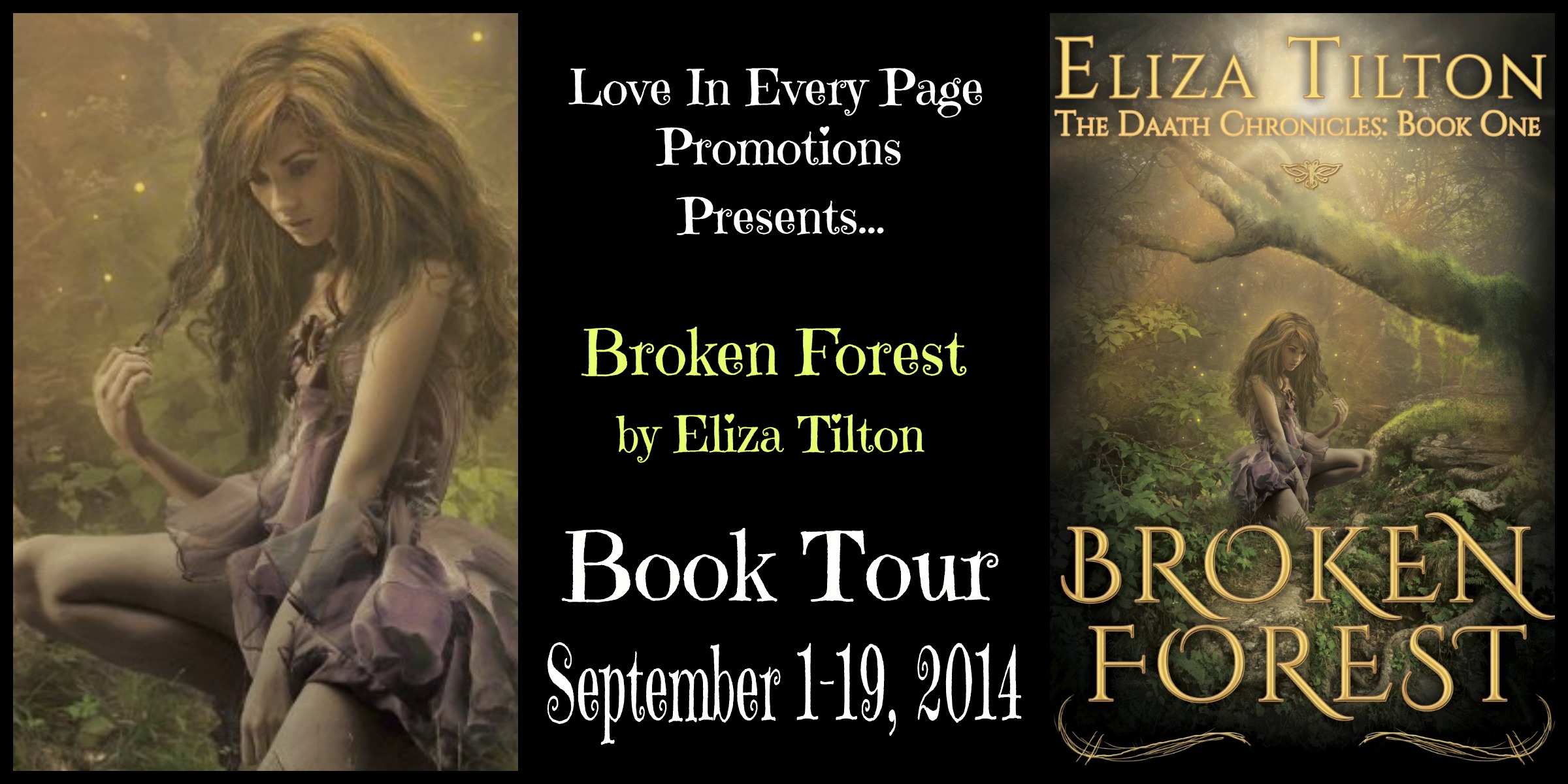
It’s a little late to call this a Book Review Wednesday post, so instead, I’m going to call it a special feature. I was invited to be a part of the blog tour for an intriguing YA fantasy novel, and since I’d been on the lookout for something in just that vein lately, how could I pass it up? (Evidence of said invitation in that lovely banner above. 😉 )

So, without too much preamble, I give you my review for:

Broken Forest by Eliza TiltonMy Rating: 4/5 Stars

Hopeless he’ll never be more than the boy who didn’t save his brother, 17-year-old Avikar accepts his life as the family stable boy, trying to forget the past. But when his sister, Jeslyn, is kidnapped, the thought of losing another sibling catapults him on a desperate quest.

With his best friend by his side, and using the tracking skills he learned from his father, he discovers Jeslyn has been taken, kidnapped by one Lucino, the young lord of Daath, a mystical place thought only to exist in fables.

And Lucino has plans for Jeslyn.

His shapeshifter brethren feed off the auras of humans, and Jeslyn’s golden hue is exactly what Lucino needs to increase his power. The longer it takes Avikar to reach her, the more entranced she becomes with Lucino’s world, and the harder it will be for Avikar to set her free.

He failed his family once. He won’t fail again.

Broken Forest was a fast-paced, highly enjoyable read. Contrary to what the blurb implies, it’s actually told in alternating, first-person POVs from the three main characters — Avikar, Jeslyn, and Lucino. Avikar is presented as the dominant character, though, as his storyline drives the overall plot. Haunted by a past failure that cost his family a son and brother, he’s a flawed hero, but a hero all the same. When his sister is captured by the lord of a supposedly mythical land, Avikar takes it upon himself to rescue her. Together with his friend Derrick, Avikar travels to the long-lost Daath, facing great evil in order to save Jeslyn from it’s shape-shifting, slightly psychopathic overlord.

The writing is eloquent and the characters fairly well developed, but I think what I enjoyed most was the world. In a lot of ways, it reminded me of Maggie Steifvater’s Books of Faerie series. Not necessarily because of the content, but because of the overall feel and lyrical prose. It’s listed as a fantasy, but it should be noted there is a slight Science Fiction aspect to the creatures that was both surprising and unique. I was honestly expecting the Fey, but Tilton took the story in a direction that was much more original.

My only complaint, and the reason this has earned 4 instead of 5 stars, is that Avikar and Jeslyn sounded very similar. Lucino was fascinating and Tilton captured his indifferent, cold assessment of the world perfectly. But the siblings were fairly indistinguishable, making it hard to remember whose POV I was reading without the aid of the chapter headers. I would have preferred a little more differentiation in the voices, but otherwise, I highly recommend this to anyone looking for a new voice in YA fantasy, and I will most definitely be looking to pick up the rest of the series. 🙂

About the Author:

Eliza Tilton

 Eliza graduated from Dowling College with a BS in Visual Communications. When she’s not arguing with excel at her day job, or playing Dragon Age 2, again, she’s writing. Her stories hold a bit of the fantastical and there’s always a romance. She resides on Long Island with her husband, two kids and one very snuggly pit bull.


AUTHOR LINKS:

Twitter / Tumblr / Website / Pinterest / Facebook / Instagram

BUY LINKS:

Amazon / Barnes & Noble / KOBO


**Disclosure Statement: I received a copy from the blog tour company in exchange for an honest review. **